How mosquitoes find you: a three-step approach
Mosquito vision doesn't work alone. It's part of a layered detection system that kicks in at different distances. Let’s take a look at how mosquitoes track you down.
Stage 1: Smell (35 to 170 feet away)
The first signal a mosquito picks up is carbon dioxide. Every time you exhale, you send out a chemical beacon that female mosquitoes can detect from up to 100 feet away using specialized receptors near their antennae and mouthparts. The more CO2 you produce, the stronger the signal. This is why people who are exercising, pregnant, or larger in body size tend to attract more attention from mosquitoes.
Stage 2: Sight (15 to 50 feet away)
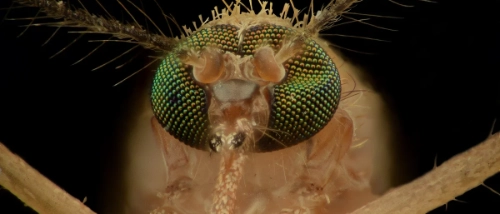
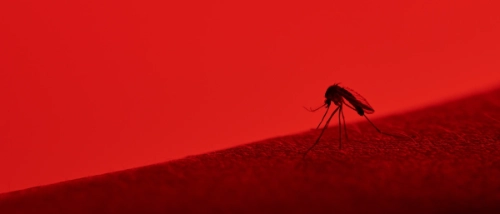
Once a mosquito has locked onto a CO2 source, its eyes take over. Research published in Nature Communications by scientists at the University of Washington found that after detecting CO2, Aedes aegypti mosquitoes become strongly attracted to specific colors, particularly red, orange, and cyan. Human skin, regardless of complexion, reflects light primarily in the red-orange range. In other words, your skin is essentially a visual target once a mosquito has detected your breath.
Stage 3: Heat (less than four feet away)
At close range, mosquitoes switch to thermal sensing. They detect the warmth radiating from your skin and use it to guide their final approach. Body heat, combined with moisture and skin chemistry, helps them confirm you're a viable host before landing. At this point, vision has done its job.