Temps and termites are on the rise. Schedule your free inspection today.

800-937-8398 Call us for a free quote Contact us

Mice facts and information

Mice are small, but left unchecked, they can cause real damage to your home or business.

Mice are small rodents that can cause big problems in your home or business. From gnawed wires to contaminated food, a mouse problem can escalate fast. Here's everything you need to know about mice, from how to spot them to what to do when you find one.

Quick facts about mice

  • Mice can squeeze through a gap no bigger than a dime.
  • A single female can produce up to 35 offspring per year.
  • Mice are nocturnal and most active after dark.
  • They can spread diseases like hantavirus and salmonella through droppings and urine.


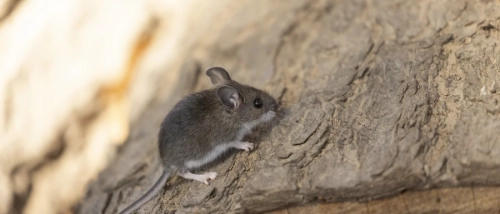
The harvest mouses on a branch

What are mice

Mice are among the most common rodents in the United States. They're fast breeders, resourceful foragers, and surprisingly agile, able to squeeze through a gap as small as a dime.

Mice are primarily nocturnal, which means you're more likely to hear them than see them. They tend to nest close to food sources and can set up a colony inside your walls, attic, or crawl space without you knowing for weeks. 

Mouse identification checklist

  • Size: 2.5 to 3.75 inches in body length, with a tail of similar length
  • Color: Light brown to grey, with a lighter underside
  • Body: Slender build, pointed snout, large rounded ears, and a long, thin, scaly tail
  • Droppings: Small, rod-shaped, roughly 1/4 inch long, with pointed ends

Different mouse species 

There are dozens of mouse species found across the U.S., but a handful are the ones most likely to show up in your home or business. Here's a quick look at the most common.

The most common home-invading species. House mice are grey-brown, small, and highly adaptable. They nest in wall voids, behind appliances, and in cluttered storage areas. They contaminate food and can carry pathogens in their droppings and urine.

Deer mice are found across much of the western U.S. and are recognizable by their two-toned coloring: brown on top, white underneath. They're a concern because they can carry hantavirus, a serious respiratory illness.

The western harvest mouse is one of the smallest rodents in the western U.S. It has brownish fur, a pale belly, and builds distinctive spherical grass nests in meadows and grasslands. Nocturnal and seed-loving, it rarely enters homes but may turn up in outbuildings.

The cactus mouse is a desert-adapted rodent found across the arid Southwest. It measures six to eight inches in total length and can survive without drinking water, getting moisture from seeds and cactus fruits. It prefers rocky desert terrain and rarely enters occupied buildings.

Seeing mice?

Call now to book your free inspection.

Key signs of mice

You often know you have a mouse problem before you ever see one. Here are the most common signs of mice to watch for:

  • Droppings: Small, dark, rod-shaped pellets near food sources, in drawers, or along baseboards
  • Gnaw marks: Fresh gnaw marks are lighter in color; older ones darken over time
  • Scratching sounds: Particularly at night, inside walls or ceilings
  • Nesting material: Shredded paper, fabric, or insulation tucked into hidden corners
  • Grease marks: Dark smudges along walls and baseboards where mice travel repeatedly
  • Urine odor: A strong, musky smell, especially in enclosed spaces

The CDC advises that it's easier to control rodents before they establish themselves, so acting on early signs is key.

Deer mouse on a tree

Preventing mice

Keeping mice out starts with removing what draws them in. Seal gaps around pipes, vents, and your foundation, since mice can squeeze through openings as small as one-quarter of an inch. Store food and pet food in airtight containers, reduce clutter, keep firewood away from the house, and use trash cans with tight-fitting lids.

Our rodent exclusion services help to seal your property against future entry using proven methods that store-bought fixes can't match.

Professional mouse control 

If you're dealing with an active infestation, professional help is the most reliable path forward. Mice reproduce quickly, with a single female capable of producing up to 35 offspring per year. 

At Western Exterminator, our technicians are trained to find where mice are nesting, how they're getting in, and what's drawing them to your property. We use targeted treatments and proven exclusion methods to help address the problem at its source, not just the symptoms.

Our mouse control services cover both residential and commercial properties. Book a free inspection today.


Frequently asked questions

House mice typically live for about one to two years in the wild, though they can live longer in protected indoor environments. Their short lifespan is offset by their rapid reproduction rate, which is why infestations can grow quickly.

The common house mouse measures between 2.5 and 3.75 inches in body length, with a tail of roughly the same length. They typically weigh less than an ounce, which is part of what makes them so good at slipping through tiny gaps.

Mice can enter through any gap or crack roughly the size of a dime. Common entry points include gaps around pipes and utility lines, cracks in the foundation, damaged door sweeps, and openings around vents or air conditioning units.

Yes, mice can pose health risks. According to the CDC, rodents can spread diseases including hantavirus, leptospirosis, and salmonella through their droppings, urine, and nesting materials. If you suspect a mouse problem, avoid handling droppings directly and contact a pest professional.

The most effective way to address a mouse infestation is to work with a pest control professional. Our technicians will inspect your property, identify entry points, and put a targeted treatment plan in place.

Find your local branch

Enjoy protection from pests all year long with PestFree365+. See how our home pest control plan can help protect you and your family from 39 common pests.