Temps and termites are on the rise. Schedule your free inspection today.

800-937-8398 Call us for a free quote Contact us

Rat facts and information

Rats are one of the most common and destructive pests in the U.S.

Rats are one of the most adaptable pests on the planet, and they've been living alongside humans for thousands of years. They're resourceful, fast-breeding, and capable of causing serious damage to your home or business. 

Quick facts about rats

  • A single pair of rats can produce dozens of offspring within months.
  • Rats are linked to the spread of more than 35 diseases to humans.
  • Their teeth never stop growing, so they gnaw constantly on whatever is nearby.
  • Rats are most active at night, which is why infestations often go unnoticed early on.


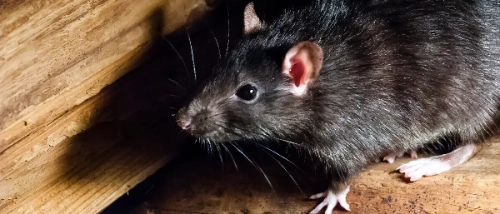
Black rat around wood

What are rats? 

Rats are medium-to-large rodents belonging to the genus Rattus. They're warm-blooded, highly social, and driven by three basic needs: food, water, and shelter. 

Rats gnaw constantly to keep their teeth in check, which means wiring, insulation, pipes, and structural materials are all fair game. A rat's incisors are strong enough to chew through soft metals, wood, and plastic. Left unchecked, a small rat problem can quickly become a costly one.

Rats are also prolific breeders. A single female can produce up to five litters per year, with six to 12 pups per litter. That means a pair of rats can become dozens within a few months.

Rat identification checklist

  • Size: 7–9.5 inches, not including the tail
  • Color: Brown-gray to dark brown, depending on species
  • Body: Stocky or slender build, pointed snout, rounded ears, long scaly tail
Different rat species 

Two rat species are most commonly found in the Western U.S.: the Norway rat and the roof rat. While they share the same basic profile, their habits and preferred habitats are quite different.

Also called the brown rat or sewer rat, the Norway rat is the larger of the two. It's stocky, with coarse brown-gray fur, a blunt nose, small ears, and a tail that's shorter than its body. Norway rats are ground-dwellers.

You're most likely to find them in basements, crawl spaces, and lower levels of buildings.

Roof rats are sleeker and more agile than Norway rats. They have smooth dark brown to black fur, a pointed nose, large ears, and a tail that's longer than their body. Roof rats are a particularly common problem in coastal areas.

They prefer elevated spaces: attics, eaves, tree canopies, and overhead utility lines. If you're hearing scratching in the ceiling at night, a roof rat is often the culprit.

Seeing rats?

Call now to book your free inspection.

Key signs of rats

Early detection makes a real difference. Here's what to look for:

  • Droppings: Dark and moist when fresh; dry and gray when older
  • Gnaw marks: Fresh marks are lighter in color; older ones darken over time. Look for damage on wiring, wood, and food packaging
  • Rub marks: Greasy, dark smudges along walls and baseboards where rats travel repeatedly
  • Burrows: Holes roughly two to three inches wide near foundations, under debris, or in landscaping
  • Sounds: Scratching, scurrying, or squeaking, especially at night
  • Nests: Shredded paper, fabric, or plant material tucked into hidden spaces
  • Odor: A musky smell in enclosed areas like attics or crawl spaces

If you're seeing signs of rats in more than one area of your property, it's a strong indicator that activity is already well established.

Can rats make you ill?

Yes, rats can make you ill, and this is one of the most important reasons to act quickly. According to the CDC, rats are associated with the transmission of more than 35 diseases to humans. These include leptospirosis, rat-bite fever, salmonellosis, and in parts of the Western U.S., plague, which is spread by fleas carried on rats.

Disease can spread through direct contact with a rat, or indirectly through their droppings, urine, saliva, and the parasites they carry. Contaminated food surfaces and water sources are also common transmission routes. For businesses in food service, healthcare, or hospitality, a rat infestation can mean health code violations and serious reputational damage on top of the health risks.

Deer mouse on a tree

Preventing rats

Prevention is always easier than dealing with an active infestation.

Start by removing what attracts rats in the first place: store food and pet food in airtight containers, secure garbage in bins with tight-fitting lids, and clear yard debris, woodpiles, and clutter where rats can nest. Trim vegetation back from your building, fix leaky pipes, and seal any gaps around pipes, vents, and utility lines.

For more robust, long-term protection, our rodent exclusion services use professional-grade materials to seal entry points and help keep rats out for good.

Professional rat control 

Western Exterminator’s approach to rat control is thorough and tailored to your property, starting with a thorough inspection to identify the species, locate entry points, assess the extent of activity, and pinpoint what's drawing rats to your property

We then build a targeted plan using trapping, baiting, monitoring, and exclusion methods. Click the button below to arrange a free inspection.


Frequently asked questions

Most rats live between one and two years in the wild. In that time, they can reproduce rapidly, which is why a small problem can escalate quickly. Early action is always the best approach.

Norway rats typically measure 7-9.5 inches in body length, while roof rats are slightly smaller at 6-8 inches. Both species have long tails that add several more inches to their total length.

Rats can squeeze through surprisingly small gaps. A Norway rat only needs an opening the size of a quarter to get in. Common entry points include cracks in foundations, gaps around pipes and utility lines, damaged vents, and spaces under doors. Roof rats often enter through rooflines, soffits, and gaps where utility lines meet the building.

Getting rid of rats means more than setting a trap. Effective control combines inspection, targeted trapping and baiting, and sealing entry points so rats can't return. DIY methods rarely solve the problem for long. Our professional rat control services start with a free inspection and a plan built around your property.

Find your local branch

Enjoy protection from pests all year long with PestFree365+. See how our home pest control plan can help protect you and your family from 39 common pests.