Temps and termites are on the rise. Schedule your free inspection today.

800-937-8398 Call us for a free quote Contact us

Deer mouse

Learn about deer mice - habitat, diet, life cycle, and dangers

The deer mouse is one of North America's most widespread rodents, but it's also one that needs to be taken seriously. These small mammals can pose significant health risks when they enter human spaces. Learn more about the species in this quick guide to deer mice.

Quick facts about deer mice

  • Deer mice are the primary carriers of hantavirus in the US.
  • They are primarily outdoor animals that occasionally enter buildings.
  • Deer mice are found throughout North America.
  • They measure five to eight inches in total length.


A deer mouse climbing on the bark of a log

Deer mouse identification

Deer mice (Peromyscus maniculatus) are small rodents that people often mistake for the common house mouse. 

They typically measure five to eight inches in total length, with their tail accounting for nearly half of that measurement. Their most notable feature is their bi-colored tail, dark on top and white underneath. Their fur is soft and dense, with a reddish-brown or grayish-brown color on their back and sides. Young deer mice look similar to adults but tend to be slightly grayer in color.

Seeing mice?

Call now to book your free inspection.

Habitat, diet, life cycle, and behaviors

Proper deer mouse identification starts with understanding their habitat, diet, and lifespan. Read on to learn where they live, what they eat, and many more deer mouse facts.

Deer mice are incredibly adaptable and can thrive in almost any habitat across North America. They're found in grasslands, brushy areas, woodlands, forests, and even alpine environments. 

In natural settings, deer mice build nests in hollow trees, logs, stumps, abandoned burrows, and under rocks or debris. They line their nests with shredded plant material, feathers, and fur to create warm, insulated spaces. During colder months, they may move into buildings in search of warmth and food.

Deer mice are omnivores with a varied diet that changes with the seasons and available food sources. In spring and summer, they primarily eat seeds, nuts, berries, and insects. They're particularly fond of acorns, pine seeds, and the seeds of grasses and weeds. Insects like beetles, caterpillars, and grasshoppers provide essential protein, especially during the breeding season.

When deer mice enter buildings, their diet expands to include human food and pet food. They'll readily consume grains, cereals, crackers, bread, chocolate, and nearly any other accessible food.

In the wild, deer mice typically live for anywhere between two and 14 months, though some individuals may survive up to two years under favorable conditions. 

Their relatively short lifespan is often due to predation from owls, hawks, snakes, foxes, and other animals. However, deer mice that find their way into sheltered, protective environments like homes, barns, or storage buildings may live considerably longer, sometimes reaching five to eight years. 

Their life cycle is built for speed, with pups growing from helpless newborns to independent juveniles in just three weeks. They hit reproductive age incredibly fast, reaching sexual maturity and starting to breed at only five to six weeks old. 

Interested in learning more? Check out our page: How long do mice live?
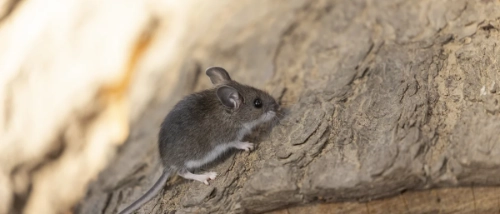
Deer mice are nocturnal and most active after dark. They're excellent climbers and can scale rough vertical surfaces with ease. They're also strong jumpers, capable of leaping up to a foot high. These abilities allow them to access buildings through small openings in rooflines, vents, gaps around pipes, and cracks in foundations.

Deer mice often follow the same paths repeatedly, creating small trails along walls and baseboards. They have strong, continuously growing teeth, so they gnaw constantly to keep them trimmed, which can damage electrical wiring, insulation, and structural materials.

What are the dangers of deer mice?

Deer mice can pose a serious health risk: They're the primary carrier of hantavirus in North America, a potentially fatal respiratory disease that humans can contract by breathing in dust contaminated with deer mouse droppings, urine, or saliva. Deer mice can also carry other diseases, including plague and Lyme disease (through the ticks they may transport). Their droppings and urine can also trigger allergies and asthma, particularly in children and sensitive individuals. 

Beyond this, a deer mouse infestation can cause property damage: These mice love to gnaw on electrical wiring, insulation, and structural materials, potentially creating fire hazards.

Recognizing the signs of deer mouse activity

Detecting deer mice early can help prevent a serious infestation. Look for these telltale signs:

  • Droppings are usually the first indicator
  • Gnaw marks may appear on food packaging, baseboards, wires, and other materials
  • Nesting materials like shredded paper, fabric, insulation, or plant matter can indicate an active nest nearby
  • Scratching or scurrying sounds in walls, ceilings, or attics, especially at night
  • A distinctive musky odor.

The differences between deer mice and other mice

Distinguishing deer mice from house mice and other species of mice is important for proper identification:

House mice

House mice are uniformly gray or brown without the sharp color contrast between their back and belly. Their tails are nearly hairless and uniform in color, not bi-colored like deer mice.

White-footed mice

Often confused with deer mice, white-footed mice have tails shorter than their head and body combined, while deer mice have tails equal to or longer than their head and body.

Harvest mice

Harvest mice are much smaller than deer mice, with grooved front teeth and semi-prehensile tails. They're typically found in grassy or marshy areas rather than woodlands.

Voles

Voles have stockier bodies, shorter tails, smaller eyes and ears, and prefer to stay in grassy areas or underground. They're rarely found inside buildings.

Tips for deer mouse prevention

Keeping house mice out is much simpler than trying to remove them once they’ve settled in. A few preventative habits can make a big difference:

  • Close off access points by checking the outside of your property for gaps or cracks larger than about 1/4 inch and sealing them up
  • Cut off their food supply by storing food in sturdy, airtight containers, cleaning up crumbs and spills quickly, and keeping bins tightly closed
  • Limit hiding spots by clearing clutter in areas like basements and attics, and using plastic storage bins instead of cardboard
  • Address damp conditions by repairing leaks, improving drainage, and using ventilation or dehumidifiers where needed
  • Stay on top of cleaning by regularly wiping down surfaces, vacuuming, and not leaving dishes or food out overnight
  • Hire a professional pest exterminator. Given the serious health risks associated with deer mice, professional intervention is the best approach. Whether you need residential pest management for your home or commercial pest management for your business, our technicians can help.

Frequently asked questions

Yes, deer mice can be challenging to eliminate due to their small size, climbing ability, and adaptability. They can squeeze through openings as small as 1/4 inch and access buildings through multiple entry points.

Professional pest control is often the most effective approach, as technicians can identify hidden entry points and nesting areas, and implement comprehensive exclusion strategies.

Deer mice can survive approximately two to four days without food, though this varies based on environmental conditions and the individual mouse's health. 

However, they rarely go without food for long periods, as they're opportunistic feeders and actively search for seeds, insects, and stored food.

Deer mice don't typically dig their own burrows but readily use abandoned burrows created by other animals, such as chipmunks, voles, or ground squirrels. They prefer to nest above ground in hollow trees, logs, stumps, rock crevices, or under debris.

Deer mice have one of the widest distributions of any North American mammal. They're found throughout the continental United States, Canada, Alaska, and into Mexico, thriving from sea level to elevations above 12,000 feet.

Find your local branch

Enjoy pest-free living all year long with PestFree365+. See how our home pest control plan protects you and your family from 39 common pests.