Temps and termites are on the rise. Schedule your free inspection today.

800-937-8398 Call us for a free quote Contact us

House mouse

Learn about house mice - habitat, diet, life cycle, and dangers

The house mouse is the most common rodent pest in homes and businesses worldwide. These adaptable mammals have lived alongside humans for thousands of years, thriving in urban, suburban, and rural environments. Learn more about them in this quick guide to house mice.

Quick facts about house mice

  • Small rodents measuring six to seven inches in total length, including tail
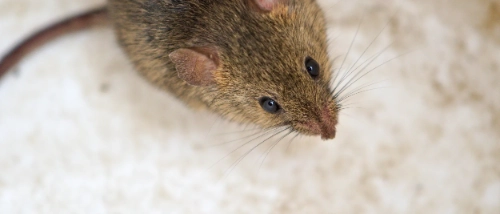
  • Uniformly gray or brown fur with lighter undersides
  • Found worldwide, particularly in human-occupied buildings
  • Highly adaptable and breed year-round in indoor environments
  • Can squeeze through openings as small as 1/4 inch.


A house mouse

What are house mice?

The house mouse (Mus musculus) is a small rodent that has become one of the most successful mammal species on Earth due to its close association with humans. 

These pests typically measure six to seven inches in total length, including their tail, which accounts for about half of their body length.

House mice are highly adaptable and can thrive in almost any environment where food and shelter are available, making them particularly problematic in residential and commercial settings.

Seeing mice?

Call now to book your free inspection.

Habitat, diet, life cycle, and behaviors

Learn more about the house mouse by understanding where they live, what they eat, and how they behave.

House mice are commensal rodents, meaning they prefer to live in close association with humans. These pests thrive indoors and are found in homes, apartments, offices, warehouses, restaurants, and virtually any building that provides food, water, and shelter.

While house mice can survive outdoors in warmer climates, they prefer the stable temperatures and abundant food sources found inside buildings.

House mice are omnivores but prefer grains, seeds, and cereals. They'll eat almost anything available, including bread, crackers, pasta, pet food, chocolate, butter, and even soap or glue when other food is scarce. 

These mice are nibblers, taking small bites from multiple food sources rather than consuming large amounts at once. They require very little water and can obtain most of their moisture from the food they eat. However, they'll drink water when it's available.

Indoors, where they're protected from predators and harsh weather, they can live up to two years.

Female house mice reach sexual maturity at just five to six weeks old and can produce five to 10 litters per year, with each litter containing five to six young. This means a single female can produce 30 to 60 offspring annually.

House mice are primarily nocturnal but may be active during the day in heavily infested areas. They're curious and excellent explorers, investigating new objects and changes in their environment. However, they're also cautious and prefer to travel along walls and edges rather than open spaces.

House mice are also excellent climbers and can scale rough vertical surfaces, jump up to 12 inches high, and squeeze through openings as small as 1/4 inch. 

They have poor eyesight but compensate with excellent senses of hearing, smell, taste, and touch. House mice use their whiskers to detect air movements and navigate in darkness. They follow the same routes repeatedly, creating visible runways marked by grease and dirt from their fur.

What are the dangers of house mice?

House mice can carry and transmit diseases, including salmonellosis, leptospirosis, and lymphocytic choriomeningitis (LCMV). They spread disease through their droppings, urine, saliva, and through parasites like fleas, mites, and ticks.

House mice can also contaminate food and food preparation surfaces with their droppings and urine. A single mouse can produce 50 to 75 droppings per day, creating serious sanitation concerns, especially in food service establishments.

Beyond health risks, house mice cause significant property damage. Their constant gnawing can damage electrical wiring, posing a fire hazard. They also tend to gnaw through insulation, drywall, wood, plastic pipes, and stored items.
Recognizing the signs of house mouse activity

Detecting house mice early can help prevent a serious infestation. Look for these telltale signs of mice in your property:

  • Droppings (the most common indicator): small and rod-shaped, with pointed ends
  • Gnaw marks on food packaging, baseboards, wires, and other materials
  • Nesting materials like shredded paper, fabric, or insulation in hidden areas
  • Scratching or scurrying sounds in walls, ceilings, or cabinets, especially at night
  • A distinctive musky odor in areas with heavy activity
  • Grease marks or rub marks along walls and baseboards where mice travel repeatedly
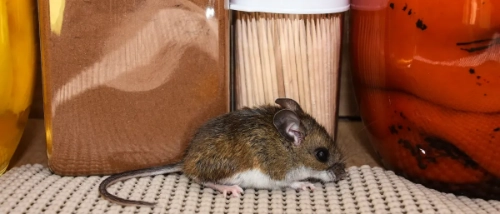
A house mouse in a kitchen pantry

Where are house mice found?

House mice are found worldwide and are the most widely distributed rodent species. They're present on every continent except Antarctica and thrive in urban, suburban, and rural environments.

The differences between house mice and other mice

Distinguishing house mice from deer mice and other species is important for proper identification.

Deer mice

Deer mice have bi-colored tails (dark on top, white underneath) and sharp color contrast between their reddish-brown backs and bright white undersides. 

House mice, on the other hand, are uniformly gray or brown with no distinct color separation.

White-footed mice

White-footed mice prefer wooded areas and are less likely to infest buildings than house mice. Their tails are also shorter than their head and bodies combined.

Harvest mice

Harvest mice are much smaller than house mice, typically measuring only two to three inches in body length. They have grooved front teeth and semi-prehensile tails. 

They're found in grassy or marshy outdoor areas, not usually in buildings.

Voles

Voles have stockier bodies, much shorter tails (less than twice the length of their hind foot), smaller eyes and ears, and dense fur. 

They also prefer outdoor grassy areas and rarely enter buildings.

 Tips for mouse prevention

Preventing house mice from entering your property is easier than dealing with an infestation. Here are practical steps you can take:

  • Seal potential entry points. Inspect your building's exterior and seal any gaps or cracks larger than 1/4 inch. 
  • Eliminate food sources. Store all food in airtight metal or thick plastic containers. Don't leave pet food out overnight, clean up spills and crumbs promptly, and keep garbage in sealed containers with tight-fitting lids
  • Remove shelter. Reduce clutter in basements, attics, and storage areas. Keep stored items in sealed plastic bins rather than cardboard boxes. Maintain a clean, organized environment that provides fewer hiding spots
  • Reduce moisture. Fix leaky pipes, faucets, and drainage issues. Use dehumidifiers in damp basements or crawl spaces. Proper ventilation can help make your property less attractive to rodents
  • Practice good sanitation. Clean regularly, especially in kitchens and food storage areas. Vacuum frequently to remove crumbs and food debris. Wash dishes promptly and don't leave food out overnight
  • Call in a professional pest exterminator. Because deer mice can pose real health risks, expert support is the best option. Whether you need domestic pest solutions for your home or commercial pest solutions for your business, trained technicians can help

Frequently asked questions

House mice are small, slender rodents with a pointed snout and large, rounded ears that help them pick up tiny sounds. They typically grow to about 2.5 to 3.75 inches long, plus a tail of similar length that is scaly and mostly hairless. 

Their fur is usually a uniform dusty gray or light brown on their back, with a slightly lighter belly.

House mice need food, water, and shelter, but require very little of each. They need only three to four grams of food per day and can obtain most of their water from food. They prefer warm, protected nesting sites with soft materials like paper or fabric, which is why even clean homes can experience infestations.

House mice multiply extremely rapidly. A single female can produce five to 10 litters per year with five to six young per litter.

No, house mice will not leave on their own. Once they've found food, water, and shelter on your property, they'll stay, and their population will grow rapidly. Professional intervention is necessary to eliminate an infestation and prevent future problems.

Find your local branch

Find out more about Western Exterminator and our services.