Temps and termites are on the rise. Schedule your free inspection today.

800-937-8398 Call us for a free quote Contact us

The life cycle of mosquitoes

Follow the mosquito life cycle from egg to adult

Quick facts about the mosquito life cycle

  • Mosquitoes have four life stages; three occur in water
  • Egg to adult can take as little as four days
  • Tiny amounts of standing water are enough for breeding
  • Male mosquitoes live for a few days; females for a few weeks

The four stages of the mosquito life cycle 

Mosquitoes go through four distinct stages, and three of them happen in water. That means a birdbath, a clogged gutter, or even a bottle cap holding rainwater can be enough to keep a population going. This guide walks you through each stage, what it means for your property, and where professional mosquito treatment can make the biggest difference. 

The full cycle from egg to adult can take as little as four days in warm, humid conditions, or up to a month in cooler weather. According to the EPA, the typical cycle takes around two weeks. That rapid turnaround is exactly why a small standing water source can produce a large mosquito problem so quickly.

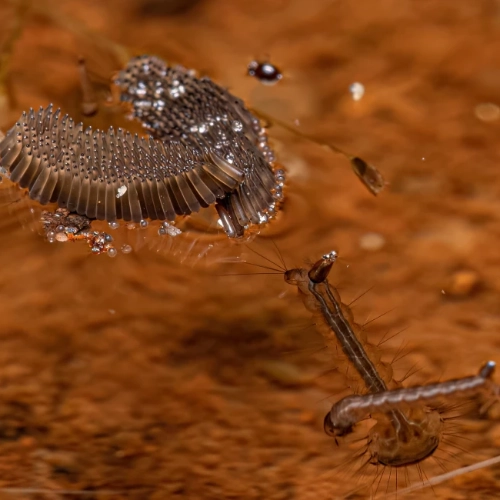
A raft of mosquito eggs floating on still water.

Stage 1: Mosquito eggs 

Female mosquitoes lay eggs directly onto or near water. Depending on the species, eggs are laid individually along the water's edge or in floating clusters called rafts. A single female can lay between 30 and 300 eggs at a time.

Mosquito eggs are tiny, dark, and barely visible to the naked eye. Some species produce drought-resistant eggs that can survive dry conditions for months, waiting for water to trigger hatching. This is why you can see sudden spikes in mosquito activity after heavy rain, even in areas that seemed dry.

Most eggs hatch within 24 to 48 hours once submerged in water. But some mosquito eggs lay dormant during winter, and then hatch when conditions are right.

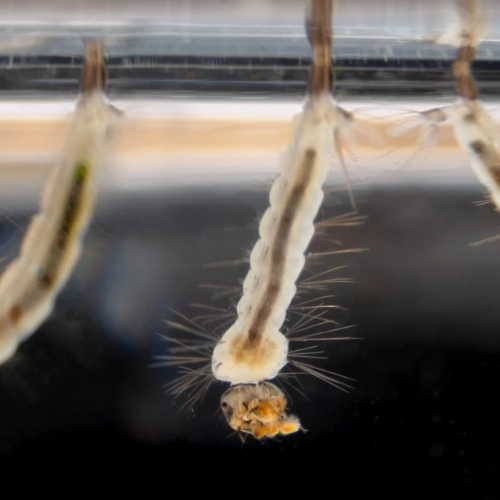
A close-up of mosquito larvae in water.

Stage 2: Mosquito larvae 

Once hatched, mosquito larvae live entirely in water. You may have seen them before: they are the small, wriggling creatures near the surface of a still pond or neglected container. They breathe through a siphon tube at the water's surface, which is why they hang head-down just below the waterline.

Larvae feed on microorganisms, algae, and organic debris. They go through four growth phases, called instars, before moving to the next stage. 

This larval phase typically lasts 4-14 days, depending on temperature and food availability.

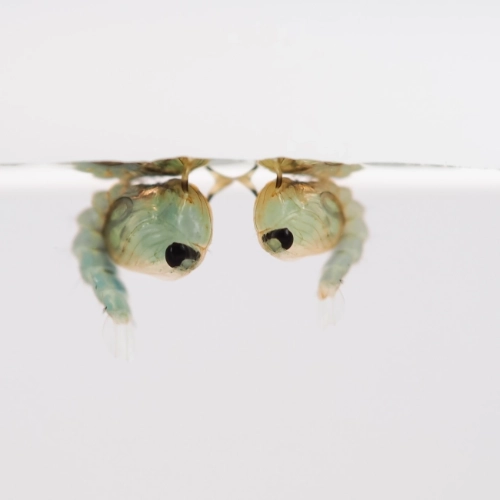
Two comma-shaped mosquito pupae in water.

Stage 3: Mosquito pupae 

The pupal stage is a transformation period. Pupae, sometimes called "tumblers" because of the way they roll through the water, do not feed. They are comma-shaped and breathe through small tubes at the water's surface.

This stage lasts one to four days. The mosquito's body reorganizes completely during this time, developing wings, legs, and reproductive organs. Pupae are sensitive to light and movement, diving deeper when disturbed.

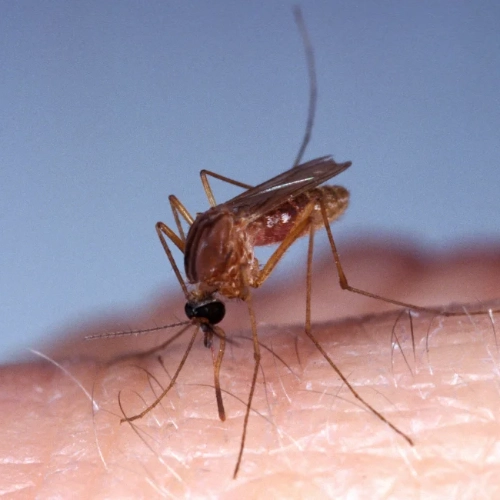
Adult female mosquito feeding

Stage 4: Adult mosquitoes  

Once the adult mosquito emerges from the pupal case, it rests on the water's surface while its wings dry and harden. Within hours, it is ready to fly and mate.

Only female mosquitoes bite; they need the protein in blood to develop eggs. They locate hosts by detecting carbon dioxide, body heat, and chemical compounds we exhale. After feeding, a female seeks out standing water to lay her next batch of eggs, and the cycle begins again.

Most mosquito species have a flight range of 1-10 miles, though some can travel further. That means mosquitoes breeding in a neighbor's yard or a nearby drainage ditch can easily reach your property.
Struggling with mosquitoes?

Call now to book your free inspection.

How long do mosquitoes live? 

The average mosquito lifespan varies by species and conditions, but in general male mosquitoes live only around six to seven days. They feed only on plant nectar and do not bite. Female mosquitoes, meanwhile, live up to six weeks on average, and longer under ideal conditions.

Where mosquitoes breed around your home 

Mosquitoes do not need much water to breed. Some of the most common breeding sites are easy to overlook:

  • Birdbaths and pet water bowls left unchanged
  • Clogged gutters holding stagnant water
  • Flower pot saucers and plant trays
  • Corrugated downspout extensions
  • Tire swings and outdoor equipment that collects rainwater
  • Tree holes and hollow stumps
  • Poorly maintained water features or ornamental ponds

Removing or emptying these sources regularly is one of the most effective things you can do between professional treatments. That said, it is nearly impossible to eliminate every potential breeding site on your own, especially when mosquitoes can travel from neighboring properties.

A mosquito feeling on a human

Why the life cycle matters for mosquito control 

Knowing how mosquitoes develop helps explain why some control methods work better than others. Targeting only adult mosquitoes gives you short-term relief, but it does not stop the next generation from hatching. Effective mosquito control needs to address both larvae in the water and adults resting in vegetation.

Our technicians apply EPA-registered treatments to the areas where mosquitoes rest and breed, including perimeter vegetation, ground cover, shaded areas, and standing water sources. This approach disrupts the cycle at multiple points, helping to reduce populations more consistently over time.

Ready to break the cycle? 

Western Exterminator has been helping homeowners and businesses across the West Coast manage mosquito problems since 1921. Our technicians will inspect your property, identify breeding sites, and put together a treatment plan built around your yard and your season. Book a free inspection today.

Frequently asked questions

Most mosquito eggs hatch within 24 to 48 hours when exposed to water. Some species produce drought-resistant eggs that can remain dormant for months and hatch when conditions improve. Water temperature and species type both affect how quickly eggs develop.

Mosquito eggs are tiny, dark, and oval-shaped, roughly 1mm in length. Depending on the species, they are laid individually along the water's edge or in floating clusters called egg rafts. They are difficult to spot without close inspection.

Very fast. A female mosquito can lay 30 to 300 eggs per blood meal, and the full cycle from egg to adult can take as little as four days in warm conditions. That rapid reproduction rate is why a single standing water source can produce a significant mosquito problem in a short period of time.

Yes. Mosquito activity varies by region and season. Coastal areas with mild, wet winters can see earlier activity in the year, while hot inland zones often experience peak populations from late spring through early fall. Western Exterminator's technicians understand local mosquito pressures and can recommend the right timing and treatment approach for your area.

Find your local branch

Enjoy protection from 39 of the most common household pests with our annual residential pest control program, PestFree365+.