Temps and termites are on the rise. Schedule your free inspection today.

800-937-8398 Call us for a free quote Contact us

The difference between male and female mosquitoes

Learn the key differences, from biting and feeding behavior to physical appearance

Summary: male vs. female mosquitoes

  • Only female mosquitoes bite; they need protein to develop their eggs
  • Male mosquitoes do not transmit diseases
  • Females live longer and can reproduce repeatedly
  • Male mosquitoes have bushy antennae and are generally smaller


Physical differences between male and female mosquitoes 

You step outside on a warm evening and, within minutes, you're swatting at mosquitoes. But here's something most people don't realize: not every mosquito in that swarm is out to bite you. Whether it’s a male or female buzzing around you makes a big difference.

At first glance, male and female mosquitoes look alike. Look closer, though, and the differences stand out.

Size and body shape

Female mosquitoes are generally larger than males. Their bodies are built to carry and develop eggs, which requires more resources. Males tend to be smaller and more slender.

Antennae

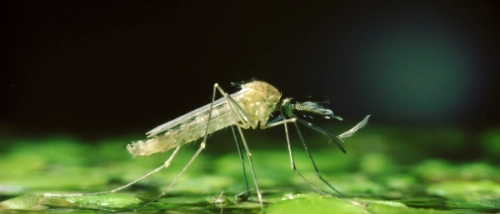
This is the easiest way to tell them apart. Male mosquitoes have bushy, feathery antennae that look almost fluffy. These help them detect the wing-beat frequency of females during mating. Female antennae are much thinner and less hairy.

Mouthparts

Female mosquitoes have a sharp, needle-like proboscis designed to pierce skin and draw blood. Males have mouthparts built only for feeding on nectar and plant juices. They simply don't have the anatomy to bite.

Struggling with mosquitoes?

Call now to book your free inspection.

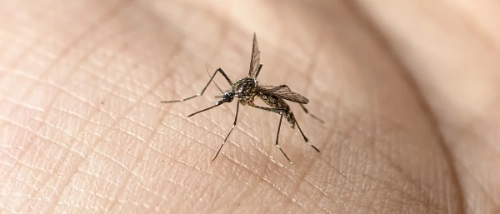
A mosquito feeling on a human

Do male mosquitoes bite?

No, male mosquitoes do not bite. They feed entirely on nectar, plant sap, and other sugary plant fluids. They have no need for blood and no physical ability to draw it. So if you're getting bitten, it's always a female doing the biting.

When you see a large swarm, many of those mosquitoes may be males, particularly during mating season. Males often gather in swarms to attract females. The females fly into the swarm, mate, and then go off in search of a blood meal.

A mosquito feeling on a human

Why do only female mosquitoes bite

It comes down to reproduction. Female mosquitoes need the proteins and iron found in blood to develop their eggs. Without a blood meal, they can't produce viable eggs. This biological need is what drives their biting behavior.

After feeding, a female mosquito will rest for a few days while her eggs develop. She can then lay anywhere from 30 to 300 eggs at a time, depending on the species. Once she's laid her eggs, she'll seek another blood meal to start the cycle again.

This is also why signs of mosquitoes around your yard, like standing water and increased biting activity at dusk, are worth taking seriously. Where there are biting females, there are eggs, and where there are eggs, there's a growing population.
Can male mosquitoes spread disease? 

No. Because male mosquitoes don't bite, they have no way to transmit disease. Mosquito-borne illnesses are passed through the saliva of a biting female. When a female feeds on an infected host, she can pick up a pathogen. When she bites again, she can pass it on.

If you're concerned about mosquito activity around your home or business, our mosquito control services can help you assess the risk and take action.

The mosquito lifecycle: how males and females fit in

Understanding the lifecycle helps explain why controlling mosquito populations requires targeting both sexes, even though only females bite.

Both male and female mosquitoes start life as eggs. Females lay their eggs in or near standing water, from birdbaths and clogged gutters to puddles and ponds. Eggs can hatch in as little as 24 to 48 hours under warm conditions. 

Larvae develop in water, feeding on microorganisms near the surface. After several molts, they become pupae. The entire larval and pupal stage can take as little as one week in warm weather. 

Adult mosquitoes emerge from the water. Males typically live for about a week, focusing almost entirely on mating. Females can live for several weeks to a couple of months, during which time they seek blood meals and lay multiple batches of eggs. 

Males form swarms, often near vegetation or open spaces, to attract females. After mating, females go off to find a host. This is when the biting begins. Disrupting the breeding cycle, particularly by eliminating standing water, is one of the most effective ways to reduce mosquito populations around your property. 

How Western Exterminator can help

Mosquitoes are more than a nuisance. With the right treatment plan, you can help protect your family and pets from biting females and the health risks they can carry. Call Western Exterminator at 800-937-8398 or contact us online to schedule your free inspection today.

Frequently asked questions

No. Only female mosquitoes bite. Males feed exclusively on nectar and plant juices and do not have the mouthparts needed to pierce skin. So while both sexes may be present in your yard, only the females are responsible for biting. 

The easiest way is to look at the antennae. Male mosquitoes have bushy, feathery antennae, while females have thinner, less hairy ones. Males are also generally smaller than females. In practice, it's difficult to tell them apart without a close look, which is why professional identification and treatment is the most reliable approach. 

Female mosquitoes bite to obtain blood, which they need to develop their eggs. During feeding, they can transmit pathogens from one host to another. This is how diseases like West Nile virus, Zika, and dengue are spread. Male mosquitoes pose no direct health risk to humans.

Professional mosquito treatments target both sexes at all life stages, including larvae in water and adult mosquitoes resting in vegetation. While treatments aren't sex-specific, reducing the overall population significantly lowers the number of biting females around your property. Our technicians can recommend the right approach for your situation.

Find your local branch

Enjoy protection from 39 of the most common household pests with our annual residential pest control program, PestFree365+.