Temps and termites are on the rise. Schedule your free inspection today.

800-937-8398 Call us for a free quote Contact us

How big can mosquitoes get?

Learn how big mosquitoes get, from common U.S. species to the world's largest, and why smaller mosquitoes can be more dangerous

Quick facts about mosquito size

  • Most mosquitoes in the U.S. are between 0.15 and 0.4 inches long
  • Females are typically 10–20% larger than males
  • The world's largest mosquito can grow up to 1.5 inches but doesn't bite; it feeds on nectar
  • Smaller species are often more dangerous, spreading dengue, Zika, and West Nile
  • They grow while they are larvae, and nutrient-rich water can produce bigger mosquitoes

Most people swat at mosquitoes without giving much thought to their size. But mosquito size actually varies more than you'd expect, and can help identify the species you're dealing with and the risks they carry. Whether you're spotting something unusually large in your yard or just curious about what's biting you, here's a practical breakdown of how big mosquitoes get, from egg to adult.

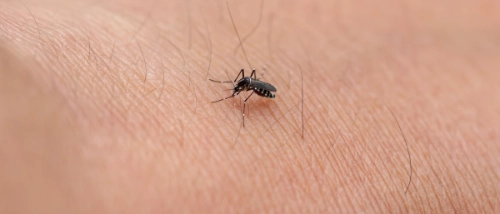
A mosquito feeling on a human

What is the typical size of a mosquito? 

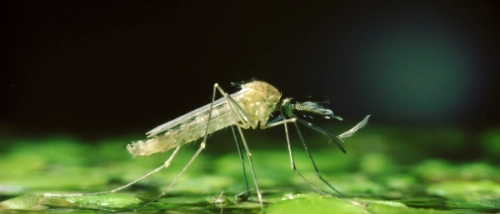
Adult mosquitoes are small insects, but their size depends on the species and the conditions in which their larvae developed. Most adult mosquitoes you'll encounter in the U.S. fall somewhere between 0.15 and 0.4 inches long. That's roughly the width of a pencil eraser on the smaller end.

A few of the most common species and their approximate sizes:

  • Southern house mosquito (Culex quinquefasciatus): around 0.17 inches.
  • Anopheles mosquito (Anopheles spp.): around 0.2 inches.
  • Northern house mosquito (Culex pipiens): 0.12 to 0.27 inches.
  • Yellow fever mosquito (Aedes aegypti): 0.16 to 0.27 inches.
  • Asian tiger mosquito (Aedes albopictus): 0.08 to 0.39 inches.

Female mosquitoes are typically 10% to 20% larger than males. This is because females need the extra capacity to store blood, which they use to develop their eggs. If you're being bitten, it's always a female.

How big are mosquito larvae? 

Mosquitoes go through four life stages: egg, larva, pupa, and adult. Of these, only the larval stage involves actual growth. Larvae start out at around one-eighth of an inch long and can reach up to half an inch by the time they're ready to pupate. They do this by molting through four developmental stages, called instars.

Larvae live in standing water, which is why sources like clogged gutters, birdbaths, and low-lying puddles are such common breeding grounds. Knowing this is key to understanding signs of mosquito activity around your property.

Adults and pupae don't grow after they form, so the size of an adult mosquito is largely set during the larval stage. Larvae live in standing water (including clogged gutters, puddles, plant pots, etc.).  Those that develop in nutrient-rich water tend to produce larger adults.
Struggling with mosquitoes?

Call now to book your free inspection.

The biggest mosquitoes in the world 

Not all mosquitoes are the same size. Some species are significantly larger than the ones you typically encounter in your backyard.

Gallinipper

The gallinipper is one of the largest biting mosquitoes in North America, growing up to an inch long. That's roughly the diameter of a quarter. It's found across the eastern and central US. Gallinippers are aggressive biters, and their bites are noticeably more painful than those of smaller species. They tend to be most active after heavy rainfall or flooding.

Australian elephant mosquito

The largest mosquito in the world is the Australian elephant mosquito, which can reach about 1.5 inches in length. Despite its size, it doesn't bite. Adult elephant mosquitoes feed on plant nectar, not blood. Their larvae are predatory, feeding on the larvae of other mosquito species, which makes them a natural check on certain mosquito populations.

Psorophora species in the US

Mosquitoes in the Psorophora genus are among the largest found in the U.S. They're floodwater mosquitoes, meaning populations can surge quickly after heavy rain. If you live in a region prone to flooding, these are the species most likely to catch you off guard with their size.

Does size affect how dangerous a mosquito is? 

Size is not a reliable indicator of risk. Some of the smallest mosquito species are among the most medically significant. The Aedes aegypti mosquito, for example, is a relatively small species but is a known vector of dengue fever, Zika virus, and yellow fever. The Asian tiger mosquito (Aedes albopictus) is similarly small but aggressive and capable of transmitting several diseases.

What matters more is identifying the species, its feeding behavior, and where it's been. Our mosquito control services are designed to target the species most active in your area, not just the ones you can see.

Does mosquito size change after a blood meal? 

When a female mosquito feeds, her abdomen expands noticeably as it fills with blood. This can make her look significantly larger than usual. Once she digests the blood meal, her abdomen returns to its normal size. So if you've spotted what looks like an unusually large mosquito, it may simply be a recently fed female, and the increase in size is only temporary.

A mosquito feeling on a human

Why mosquito size matters for pest control  

Understanding mosquito size and life stage is more than just trivia. Size helps to identify the species and associated risks, which has real implications for mosquito control.

Larger species like the gallinipper are floodwater mosquitoes that can travel significant distances from their breeding sites. Smaller species like Aedes mosquitoes tend to breed in very small amounts of standing water, sometimes just a bottle cap's worth. Targeting both adults and larvae requires a treatment approach that accounts for these differences.

At Western Exterminator, our technicians inspect your property to identify which species are active, where they're breeding, and what treatment approach will be most effective. We use EPA-registered products applied to the areas where mosquitoes rest and breed, including perimeter vegetation, ground cover, and shaded areas.

If you're also dealing with ticks, we offer a combined mosquito and tick control service that addresses both pests in a single treatment plan.

Frequently asked questions

Most adult mosquitoes in the U.S. range from about 0.15 to 0.4 inches long. Size varies by species and is influenced by the conditions in which the larvae developed. Female mosquitoes are generally 10% to 20% percent larger than males.

The Australian elephant mosquito (Toxorhynchites speciosus) is widely recognized as the world's largest mosquito, reaching about 1.5 inches in length. It does not bite humans. The largest biting mosquito in North America is the gallinipper (Psorophora ciliata), which can grow up to an inch long.

Not necessarily. Some of the disease-carrying mosquito species, including those that can spread Zika and dengue fever, are relatively small. Danger depends on the species and its disease-carrying potential, not its size.  

Find your local branch

Enjoy protection from 39 of the most common household pests with our annual residential pest control program, PestFree365+.