Temps and termites are on the rise. Schedule your free inspection today.

800-937-8398 Call us for a free quote Contact us

Do mosquitoes bite dogs?

Yes, they do. Find out what to look for and how to protect your pet.

Page summary

  • Mosquitoes do bite dogs, particularly on exposed areas like the nose, ears, and belly
  • Bites appear as small, raised welts that are easy to miss under fur
  • Heartworm disease is the most serious risk
  • Professional mosquito control is recommended for persistent activity

Yes, mosquitoes bite dogs

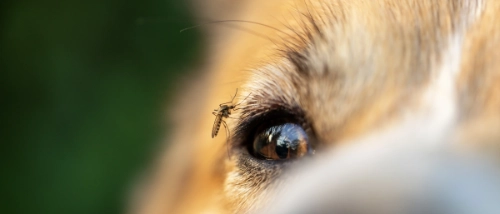
Most dog owners think about fleas and ticks. Mosquitoes? Not so much. But mosquitoes do bite dogs, and they do it more often than people realize. Your dog's coat offers some protection, but exposed areas like the nose, ears, and belly are easy targets, especially during the early morning and evening hours when mosquitoes are most active. And while the bite itself is rarely serious, the diseases mosquitoes can carry are worth knowing about.

A mosquito feeling on a human

What do mosquito bites look like on dogs

Mosquito bites on dogs are easy to miss. They typically appear as small, raised welts or red bumps on the skin, usually less than an inch across. Because of the fur, you may only notice them if your dog is scratching a specific spot repeatedly or if you part the coat and look closely.

Common areas to check include:

  • The nose and muzzle
  • The ear flaps and inner ear area
  • The belly and groin
  • Around the eyes

A single raised welt on an exposed area is more likely to be a mosquito bite than a flea bite. Flea bites tend to cluster around the neck, tail base, and groin, and cause noticeably more scratching. If the bite area becomes increasingly swollen, red, or warm to the touch, it is worth a closer look.
Mosquito-borne diseases in dogs  

The bite itself is rarely the main problem. The bigger concern is what an infected mosquito can pass on. Several serious conditions can be transmitted to dogs through a single bite.

Heartworm is the most serious risk linked to mosquito bites on dogs. When a mosquito carrying heartworm larvae bites a dog, those larvae enter the bloodstream and, over approximately six to seven months, mature into adult worms that settle in the heart, lungs, and surrounding blood vessels. According to the American Heartworm Society, heartworm disease has been diagnosed in all 50 states, and adult worms can live for five to seven years in dogs if untreated.

Early-stage infection often shows no symptoms at all. As the disease progresses, signs can include:

  • A persistent, mild cough
  • Reduced energy or reluctance to exercise
  • Fatigue after moderate activity
  • Decreased appetite and weight loss

Prevention is far simpler than treatment. Talk to your veterinarian about year-round heartworm prevention for your dog.

West Nile virus can affect dogs, though serious illness is less common than in humans. Symptoms may include weakness, lack of coordination, or unusual behavior. Dogs in areas with high mosquito activity or near bodies of standing water carry a greater risk of exposure.

EEE is rare in dogs but can cause neurological symptoms in severe cases. It is most commonly associated with wooded, wetland areas where mosquito populations are high.

If your dog shows any neurological symptoms after spending time outdoors, consult a veterinarian promptly.

Struggling with mosquitoes?

Call now to book your free inspection.

How to help protect your dog from mosquito bites 

Reducing your dog's exposure to mosquitoes starts with the environment around your home. A few practical steps can make a real difference.

Remove standing water

Mosquitoes breed in stagnant water, and larvae can develop in as little as a week. Empty birdbaths, flower pot saucers, and any containers that collect rainwater. Keep gutters clear and check for low spots in the yard where puddles form.

Limit outdoor time at peak hours

Mosquitoes are most active at dawn and dusk. Keeping your dog inside during those windows, especially in summer, can reduce the number of bites they receive.

Keep vegetation trimmed

Mosquitoes rest in shaded, overgrown areas during the day. Mowing regularly and trimming back dense shrubs reduces the places they can hide close to your home.

Never use human repellents on dogs

Products containing DEET are not appropriate for use on pets and can be harmful. Only use repellent products that are specifically formulated for dogs and approved by your veterinarian.

Keep up with heartworm prevention

Year-round heartworm prevention, prescribed by your vet, is the most reliable way to help protect your dog from the most serious risk associated with mosquito bites.

Protect your dog this mosquito season

If you are seeing consistent mosquito activity around your property, or if your dog is being bitten regularly, professional mosquito control is the most effective way to reduce populations and help protect your outdoor spaces. 

Western Exterminator's technicians understand the mosquito pressures specific to your area, whether you're on the coast or in a hot inland zone. We'll assess your property and recommend a pet-friendly treatment plan that fits your yard.

Frequently asked questions

Mosquitoes bite dogs just as readily as they bite people. They are attracted to warmth, carbon dioxide, and body heat, all of which dogs produce. Areas with thin or no fur, like the nose, ears, and belly, are the most common bite sites.

Yes, it is possible. According to the American Heartworm Society, a single bite from an infected mosquito is enough to transmit heartworm larvae. This is why year-round heartworm prevention, prescribed by your vet, is so important regardless of where you live.

The bite itself is usually mild. The greater concern is the diseases mosquitoes can carry, particularly heartworm, which can cause serious and lasting damage to a dog's heart and lungs if left untreated. West Nile virus and Eastern equine encephalitis are also possible, though less common.

Look for small raised welts on exposed areas of skin, particularly the nose, ears, and belly. If your dog is scratching the same spot repeatedly, parting the fur to check for a bite is a good first step. If the area becomes increasingly swollen or shows signs of infection, consult your veterinarian.

Removing standing water, trimming overgrown vegetation, and keeping gutters clear are all effective starting points. For more consistent, longer-lasting results, professional mosquito control services target both adult mosquitoes and larvae around your property.

Find your local branch

Enjoy protection from 39 of the most common household pests with our annual residential pest control program, PestFree365+.