Temps and termites are on the rise. Schedule your free inspection today.

800-937-8398 Call us for a free quote Contact us

European hornet facts and information

Learn about European hornets - habitat, diet, life cycle, and dangers

European hornets (Vespa crabro) belong to the genus Vespa within the family Vespidae, making them true hornets—and the largest you'll find in North America. They're primarily found in the eastern and southern U.S., though some reports place them on the West Coast. While less aggressive than some other wasps, they can still pose risks when nesting near human activity.

Quick facts about European hornets

  • Nest in hidden cavities in attics, wall voids, hollow trees
  • Sting repeatedly when threatened
  • Professional removal recommended — nests are hidden and hard to treat
  • North America's only nocturnal hornet; attracted to outdoor lighting


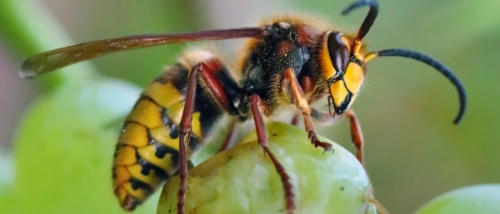
A European hornet, yellow and black, rests on a green grape

European hornet identification

European hornets are hard to miss. They're large, measuring from three-quarters of an inch to over an inch long.

Their coloring sets them apart from other species of wasps: a brown and yellow striped abdomen (rather than the stark black and white of bald-faced hornets), a reddish-brown head and thorax, and pale yellow face markings.

Seeing wasps?

Call now to book your free inspection.

Habitat, diet, life cycle, and behaviors

Understanding where European hornets live and what drives their behavior helps explain why they might choose your property.

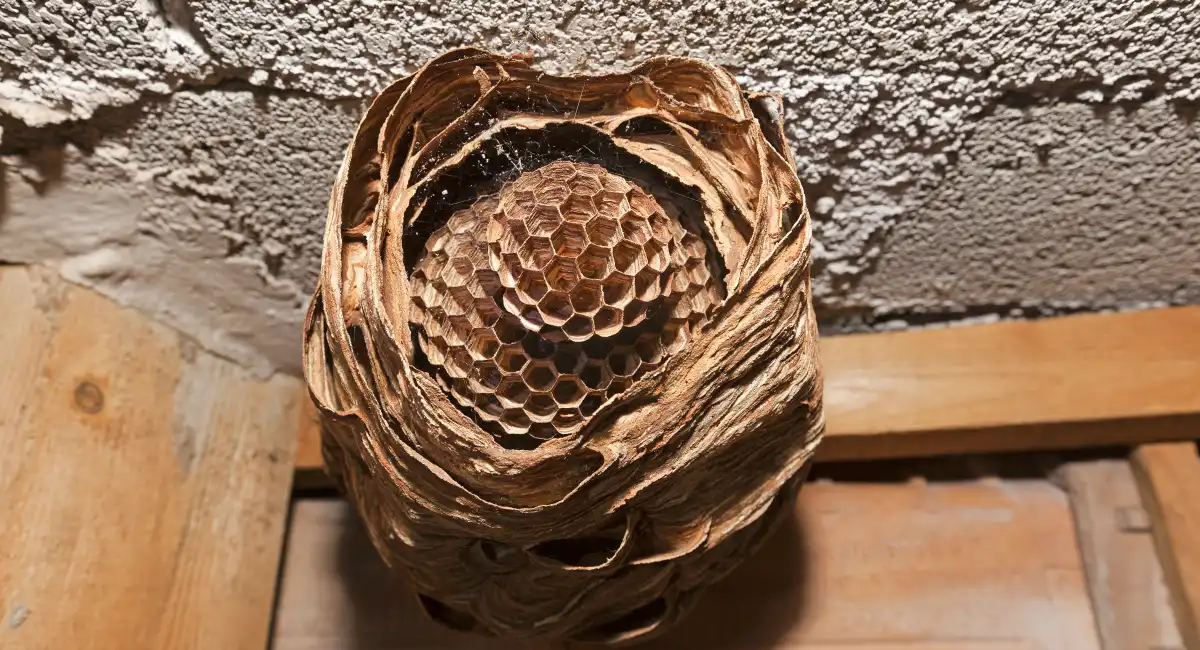
European hornets build nests in dark, sheltered cavities rather than in exposed locations. Common locations include hollow trees, wall voids, attics, barns, and abandoned bees’ nests. They prefer spots at least six feet off the ground with access to nearby water sources. Unlike other hornets, their nests are typically hidden inside these cavities, though you may occasionally spot a portion of the gray, papery nest material extending outside the nest entrance.

European hornets are carnivorous hunters that feed on grasshoppers, flies, yellowjackets, beetles, and other insects. They use their strong mandibles to capture prey and carry it back to feed developing larvae. Adults also consume tree sap, fruit juices, and honeydew for energy. In late summer, when natural food sources decline, they may damage fruit trees while seeking sugary foods.

A mated queen emerges from hibernation in spring to establish a new colony. She builds a small starter nest and lays eggs that hatch into larvae. The queen feeds these larvae until they pupate and emerge as sterile female workers. These workers then take over nest expansion and foraging duties while the queen focuses on egg-laying.

The colony grows throughout summer, reaching 200 to 400 workers by late season. In the fall, new queens and males are produced for mating before the colony dies off with the first frost.

European hornets are social insects that live in colonies of 200 to 400 members. They're the only nocturnal hornet in North America, actively foraging at night and often appearing around porch lights and lighted windows. While they look intimidating, they're generally not aggressive unless their nest is threatened. They can sting multiple times if provoked.

Signs of a European hornet infestation

The most obvious sign of European hornets is spotting the insects themselves, especially around dusk or after dark when they're most active. At night, you might spot them flying around artificial lights on porches, though this behavior is typical of many hornets and wasps.

Other telltale signs include:

  • Large, papery nests in hollow trees, wall voids, attics, or other enclosed spaces
  • A steady stream of hornets entering and exiting a single location
  • Damage to tree bark or wooden structures where hornets have been stripping material for nest building
  • A low humming or buzzing sound coming from inside the walls or ceilings
  • Dead insects near potential nest sites 

If you notice these signs, it's best to make use of our professional wasp control services rather than investigating too closely on your own, which can be dangerous.

A European hornet’s nest, with an open, cell-like structure visible beneath a papery exterior

Are European hornets harmful?

These large hornets pack a painful sting and can deliver it multiple times if they feel their nest is under threat. When they do defend their colony, they may attack in groups. This means you could end up with more than one sting.

For most people, a hornet sting results in localized pain, swelling, and redness that fades within a few days. But for some, the reaction can be more serious. Allergic reactions range from mild to severe and may include difficulty breathing, swelling of the face or throat, dizziness, rapid pulse, and widespread hives. If you experience any of these symptoms after a sting, seek immediate medical attention.

Beyond their stings, European hornets can be surprisingly destructive. They strip bark from trees like lilac, birch, and dogwood to gather material for nest building, which can damage ornamental plants.
How to get rid of European hornets

Getting rid of European hornets is a job best left to professionals. Because their nests are often hidden inside wall voids or other enclosed spaces, locating and treating them can be challenging and dangerous. Disturbing a nest can trigger a defensive response from hundreds of hornets.

Our professionals have the expertise, protective equipment, and specialized products to eliminate hornet nests for commercial customers as well as residential properties.

European hornet prevention tips

While you can't guarantee hornets won't show up, you can take steps to make your property less inviting:

  • Inspect your property in early spring for small, developing nests. Catching them early makes professional treatment much easier and safer.
  • Seal potential entry points like gaps in siding, soffits, eaves, and around utility lines where queens might establish nests.
  • Repair hollow structures or cover openings in porch columns, fence posts, and other hollow features.
  • Keep outdoor lighting to a minimum at night, or use yellow "bug lights" that are less attractive to hornets.
  • Remove fallen fruit promptly and keep outdoor dining areas clean.
  • Secure garbage cans with tight-fitting lids and position them away from doors and windows.


Frequently asked questions

Finding a European hornet nest can be tricky since they prefer hidden locations like wall voids, attics, and hollow trees. Watch for hornets flying in and out of a specific area, especially at dusk or after dark. Following their flight path can help locate the entry point. 

Investigating too closely can be dangerous, though. It's safer to rely on our technicians to locate and treat the nest

Yes, European hornets are considered invasive in North America. They were accidentally introduced to the United States around 1840 and have since spread throughout much of the eastern U.S. While they're native to Europe and Asia, they're non-native here and can impact local ecosystems, particularly by preying on native insects and honey bees.

European hornets typically forage within 300 to 400 feet of their nest, though they can travel farther if food sources are scarce.

European hornets aren't fully nocturnal, but they are unique among hornets in that they remain active after dark. They're strongly attracted to light at night, which is why you'll often see them buzzing around porch lights, windows, and outdoor fixtures.

European hornets were accidentally introduced to North America in the 1840s, possibly arriving in cargo ships from Europe. They first appeared in New York State and gradually spread westward and southward. Over the past 180 years, they've established populations throughout much of the eastern United States and continue to expand their range.

Find your local branch

Enjoy protection from 39 of the most common household pests with our annual pest control program, PestFree365+.