Temps and termites are on the rise. Schedule your free inspection today.

800-937-8398 Call us for a free quote Contact us

Yellow jacket facts and information

Learn about yellow jackets - habitat, diet, life cycle, and dangers

Yellow jackets are aggressive social wasps that defend their nests fiercely. They can sting multiple times without dying, making encounters particularly dangerous. 

Quick facts about yellow jackets

  • Aggressive social wasps that sting repeatedly without dying
  • Nest in large colonies underground, in walls, or aerial locations like shrubs and eaves
  • Attracted to sugary foods and protein; a nuisance outdoors
  • Colonies peak in late summer, when aggression is highest
  • DIY removal is dangerous;  professional treatment is recommended


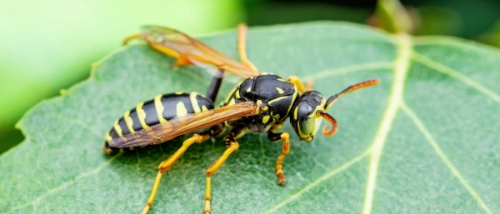
A yellow jacket wasp, with a black and yellow striped abdomen, resting on a leaf.

Yellow jacket identification

Yellow jackets have distinctive black and yellow coloration on their abdomen. They measure around half an inch long and have a smooth, hairless body, unlike fuzzy honey bees. Their narrow waist connects the thorax to the abdomen.

In the U.S., common species include those in the Vespula and Dolichovespula genera, with western yellow jackets such as Vespula pensylvanica one of the species most often found across the Western U.S.

Seeing wasps?

Call now to book your free inspection.

Habitat, diet, life cycle, and behaviors

These social wasps build complex colonies with fascinating social structures that differ from solitary wasps and other insects.

Yellow jackets build nests in various locations depending on the species. The German yellow jacket (Vespula germanica), found across much of the U.S., and the eastern yellow jacket (Vespula maculifrons), which is more common in the eastern and southeastern U.S., often nest underground in abandoned rodent burrows or wall voids. The western yellow jacket (Vespula pensylvanica) usually nests underground. The southern yellow jacket (Vespula squamosa), most often found in the South and Southeast, prefers aerial nests in shrubs or building eaves. 

Their papery nests, constructed from chewed wood fiber, can house thousands of workers by season's end.

Adult yellow jackets feed on nectar, fruit juices, and other sugary substances, while larvae require protein. Workers hunt other insects, scavenge meat, and visit garbage cans to feed developing young. This dual diet makes them both beneficial predators and annoying pests at outdoor gatherings. Their attraction to human food peaks in late summer when colony populations are largest.

A mated foundress queen emerges in spring after overwintering in a protected location. She builds a small starter nest, lays eggs, and raises the first generation of workers herself. These workers then take over nest construction, foraging, and brood care while the queen focuses solely on laying eggs. The colony grows throughout the summer, producing new queens and males in the fall. After mating, only fertilized queens survive winter; the rest of the colony dies off.

Yellow jackets are highly social wasps within the family Vespidae, living in organized colonies with distinct castes. Workers aggressively defend nest sites, especially in late summer. Unlike paper wasps (Polistes), which are relatively docile, yellow jackets will pursue perceived threats. They communicate through pheromones and can recruit nestmates to attack en masse, making them more dangerous than solitary wasps or even some hornets.

Signs of a yellow jacket infestation

Increased wasp activity around your property, especially near garbage or outdoor dining areas, often signals a nearby nest. You might notice yellow jackets flying in and out of ground holes, wall voids, or eaves. In late summer, when colonies peak in size, aggressive behavior intensifies as workers protect their nest site and forage for food.

Are yellow jackets harmful?

Yellow jackets can pose health risks, particularly to those with allergies. Their stings inject venom that causes immediate pain, swelling, and redness. They retain their stinger and can attack multiple times in quick succession. For individuals with sensitivities, stings can trigger severe allergic reactions, including anaphylaxis, which requires immediate medical attention. Even without allergies, multiple stings can be dangerous.

How to get rid of yellow jackets

Attempting DIY yellow jacket removal is extremely dangerous and not recommended. These wasps become highly aggressive when their nest is threatened, and disturbing a colony can result in mass attacks.

Our professional exterminators have protective equipment and specialized treatments to safely eliminate nests. We understand yellow jacket behavior and can remove nests while minimizing risk. Contact us for expert wasp nest removal.

Yellow jacket prevention tips

Reducing attractants and sealing entry points helps keep yellow jackets away from your property:

  • Keep garbage cans tightly sealed and away from outdoor living spaces
  • Clean up fallen fruit and sugary spills immediately
  • Cover food and drinks during outdoor activities, especially in late summer
  • Seal cracks in foundations, siding, and wall voids where nests might form
  • Inspect your property in early spring for small starter nests when colonies are manageable
  • Remove potential nest sites like old stumps, unused equipment, and debris piles

Need help with yellow jacket control?

Yellow jacket nests require professional attention for safe removal. Our highly trained,  experienced technicians can identify the wasp species, locate nests, and implement tailored treatment strategies. We understand the aggressive nature of these wasps and use proven methods to protect your family, home, or commercial property. Find out more about our residential and commercial pest management services.

Frequently asked questions

While yellow jackets do visit flowers for nectar, they're not effective pollinators like bees can be. Their smooth bodies don't collect much pollen, and they're primarily predators focused on hunting insects to feed their larvae.

Yellow jackets sting, not bite. They use their stinger to inject venom and can sting multiple times without dying. Their stings are painful and can cause severe allergic reactions in some.

Never attempt to remove a yellow jacket nest yourself. These aggressive wasps will swarm and attack when threatened. Contact Western Exterminator for professional nest removal using specialized equipment and protective gear.

No, yellow jackets don't leave stingers behind. Yellow jackets have smooth stingers, allowing them to sting repeatedly. This makes them more dangerous during encounters.

Yellow jackets build nests in lots of locations. Ground-nesting species like the German yellow jacket use abandoned burrows, while others construct aerial nests in eaves, shrubs, or wall voids. Their papery nests are made from chewed wood fiber.

Find your local branch

Enjoy protection from 39 of the most common household pests with our annual pest control program, PestFree365+.