Temps and termites are on the rise. Schedule your free inspection today.

800-937-8398 Call us for a free quote Contact us

Paper wasp facts and information

Learn about paper wasps - habitat, diet, life cycle, and dangers

Paper wasps are among the most common stinging insects you'll encounter around your home. While they play a role as pollinators and help control other insect populations, these social wasps can become a concern when they build their distinctive umbrella-shaped nests near doorways, eaves, or outdoor living spaces. 

Quick facts about paper wasps

  • Social wasps that build open, umbrella-shaped paper nests
  • Less aggressive than yellow jackets, but may sting when their nest is threatened
  • Beneficial predators — help control caterpillars and other garden pests
  • Nest near eaves, door frames, and sheltered outdoor areas
  • Professional removal recommended; early spring inspection prevents establishment


A paper wasp, with black and yellow stripes on the abdomen, clinging to a leaf

Paper wasp identification

These species of wasps measure between half an inch and one inch in length, with noticeably long legs that dangle as they fly. Their bodies feature a narrow petiole (waist) connecting the thorax to the abdomen.

Most paper wasp species display distinctive yellow markings, though coloration varies. The European paper wasp (Polistes dominula) features black and yellow bands with orange antennae. This is the species you’re most likely to spot in the Western U.S. The Northern paper wasp (Polistes fuscatus) tends to be brownish with yellow or reddish markings, though this species is more common in the Central and Eastern U.S.

Seeing wasps?

Call now to book your free inspection.

Habitat, diet, life cycle, and behaviors

Here's what you need to know about paper wasp habitat preferences, feeding habits, and seasonal patterns.

Paper wasps are found throughout North America and thrive in areas with moderate climates. They prefer to build their paper-like nests in sheltered locations that offer protection from the elements. Common nesting sites include:

  • Under eaves and roof overhangs
  • Porch ceilings and covered patios
  • Inside attics, sheds, or garages
  • On tree branches and shrubs
  • Around window frames and door frames 
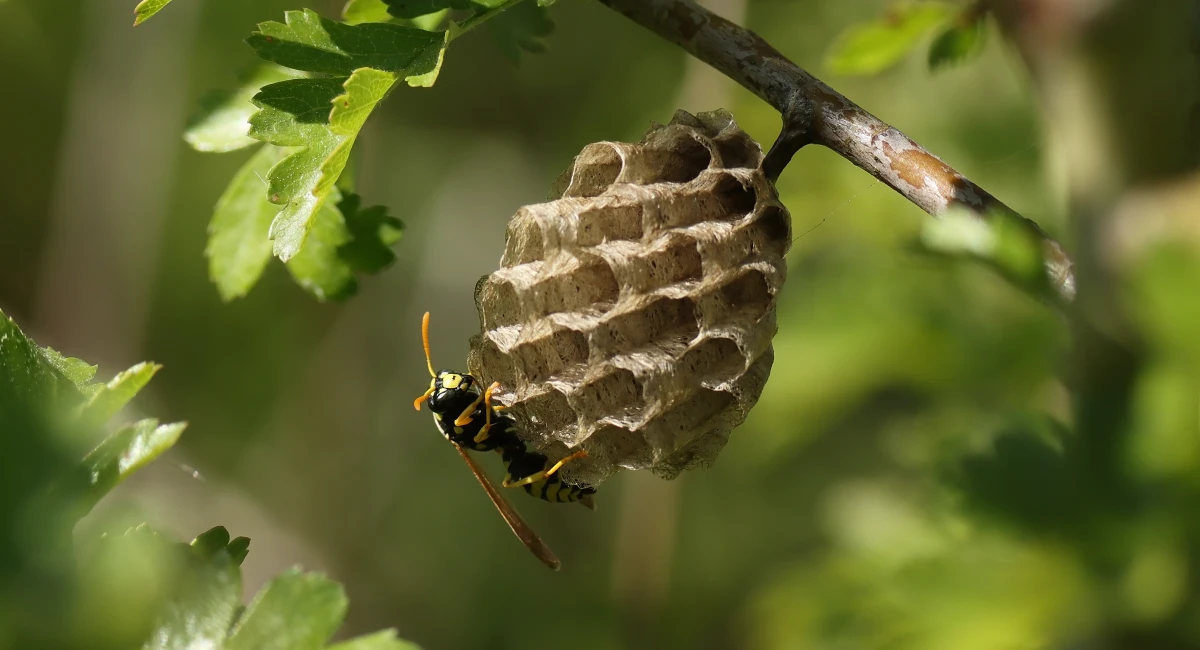
A small paper wasp nest, with an open-cell structure

Paper wasps have a varied diet that changes throughout their life cycle. Adult wasps primarily feed on nectar from flowers, making them occasional pollinators. They also consume sweet substances like fruit juices and honeydew produced by aphids.

However, paper wasps are also predators. They hunt caterpillars, fly larvae, and other insects to feed their developing young. This predatory behavior makes them beneficial for controlling pest populations in gardens and yards. A single colony can capture hundreds of caterpillars and other soft-bodied insects throughout the season, helping to protect plants from damage.

The paper wasp life cycle follows a distinct annual pattern in most regions:

  • Spring: A fertilized female wasp (the foundress) emerges from hibernation and begins building a new nest. She lays eggs in individual cells of the comb and cares for the first generation of workers herself.
  • Summer: As worker wasps emerge, they take over nest maintenance, foraging, and caring for new larvae. The colony grows rapidly during this period, with the queen focusing solely on egg-laying. Larvae are fed a protein-rich diet of chewed insects, while adult wasps consume nectar and other sugary substances.
  • Late summer/fall: The colony produces reproductive males and new queens. These wasps mate, and the fertilized females seek sheltered locations to overwinter. The original queen, workers, and males die as temperatures drop.
  • Winter: Mated females enter a dormant state called diapause, surviving in protected locations until spring arrives and the cycle begins again.

Paper wasps are social wasps that live in organized colonies with a clear hierarchy. Unlike yellow jackets, they're generally less aggressive and will typically only sting when they feel threatened or when their nest is disturbed.

  • Nest defense: Female wasps will aggressively defend their nest if they perceive a threat. They can sting multiple times and may release pheromones that alert other colony members to join the defense.
  • Foraging patterns: Worker wasps leave the nest during daylight hours to hunt for insects and gather nectar. They're most active during warm, sunny days.
  • Communication: Paper wasps use pheromones and physical behaviors to communicate within the colony, coordinating activities like nest building and defense.

Signs of a paper wasp infestation

Spotting a paper wasp infestation early can help you address the problem before it grows. Here are the key signs to watch for:

  • Umbrella-shaped nests: Paper wasp nests are distinctive, open-comb structures that hang upside down from a single stalk. They're made from a papery material that female wasps create by chewing wood fibers mixed with saliva. These nests are often found under eaves, porch ceilings, door frames, or in sheltered outdoor areas.
  • Wasps entering and exiting a specific area: If you notice wasps repeatedly flying to and from the same spot, there's likely a nest in that location.
  • Chewed wood or plant material: Paper wasps gather wood fibers to build their nests, so you may notice small areas of scraped or chewed wood on fences, sheds, or outdoor furniture.

If you suspect a paper wasp infestation, it's best to call in the pest control professionals at Western Exterminator rather than attempting removal yourself.

Are paper wasps harmful?

Paper wasps can pose risks to people and pets, particularly when nests are located in high-traffic areas. While they're generally less aggressive than yellow jackets or hornets, they will defend their nest vigorously if threatened.

Paper wasp stings are painful and inject venom that can cause a range of symptoms that include swelling and irritation. Unlike bees, paper wasps don't leave their stinger behind, which means they can sting multiple times. They may also target the face and eyes when defending their nest, making encounters particularly dangerous.

If you experience any worrying symptoms after a wasp sting, seek medical attention immediately.
How to get rid of paper wasps

Professional wasp control is the safest option. Our technicians at Western Exterminator follow a comprehensive process that includes identification, a range of treatment methods, nest removal, and prevention.

Whether you need help around the home or commercial pest control for any number of sectors, we’re here to help.

Paper wasp prevention tips

Preventing paper wasps from nesting on your property is easier than dealing with an established colony later on down the line. Here are practical steps you can take:

  • Inspect regularly: Check your property in early spring for small, developing nests. Early-stage nests are easier to address before the colony grows.
  • Seal entry points: Close gaps around windows, doors, vents, and siding where wasps might build nests.
  • Remove attractants: Keep outdoor garbage cans sealed, clean up food and drink spills promptly, and avoid leaving pet food outside.
  • Maintain your property: Trim vegetation away from your home, repair damaged wood, and remove old nests (only after confirming they're abandoned).
  • Cover outdoor spaces: Use screens on windows and doors, and consider covering outdoor dining areas when not in use.
  • Limit nesting sites: Fill in ground holes, remove debris piles, and keep sheds and garages organized to eliminate potential nesting locations.

If you're unable to carry out prevention measures on your own or would prefer expert help, we’re on standby waiting to help.

Frequently asked questions

The safest way to get rid of a paper wasp nest is to rely on the professionals. Our technicians have the proper equipment and protective gear to remove nests while minimizing risk to you and your family.

Yes, paper wasps are occasional pollinators. Adult wasps feed on nectar from flowers, and while they're not as efficient as bees, they do transfer pollen as they move from plant to plant. However, their primary ecological role is as predators of caterpillars and other insects that can damage crops and gardens.

A paper wasp nest can contain between 15 and 200 individuals, though most colonies average around 20 to 75 wasps. The size depends on the species, the age of the colony, and environmental conditions. Colonies are largest in late summer before the reproductive cycle begins, and the colony declines in fall.

Yes, paper wasp colonies have a queen. The foundress (original queen) establishes the nest in spring and lays the first eggs. In some species, multiple female wasps may cooperate to start a nest, with one eventually becoming dominant. The queen's primary role is egg-laying, while worker wasps handle foraging, nest maintenance, and caring for larvae.

Some paper wasp species are considered invasive in certain regions. The European paper wasp (Polistes dominula), for example, is native to Europe, North Africa, and parts of Asia but has become established in North America, Australia, and South America. This species can outcompete native paper wasps for nesting sites and resources. Many paper wasp species are native to their respective regions, though, and play important ecological roles.

Find your local branch

Enjoy protection from 39 of the most common household pests with our annual pest control program, PestFree365+.