Temps and termites are on the rise. Schedule your free inspection today.

800-937-8398 Call us for a free quote Contact us

Bald-faced hornet facts and identification

Learn about bald-faced hornets - habitat, diet, life cycle, and dangers

Bald-faced hornets (Dolichovespula maculata) are one of the most recognizable stinging insects in North America. Known for their striking ivory and black coloring and aggressive defense of their nests, they can pose serious risks to people and pets. Despite their name, these insects aren't true hornets at all—they're actually a type of yellowjacket and belong to the wasp family Vespidae. 

Quick facts about bald-faced hornets

  • Bald-faced hornets are yellowjackets, not true hornets
  • Identified by black-and-white markings and repeated stinging ability
  • Football-shaped paper nests can house up to 700 workers
  • DIY removal is dangerous — professional treatment is strongly recommended
  • Seal entry points and remove food sources to deter nesting


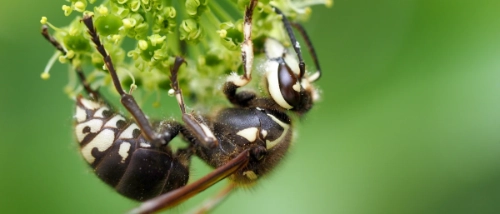
A bald-faced hornet - black with white markings - clinging to a flower.

Bald-faced hornet identification

Bald-faced hornets are noticeably larger than most yellowjackets, measuring between half an inch and just over three-quarters of an inch long. Their most striking feature is their bold black-and-white coloring.

They sport a mostly black body with distinctive white or ivory markings on their face (hence the "bald-faced" name), thorax, and abdomen tip. Their smooth stinger can be used repeatedly, making them particularly formidable.

Seeing wasps?

Call now to book your free inspection.

Habitat, diet, life cycle, and behaviors

Understanding where and how bald-faced hornets live helps explain why they show up on your property, and what's drawing them in.

Bald-faced hornets build aerial nests in protected locations. In nature, they prefer tree branches, dense shrubs, and wooded areas. Around homes and businesses, they commonly set up shop under eaves, in attics, on porch ceilings, or in thick vegetation near buildings.

Their paper nests are impressive. Worker hornets create the nest by chewing wood fibers mixed with their saliva, forming a papery pulp that hardens into protective layers. The nest has multiple tiers with a protective outer shell and internal combs where the colony raises its brood. A single nest can house 400 to 700 workers by the end of summer.

These social insects are found throughout North America, particularly in the eastern United States and along the West Coast. They thrive in areas with abundant trees and vegetation where they can forage for food and gather building materials.
Bald-faced hornets are both predators and opportunistic scavengers. Adult hornets primarily feed on nectar, tree sap, and other sugary substances for energy. However, they're also skilled hunters that capture other insects to feed their developing larvae back at the nest.

Their diet includes:

  • Flies, caterpillars, and other soft-bodied insects
  • Other yellowjackets and wasps 
  • Spiders and small arthropods
  • Nectar from flowers
  • Overripe fruit
  • Sugary drinks and food scraps (especially in late summer when they get bolder)

This predatory behavior actually makes them beneficial in some ways: they help control populations of pest insects. However, their aggressive nature and painful sting can far outweigh these benefits when they nest near human activity.

The bald-faced hornet life cycle follows a predictable annual pattern. In spring, a fertilized queen emerges from overwintering and builds a small starter nest. She lays eggs that develop through four stages: egg, larva, pupa, and adult.

The first generation consists of sterile female workers who take over nest construction and foraging while the queen focuses on laying eggs. The colony grows rapidly throughout the summer.

By late summer, the colony produces new queens and male drones that leave to mate. After mating, males die off, and newly fertilized queens overwinter in sheltered spots. The original colony dies when cold weather arrives, and the nest is never reused.

Bald-faced hornets are highly social insects with a well-organized colony structure. Workers are fiercely protective of their nest and will aggressively defend it if they sense a threat. Hornets can sting multiple times and will chase intruders who get too close.

Workers typically forage within 300 feet of their nest. If you're seeing hornets regularly in your yard, there's almost certainly a nest nearby.

These insects are most active during daylight hours and become noticeably more aggressive in late summer and early fall as resources become scarce. They're also attracted to light at night, which can draw them toward homes with exterior lighting.

Signs of a bald-faced hornet infestation

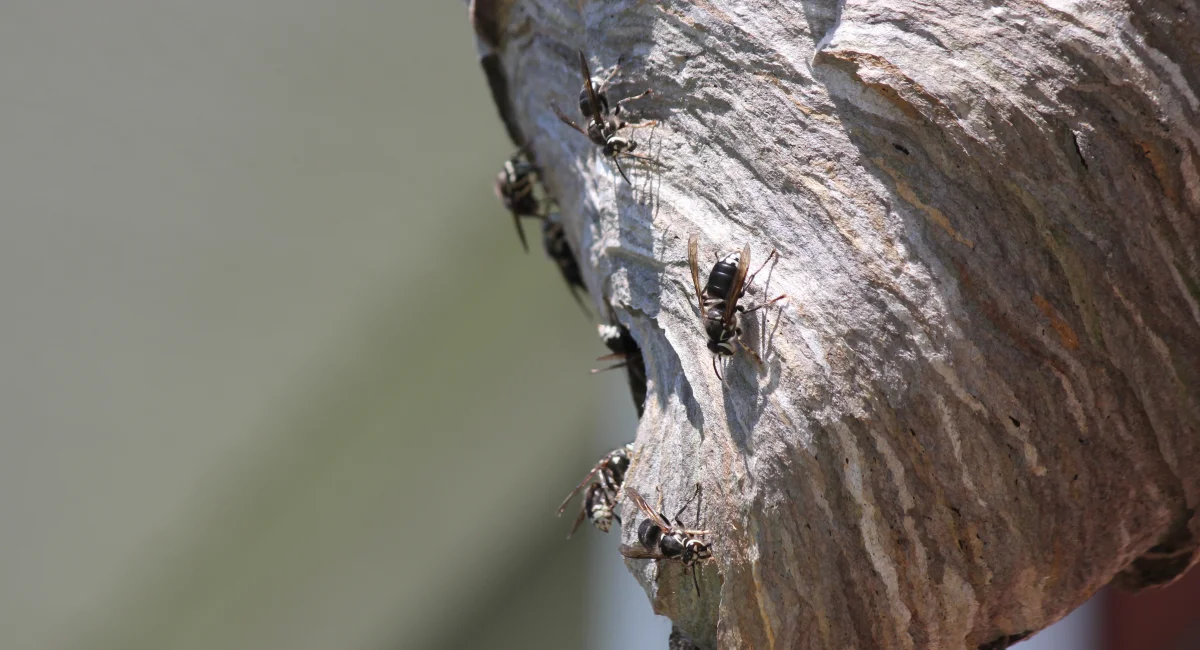
The most telltale sign of a bald-faced hornet presence is spotting their distinctive paper nest. These aerial nests are usually gray or tan, football-shaped, and can balloon to the size of a basketball by late summer. You'll typically find them hanging from tree branches, tucked under eaves, or attached to the sides of buildings.

Other signs to watch for include:

  • Increased hornet activity around a specific area of your property
  • Hornets flying in and out of a single location like clockwork
  • A papery, layered nest visible in trees or on structures
  • Aggressive behavior when you wander too close to certain areas
  • Dead insects scattered near potential nesting sites (hornets are skilled predators)

If you notice any of these signs, it's time to enlist professional wasp control services.

A bald-faced hornet nest, papery and grey

Are bald-faced hornets harmful?

Bald-faced hornets can be harmful and should be treated with respect and caution. Their sting is painful and can cause significant swelling, redness, and discomfort that lingers. Because they can sting repeatedly and often attack in groups when defending their nest, encounters can quickly result in multiple stings.

For most people, hornet stings cause localized pain and swelling that resolves within a few days. However, some people may experience mild to severe allergic reactions.

How to get rid of bald-faced hornets

Attempting DIY removal is extremely dangerous and not worth the risk. When a nest is threatened, hundreds of hornets can swarm and attack in seconds, leading to multiple painful stings. Our pest control experts have the proper protective equipment, specialized products, and hard-won experience to eliminate hornet nests. We also offer specialist commercial pest control services across the western United States.

Bald-faced hornet prevention tips

While you can't completely eliminate the risk of hornets nesting on your property, you can take some steps to make your space less attractive to these unwelcome guests:

  • Inspect your property in early spring for small, developing nests. Early-season nests are walnut-sized and much easier for professionals to treat before they grow larger.

  • Seal potential entry points like gaps in siding, soffits, and eaves where queens might overwinter and get a head start come spring.
  • Keep garbage cans tightly sealed and positioned away from doors and windows. Hornets are attracted to food waste, especially in late summer when they're actively scavenging.
  • Remove fallen fruit from trees promptly and clean up sugary spills from outdoor dining areas.
  • Trim vegetation away from your home's exterior to reduce convenient nesting sites.
  • Limit outdoor lighting at night, as it can attract hornets and the other insects they prey on.
  • Don't leave pet food outside, as it can attract the insects that hornets hunt.

If you spot a nest forming, resist the urge to knock it down or spray it yourself. Contact Western Exterminator immediately for safe, professional wasp nest removal.

Frequently asked questions

The safest way to get rid of a bald-faced hornet nest is to hire a professional pest control service.  These nests can contain hundreds of aggressive hornets that will attack en masse if threatened. Professional technicians have protective gear and specialized treatments to eliminate the colony, while minimizing risk to you and your family.

Worker bald-faced hornets leave the nest during daylight hours to forage for food, typically from spring through fall. The entire colony dies off in winter, with only newly fertilized queens surviving to overwinter and start new colonies the following spring.

Bald-faced hornets typically forage within 300 feet of their nest, though they can travel farther when necessary. If you're seeing hornets regularly on your property, there's likely a nest within this range, possibly closer than you'd like.

No, bald-faced hornets are not invasive. They're native to North America and are found naturally throughout the United States and Canada. While they can be aggressive and problematic when nesting near human activity, they're one of the native species of wasps that play a role in controlling other insect populations in the ecosystem.

Yes, bald-faced hornets have a queen. Each colony is founded by a single fertilized queen in spring. She lays all the eggs that develop into workers, and later in the season, she produces new queens and male drones. The new queens mate and overwinter to start their own colonies the following year, continuing the cycle.

Find your local branch

Enjoy protection from 39 of the most common household pests with our annual pest control program, PestFree365+.