Temps and termites are on the rise. Schedule your free inspection today.

800-937-8398 Call us for a free quote Contact us

Honey bees are among the most familiar - and important - bees in the world. You’ll see them moving busily from flower to flower, often close to homes, gardens, and outdoor spaces. This guide to honey bee identification and behavior explains how to recognize honey bees, understand their role in the ecosystem, and know when their activity may require professional help.

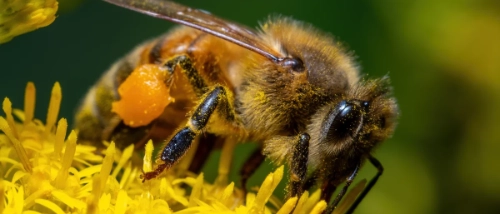
The Western honey bee, collecting pollen from a flower, with pollen stuck to its hind leg

Characteristics

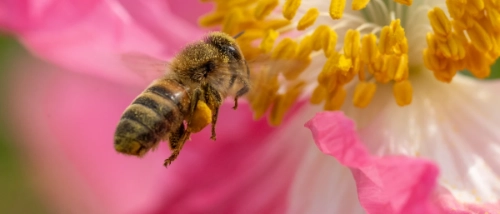
Honey bees are medium-sized bees with golden-brown bodies and darker bands across the abdomen. They’re less fuzzy than bumble bees and more streamlined, built for efficient foraging and long flights. Their bodies are designed to carry pollen, with visible pollen baskets on their hind legs.

They’re social insects that live in highly organized colonies, each with specific roles that keep the hive running smoothly.

A honey bee, with black and yellow stripes on its abdomen, hovering near a flower, collecting pollen

Identification

Accurate honey bee identification starts with behavior as much as appearance. Honey bees fly with purpose, often in straight lines between flowers and their hive. Unlike wasps, they have hairy bodies and a softer, rounded shape.

Honey bees are just one group among many native bees, but they’re especially recognizable due to their large colonies and close association with hives and honeycomb.

Habitat, diet, life cycle, and behaviors

Learn more about the habitat, life cycle, and behaviors of carpenter bees; knowing how to spot carpenter bees can help prevent infestations from worsening.

The honey bee’s habitat centers around a hive or nest. In natural settings, nests may be found in hollow trees or rock crevices. Around homes, bees may establish colonies in wall voids, chimneys, attics, or other sheltered spaces. This is where professional bee control and relocation are most often needed.

They choose locations that offer protection from weather and predators while staying close to flowering plants and water sources.

Honey bees are vital pollinators. As they collect nectar and pollen, they help plants reproduce, supporting crops, gardens, and natural landscapes. The cultivation of many fruits, vegetables, and nuts relies heavily on honey bee activity.

Their impact goes well beyond honey production - they’re a key part of a healthy food system.

The honey bee’s life cycle includes four stages: egg, larva, pupa, and adult. Queens are fed royal jelly, a nutrient-rich substance that allows them to develop and reproduce, while workers and drones receive different diets that determine their roles.

Each colony includes a queen, drones, and worker bees, which make up the majority of the hive. Workers handle everything from foraging and hive maintenance to protecting the colony.

Honey bees feed on nectar and pollen from flowering plants. Nectar is converted into honey, which serves as the colony’s long-term food supply. Pollen provides protein and nutrients needed for growth and development.

They’re not interested in human food or waste and typically ignore outdoor meals unless sugary drinks are left uncovered.

Honey bees face threats from birds, spiders, and insects such as hornets. Larger predators, including skunks and bears, may also target nests and hives for honey and larvae, damaging structures in the process.

Signs of a bee infestation

Honey bees don’t infest homes or businesses in the traditional sense, but nesting in structures can create concerns, especially if individuals possess allergies to bee stings or have medical vulnerabilities. Common signs include:

  • Steady streams of bees entering and exiting one spot
  • Buzzing sounds coming from the walls or ceilings
  • Honey odors or sticky residue near walls
  • Increased bee activity over time

Because colonies grow quickly, early attention is important. If you’re concerned about bees in your home or yard, book a free inspection today. We’ll come out, identify the species, and provide a clear, tailored plan to relocate the bees if necessary.

Professional bee control and relocation

When honey bees nest too close to living spaces, Western Exterminator can help. Whether residential or commercial pest control is needed, we help identify the colony, assess risks, and determine whether relocation or control is the most appropriate solution for your situation.

Professional handling helps protect people, preserve structures, and respect the important role honey bees play, without putting your household at risk.

Frequently asked questions

Honey bees build nests inside protected cavities, such as hollow trees, rock crevices, or man-made structures. Around homes, they may nest in wall voids, attics, chimneys, or other enclosed spaces that offer shelter and stability.

Honey bees don’t recognize human faces the way people do, but research shows some wasps can recognize each other's faces.

The “3-3” rule usually refers to beekeeping guidance for moving hives: move a hive either less than three feet or more than three miles to prevent bees from getting confused and returning to the old location. It’s a practical rule used by beekeepers, not something homeowners should try themselves.

Find your local branch

Enjoy protection from 39 of the most common household pests with our annual pest control program, PestFree365+.