Temps and termites are on the rise. Schedule your free inspection today.

800-937-8398 Call us for a free quote Contact us

Ground bees

Learn about ground bees - habitat, diet, life cycle, and dangers

If you've noticed small mounds of dirt appearing in your lawn or garden with pencil-sized holes, you've likely got ground bees. These solitary, ground-nesting bees are excellent pollinators and generally harmless, but their sudden appearance can raise questions about risk to your property. Read on to learn about ground bee identification and how we can help with nesting ground bees.

Quick facts about ground bees

The Western honey bee, collecting pollen from a flower, with pollen stuck to its hind leg

What are ground bees?

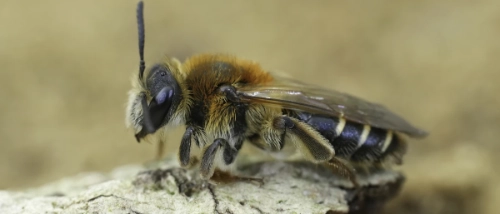
Ground bees are solitary bees that nest in the soil, where females excavate burrows to lay eggs. Unlike honey bees, each female works alone. Depending on the species, they typically measure ¼ to ¾ inch long and play an important role in pollination.

Common groups include mining bees (Andrena spp.), digger bees (often Anthophora spp.), and sweat bees (family Halictidae).

Seeing bees?

Call now to book your free inspection.

Habitat, diet, life cycle, and behaviors

Understanding where ground bees live, what they eat, and how they behave helps you recognize these beneficial insects and appreciate their role in your local ecosystem.

Ground-nesting bees prefer sunny, well-drained areas with sparse vegetation or bare soil. They excavate individual burrows 6-12 inches deep, often creating small mounds of excavated soil at the entrance. While solitary, multiple females may nest close together, forming loose aggregations that can look like small neighborhoods.

Ground bee nest identification is pretty straightforward: look for pencil-sized holes in bare ground, often with small dirt piles nearby. Common nesting sites include lawns, gardens, pathways, and sandy banks. According to The Bee Conservancy, 70% of the world's bee species live largely solitary lives underground.

Ground bees feed on nectar and pollen from flowering plants. Adult bees drink nectar for energy while foraging, and they collect pollen to provision their underground nests. Each female gathers pollen and nectar, creates a pollen ball, lays an egg on it, and seals the chamber before repeating the process.

Different species prefer different flowers, but many are generalists visiting a wide variety of blooms. Their foraging activity makes them excellent pollinators, often more efficient than honey bees for certain crops.

Their life cycle begins when a female lays an egg on a pollen provision inside an underground cell. The larva hatches, feeds on the pollen ball, and develops through several stages before pupating. Most species overwinter as adults or pupae in their sealed cells.

In spring, adults emerge, mate, and females begin excavating new nests. The entire active season for many species lasts only four to six weeks. This brief window makes them perfectly synchronized with early spring blooms, providing crucial pollination when few other insects are active.

Ground bees are generally docile and non-aggressive. Females can sting if handled roughly, but they rarely defend their nests as social bees do. Males, which emerge first, patrol nesting areas looking for mates but cannot sting at all.

Most ground-nesting bees are solitary, meaning only one female works and lives alone in each underground nest. They're curious and may investigate nearby activity, but this is normal behavior, not aggression. Their focus remains on foraging and nest construction.

Signs of a ground bee infestation

Spotting ground bee activity early helps you understand what's happening in your yard. Key signs include:

  • Small holes in bare soil: Pencil-sized burrows, often with small mounds of excavated dirt
  • Increased bee activity: Multiple bees flying low over lawns or gardens in spring
  • Clustered nests: Several holes grouped together in sunny, well-drained areas
  • Non-aggressive behavior: Bees that ignore passersby and focus on foraging

If you’re unsure whether ground bees are nesting around your property, book a free inspection today.

Ground bee control and relocation

While solitary bees are beneficial for pollination, their nesting sites sometimes raise concerns. Whether it’s a commercial or residential property, we offer expert assessment and humane solutions tailored to your situation. Our technicians can help identify the species, evaluate the nest location, and recommend the best approach—whether that's relocation, habitat modification, or simply reassurance.

Frequently asked questions

No, ground bees are generally docile and non-aggressive. They focus on foraging and nest-building rather than defending territory. Females can sting if directly threatened or handled, but this is rare. Males cannot sting at all.

Most ground bee species don't reuse the same nest. However, females often return to the same general area where they emerged to build new nests nearby. This means you’ll likely see them around your property year after year. Our experts can provide guidance on how to keep bees away from high-traffic areas while maintaining pollinator-friendly spaces elsewhere on your property.

Yes, ground bees are highly seasonal. Most species are active for only four to six weeks in spring, perfectly timed with early-blooming flowers. They spend the rest of the year as larvae or pupae underground, emerging the following spring to repeat the cycle.

Find your local branch

Enjoy protection from 39 of the most common household pests with our annual pest control program, PestFree365+.