800-937-8398 Call us for a free quote Contact us

Signs of a wasp infestation

When you start seeing wasps regularly, especially in the same spots, it often means a nest is nearby. Recognizing the signs of a wasp infestation early gives you the best chance of dealing with it before it becomes a bigger problem.

How to tell if you have a wasp infestation

There are a few key signs that will help you figure out whether you have a wasp’s nest nearby or actually in your home or business.

More wasps than usual

Seeing wasps regularly around your roofline, eaves, vents, or outdoor trash areas is one of the clearest signs of a nearby wasp infestation. A few here and there is normal; a steady stream is not.

A visible nest

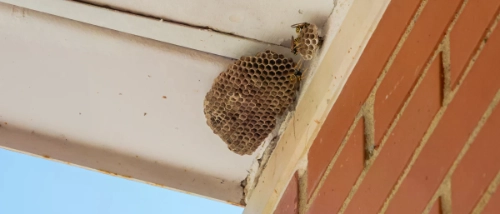
Wasp nests can appear under eaves, in wall voids, inside sheds, or tucked into corners of your porch. Early in the season, they may be no bigger than a golf ball. But by late summer, they can be the size of a basketball.

Buzzing from inside walls or ceilings

Yellow jackets and other species commonly nest in wall voids, and the sound of an active colony can carry through into your home.

Wasps are getting inside

Finding wasps indoors (especially repeatedly) suggests they're entering through a gap, crack, or vent somewhere nearby and may have established a nest inside.

Struggling with wasps?

Call now to book your free inspection.

colony-of-wasps-building-their-nest

Where do wasps build their nests?

Wasps will nest just about anywhere that offers shelter and is close to food. This includes:

  • Eaves and overhangs (a favorite for paper wasps)
  • Wall voids and siding gaps (favorites of yellow jackets in particular)
  • Lofts, attics, and garages
  • Sheds and outbuildings
  • Underground burrows (ground-nesting species often use abandoned rodent holes)
  • Tree branches and shrubs

If you spot a nest, don't approach it. Wasps are territorial and will defend their colony aggressively if they feel threatened. Our wasp control experts can assess the situation safely.

What to do if you spot a wasp infestation

Spotted a nest? Think before you act, and don’t approach it. Follow these steps instead:

1. Don't disturb the nest: Resist the urge to knock it down, spray it with a hose, or investigate up close. Disturbing a nest, even accidentally, can trigger an aggressive response from the colony.

2. Note where wasps are entering and exiting: If you can safely observe from a distance, take note of where wasps are flying to and from. This information helps our technicians locate the nest quickly during an inspection.

3. Contact Western Exterminator: DIY wasp control is not something we recommend. Without the right protective equipment and knowledge of wasp behavior, attempting to treat a nest yourself can be dangerous.
Frequently asked questions

The most common signs include:

  • Large numbers of wasps around your property
  • A visible nest
  • Buzzing from inside walls or ceilings
  • Repeatedly finding wasps indoors. 

If you're noticing any of these signs, it's worth getting a professional inspection.

Wasps typically enter through small gaps in siding, cracks around window or door frames, unscreened vents, or gaps around utility pipes. They're often searching for food or a sheltered nesting site. Sealing these entry points is an important part of long-term prevention.

Wasps can sting multiple times and will defend their nest aggressively if disturbed. For people with sting allergies, this can be a serious health risk.

Find your local branch

Enjoy protection from 39 of the most common household pests with our annual residential pest control program, PestFree365+.