Temps and termites are on the rise. Schedule your free inspection today.

800-937-8398 Call us for a free quote Contact us

What do bed bug droppings look like?

Finding small dark spots on your mattress or bedding can be unsettling — and for good reason. Bed bug droppings are one of the most reliable early signs of an infestation, often appearing before you ever spot a live bug. Knowing what to look for can help you act quickly before the problem spreads.

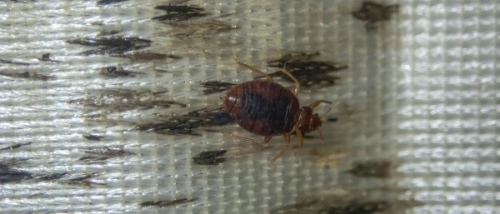
A bed bug, small and round, on a mattress stained with excrement

What do bed bug droppings look like?

Bed bug excrement doesn't look like typical insect waste. Here's what sets it apart:

  • Color: Dark rusty-brown to almost black
  • Consistency: Semi-liquid when fresh — it soaks into fabric rather than sitting on top
  • Size: Roughly the size of a pinhead or a dot from a ballpoint pen
  • Shape: Irregular, ink-like stains that bleed into soft surfaces
  • Smell: A faint, musty, or sickly-sweet odor, caused by pheromones and oxidized iron in digested blood

On fabrics, it looks like a marker has bled into the material. On hard surfaces, it may appear as small, clustered dark dots.

The damp Q-tip test

Not sure if what you're seeing is bed bug droppings? Try this simple test:

  1. Dampen a Q-tip or white cloth
  2. Gently press it against the suspicious stain
  3. If the stain smears into a reddish-brown streak, it's likely bed bug feces

Solid debris that doesn't smear is more likely to be dirt or another type of pest dropping. Keep in mind that this test is by no means definitive. The opinion of a pest control professional is often needed to confirm the presence of bed bugs or bed bug excrement.

Where to find bed bug droppings

The bed is the most common place to start your search, but it's not the only place. Bed bugs stay close to where they feed, so droppings tend to cluster near sleeping and resting areas.

Check these spots carefully:

  • Mattress seams, piping, and tags
  • Under the mattress label
  • Box spring seams and joints
  • Bed frame joints and crevices
  • Behind the headboard
  • Nightstands and nearby furniture
  • Carpet edges and baseboards
  • Behind electrical outlets and wall plates
  • Under loose wallpaper or wall hangings

As an infestation grows, droppings can spread further, appearing in sofas, chairs, and even along the ceiling-wall junction. Finding droppings in multiple rooms is a strong sign of an active, spreading infestation. Know where to check for bed bugs with our handy guide.

For a thorough assessment, book a free bed bug inspection. We know what to look for and where.
What to do if you find bed bug droppings

Finding droppings is a strong signal that bed bugs are, or recently were, active in your home. Here's what to do:

  1. Don't move items between rooms: Moving items throughout the property can spread bed bugs to new areas
  2. Strip and wash bedding: Use a high-heat setting (at least 140°F) on fabrics that are not delicate
  3. Vacuum mattress seams, the bed frame, and nearby furniture: Vacuuming is a useful tool in the fight against bed bugs, but make sure to dispose of the vacuum bag outside immediately
  4. Avoid DIY sprays or foggers: DIY sprays often push bed bugs deeper into hiding and can make professional treatment harder
  5. Contact a professional: A trained technician can confirm whether bed bugs are present and recommend the right treatment

If you're not sure what you're looking at, schedule a free bed bug inspection with Western Exterminator. We'll assess your property and walk you through our bed bug control service.

Frequently asked questions

Bed bug droppings appear as small, dark, ink-like stains — rusty brown to near-black in color. They soak into fabric rather than sitting on top, and they smear when wiped with a damp cloth.

Bed bug droppings on the bed are the most common sight— in seams, under labels, and along the edges of the box spring. In heavier infestations, droppings can also appear on baseboards, behind headboards, and in nearby furniture.

You can clean the stains, but cleaning alone won't resolve an infestation. If live bed bugs remain, droppings will return. Professional treatment is often needed to address the root cause.

Bed bug droppings don't spread disease, but they can trigger allergic reactions in some people. If you're concerned about a reaction, consult a healthcare professional.

Try the damp Q-tip test: press a damp Q-tip against the stain, and if the stain smears into a reddish-brown streak, it's likely bed bug feces. Location matters too: bed bug droppings almost always appear near sleeping or resting areas. 

Our expert technicians can identify whether it’s bed bug droppings or something else.

Find your local branch

Enjoy protection from 39 of the most common household pests with our annual residential pest control program, PestFree365+.