Temps and termites are on the rise. Schedule your free inspection today.

800-937-8398 Call us for a free quote Contact us

Do bed bugs come out during the day?

If you've spotted a bug crawling across your mattress in the middle of the afternoon, it's natural to wonder what you're dealing with. Bed bugs have a reputation for being nighttime pests, and this is mostly true – but a hungry bed bug, or a growing infestation, won't always wait for the lights to go out.

When do bed bugs come out?

According to research published in the National Library of Medicine, bed bugs are far more active in the dark than in the light. That’s because bed bugs are mostly nocturnal, meaning they tend to feed in the early morning hours, when their hosts are in a deep sleep and least likely to notice them. 

Their whole feeding strategy is built around staying hidden. They pick up on the carbon dioxide from your breath, your body heat, and the scent of your skin, then move in while you're still. After feeding, they head back to their hiding spots and can stay there for days.

Do bed bugs ever come out during the day?

Despite being nocturnal, bed bugs can absolutely come out during the day. A few things can cause this:

  • They're very hungry. A starved bed bug won't wait for nightfall. If they sense a host nearby, they'll come out regardless of the time of day.
  • Your schedule is different. If you work nights and sleep during the day, bed bugs in your home can shift their activity to match yours over time. Their nighttime habits are driven by when their hosts are available, not a hard-wired need for darkness.
  • The infestation has grown. As numbers increase, there's more competition for feeding. Bed bugs may start coming out at odd hours simply because the nighttime rush is too crowded.
  • Their hiding spots were disturbed. Moving furniture, cleaning, or a partial DIY treatment can scatter bed bugs and make them visible at any time of day.
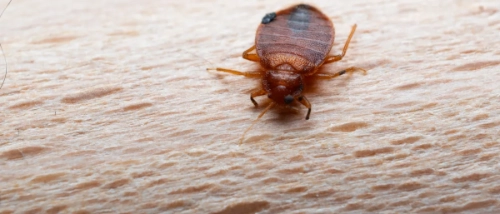
A reddish-brown bed bug on a white bed sheet

Where might you see bed bugs?

These pests hide in tiny spaces near where people rest or sleep, so check along mattress edges, baseboards, bed frames, cracks in furniture, and behind pictures and headboards. They also tuck into soft furniture like couch cushions or behind wall hangings.

Their small, flat bodies let them squeeze into narrow crevices, and they're often found in clusters, especially around places we stay still for long periods. As infestations grow, bed bugs can move to less expected places — electrical outlets, curtain folds, or carpet edges.

A single bed bug crawling across a beige fabric surface, its flat oval body and reddish-brown color clearly visible

What to do if you spot a bed bug

If you find a bed bug — day or night — don't panic, but do act quickly. Bed bugs breed fast, and a small problem can turn into a big one in just a few weeks.

Start by stripping all bedding and washing it at 140°F or higher for at least 90 minutes. Vacuum thoroughly along mattress seams, baseboards, and furniture edges, and empty the vacuum outside straight away. Also, try not to move infested items to other rooms, as this can spread bugs to new areas. 

You can do all you can to try to prevent the spread of bed bugs, but once you have them, you’ll almost always need a professional bed bug exterminator.

Need help with bed bugs?

Be it day or night, if you've spotted signs of bed bugs, act now. They're one of the hardest pests to manage, and DIY methods rarely cut it. Don’t sit on the problem; call us, or click the button below to arrange a free inspection.

Unfortunately, light doesn’t protect you from bed bugs. Sure, they are less active in bright conditions, but a hungry bed bug will still come out to feed regardless of the lighting. 

In general, bed bugs are nocturnal, but that's not the full picture. A growing infestation, a disrupted schedule, or a very hungry bug can all bring them out during the day. If you're seeing them, you need to act fast.

Bed bugs can come out in daylight if they’re very hungry, if your sleep schedule shifts (such as sleeping during the day), if the infestation is growing and there’s more competition for feeding, or if their hiding spots were disturbed by cleaning, moving furniture, or DIY treatment.

Find your local branch

Enjoy protection from 39 of the most common household pests with our annual residential pest control program, PestFree365+.