Temps and termites are on the rise. Schedule your free inspection today.

800-937-8398 Call us for a free quote Contact us

Types of bees in California

If you live in California, you are probably aware that the state is known for its fruitfulness in agriculture, and bees play a central role in pollinating plants. Bees are prevalent in this area due to the high amount of agricultural activity. At times, however, bees can act aggressively, and professional control methods are necessary to help protect people and properties. Bee control is particularly important to help protect someone who is allergic to stings, who may have a severe reaction if stung.

Have you spotted a nest on your property, or do you see lots of bees and fear for your safety? Never attempt to get rid of bees on your own. You could end up hurting yourself. Reach out to a bee expert instead. Western Exterminator can help get rid of these stinging pests. We use safe management strategies and are respectful of bee populations. Get in touch with us right away if you see a high number of bees on your premises.

Learn more about the common types of bees found across California to help you identify the type of bee you may be seeing and understand more about their behavior.
Contact our local bee experts!

* Required field

Download this report

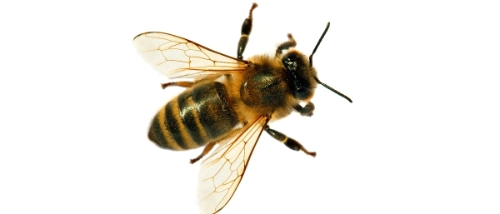
A honey bee isolated on a white background

California honey bees

Honey bees are one of the more common kinds of bees in the Golden State. European honey bees (one type of honey bee) are less aggressive compared to Africanized honey bees, which are commonly called “killer” bees. In California, you are likely to find Africanized honey bees in southern California. European and Africanized honey bees look almost the same, but they act differently.

Contrary to what some people may think, European honey bees do not make it their goal to sting people. They will attack you if you appear to be creating a hazard for them. On the other hand, killer bees are more defensive and also swarm more often. Africanized honey bees create nests in a greater assortment of spots than European honey bees.

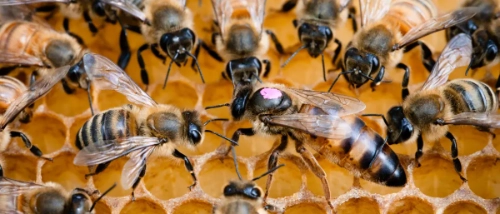
A honey bee queen, surrounded by nurse bees

Queen honey bee

You may have heard of queen honey bees, but let’s learn about what exactly they do. A queen honey bee has mated and keeps sperm that came from drone bees. If she fertilizes an egg, it will become a queen bee or a worker bee; if the egg is not fertilized, it will become a male.

The honey bee colony has only one queen that lays eggs. The queen can live for multiple years and may lay hundreds of eggs in a day. The colony also contains workers that undertake tasks such as creating the hive and giving food to larvae and the queen.

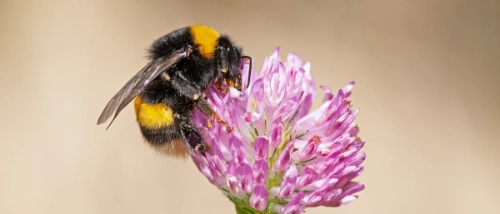
A bumble bee feeding on a pink flower

Bumblebees vs honey bees

Bumblebees are also common in California. You may confuse these two bees, so how are they different? Bumblebees look hairy in general, and are black and yellow in color (but may be orange too) - versus honey bees, which are typically colored orangish brown.

If you’ve ever heard that bees can sting just one time, that doesn’t apply to all of them. Bumblebee females are capable of stinging more than one time, unlike honey bees, which die after stinging humans (due to their barbed stingers). Also, honey bee colonies tend to be larger.

Do honey bees swarm in California?

Bee swarming typically occurs during the spring in California. Africanized honey bees can swarm more frequently, though. Remember not to bother a swarm, or you could get stung. If bees do chase you, do not stand still; rather, run and get inside a structure (or vehicle).

Do not immediately become scared if you see a swarm of bees. Honey bees actually swarm in order to look for a new place to live; they will begin a new colony. This involves a queen and some worker bees. No other bees swarm besides honey bees.

Bee control in California

As a reminder, it is never wise to remove bees on your own. For bees, it is best to call a pest control specialist. Our technicians know the difference between bees and other stinging insects, and can recommend the best course of action, depending on the stinging insect near your home or business. At Western Exterminator, we have a good depth of expertise with bees in California.

We recognize that bees at your home or business can make you feel threatened, and we give our full effort to ensure you feel protected from the stinging insects. Are you concerned about bees at your premises? Contact us as soon as possible so we can come check out the issue and get it resolved.

Frequently asked bee control questions


California's diverse climate and vast agricultural landscapes provide ideal conditions for bees to thrive. The abundance of flowering plants, warm weather, and extended growing seasons create perfect nesting and foraging opportunities for various types of California bees, including honey bees, bumblebees, and carpenter bees.

Yes, Africanized honey bees—often called "killer bees"—are present in California, particularly in the southern regions. They are more aggressive than typical European honey bees and may pose risks when their nests are disturbed. Professional removal is recommended to handle Africanized honey bee infestations safely.

In California, state guidelines strongly encourage relocation over extermination due to their critical role in pollination. Some local ordinances may have specific regulations, and property owners are encouraged to contact local pest control experts for humane and lawful solutions.

To help prevent bees from nesting on your property, seal any cracks or openings in walls, roofs, and outdoor structures. Regularly inspect areas like eaves, attics, and sheds, and remove potential food sources such as exposed trash or sweet-smelling plants near entryways.

Different types of bees in California thrive depending on the region and season, contributing to the state's rich biodiversity. The most common types of California bees include honey bees, bumblebees, carpenter bees, and sweat bees. Each of these species plays a unique role in pollination, but may also create challenges when they establish nests in residential or commercial properties.

Find your local branch

Enjoy pest-free living all year long with PestFree365+. See how our home pest control plan protects you and your family from 39 common pests.