© 2026 Rentokil Initial plc and subject to the conditions in the Legal statement
Quick overview
- Only Anopheles mosquitoes can transmit malaria
- Malaria is caused by a parasite, not a virus or bacteria
- Malaria is not contagious; it cannot be transmitted from person to person
- Most cases occur in sub-Saharan Africa
- Reducing standing water helps cut mosquito numbers
Malaria is one of the most well-known mosquito-borne diseases worldwide. According to the World Health Organization’s 2025 World Malaria Report, there were an estimated 282 million malaria cases globally in 2024. While that number is largely concentrated in tropical regions far from the U.S., understanding how mosquitoes carry malaria is useful for anyone travels internationally, or simply wants to know more about the insects buzzing around their yard.
Do all mosquitoes carry malaria?
Only mosquitoes of the Anopheles genus can transmit malaria to humans. There are around 3,500 known mosquito species worldwide, and only a small number of Anopheles species transmit the disease.
That said, many mosquito species can still carry other diseases, so reducing mosquito activity around your home is always a good idea. Learn more about the signs of mosquitoes on your property and what to look out for.
How is malaria transmitted?
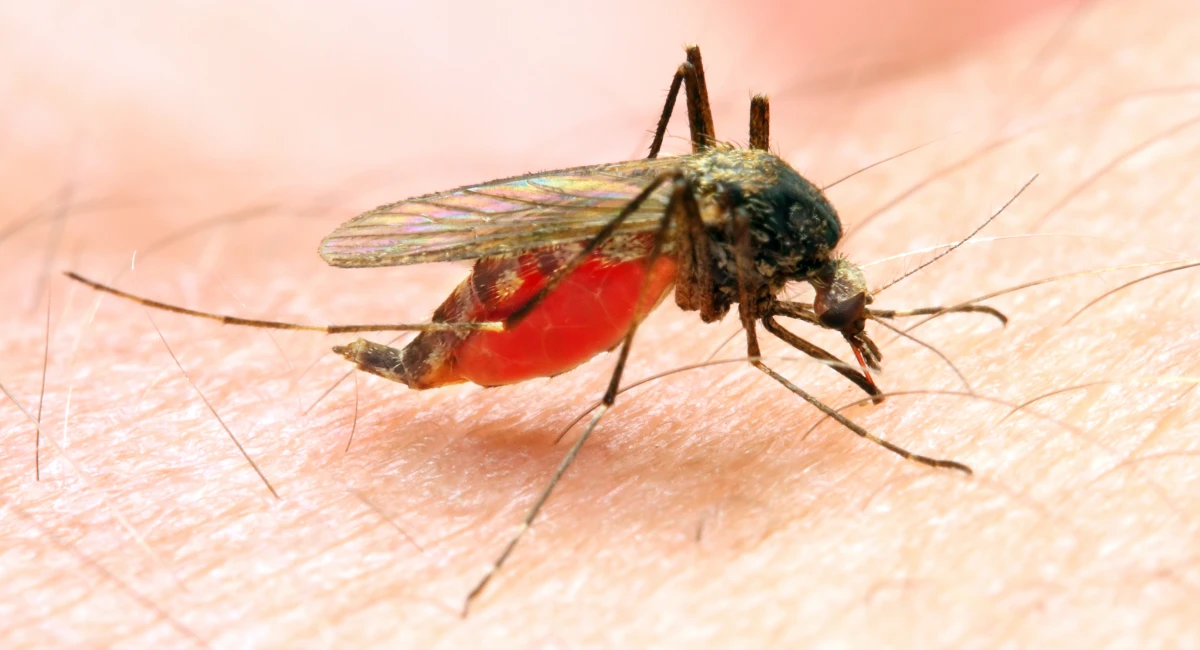
How malaria is transmitted comes down to a single moment: the bite of an infected Anopheles mosquito. When an infected female mosquito bites a person, she passes a microscopic parasite called Plasmodium into the bloodstream. It's this parasite, not the mosquito itself, that causes malaria.
How does a mosquito get malaria?
The mosquito itself picks up the Plasmodium parasite when it feeds on the blood of an already-infected person. Once inside the mosquito, the parasite develops and migrates to the salivary glands, where it can be passed on during the next bite. It's a cycle that requires both a human host and a mosquito vector to keep going.
Can you get malaria in the United States?
Malaria is not endemic in the U.S., so local transmission is very rare. The main risk is for travelers returning from malaria-endemic regions. If you've traveled abroad and develop fever or flu-like symptoms, consult a healthcare professional promptly.
According to the CDC, most cases of malaria occur in sub-Saharan Africa, but it can also be found in South and Southeast Asia, parts of Oceania, Central America, and South America. The WHO provides a handy global map of malaria cases.
Is malaria contagious?
Malaria is not contagious in the way a cold or flu is. You cannot catch it from being near someone who has it, touching them, or sharing space with them. The disease requires a mosquito to act as the go-between, or a direct exchange of blood between humans with malaria, which is rare.
The development stage: how malaria grows inside a mosquito
When a female Anopheles mosquito bites someone with malaria, it sucks blood containing tiny malaria parasites. Inside the mosquito's stomach, these parasites grow and multiply over one to three weeks.
Once ready, the new parasites travel to the mosquito's salivary glands. The next time the mosquito bites a person, it passes the parasites into their bloodstream.
Mosquitoes that have never bitten an infected person do not carry malaria. According to the CDC, warmer temperatures speed this process up, which is one reason malaria transmission is more intense in tropical climates.
The silent incubation phase in the human liver
After entering a person's body, the parasites quickly travel to the liver. For about one to two weeks, they grow silently without making the person feel sick. There are no symptoms and no warning signs during this stage.
When they burst out of the liver into the blood, symptoms like fever and chills begin.
Some malaria types, including Plasmodium vivax and Plasmodium ovale, can also lie dormant in the liver and reactivate months or even years later, causing illness long after the original bite. This is one reason malaria can be difficult to diagnose in returning travelers.
If you travel to a region with malaria and develop a fever, see a healthcare professional right away, even if it's been weeks or months since your trip.
Alternative transmission routes: spread beyond mosquitoes
Mosquito bites are by far the most common way malaria spreads, but they're not the only route. In rare cases, Plasmodium can be transmitted through direct blood-to-blood contact, bypassing the mosquito entirely.
These non-vector routes include:
- Blood transfusions: Malaria parasites can survive in donated blood. In regions where malaria is not endemic, blood banks screen for this, but the risk is not zero, particularly with blood sourced from travelers or donors who have visited endemic areas.
- Organ transplantation: A transplanted organ from a donor who has malaria, even asymptomatically, can transmit the parasite to the recipient.
- Shared needles: Needle-sharing among people who inject drugs can transmit malaria if one person carries the parasite in their blood.
- Congenital transmission: In rare cases, a pregnant woman with malaria can pass the parasite to their baby during pregnancy or delivery. This is known as congenital malaria.
An important distinction: when malaria is transmitted through blood products or organ transplants, the liver stage of the parasite's development is bypassed entirely. This means there are no dormant hypnozoites and no risk of relapse from that particular infection. The parasite goes straight to the blood stage, which can make diagnosis faster but also means symptoms may appear more quickly.
These routes are uncommon, but they're worth knowing about, particularly for healthcare workers, frequent travelers, and anyone managing health risks in a professional setting.
How to reduce your risk of mosquito bites
If you're heading to a region where mosquito-borne diseases are a concern, a few simple steps can help reduce your risk:
- Use repellent: Apply an EPA-registered insect repellent to exposed skin. In many affected regions, mosquitoes can bite during both day and night.
- Wear protective clothing: Long sleeves and pants offer a physical barrier, especially at dawn and dusk when mosquitoes are most active.
- Choose your accommodation carefully: Where possible, stay somewhere with air conditioning or screened windows and doors. If sleeping outdoors, be sure to use a mosquito net.
Schedule your free pest inspection today
Get peace of mind knowing your home or business is protected. Our technicians will assess your property and recommend customized solutions.
Book your free pest inspection today
Our local technicians will assess your property and recommend tailored solutions. Fast, friendly, and completely obligation-free.
- Targeted treatments
- Local experts, fast response
- Trusted, trained technicians