© 2026 Rentokil Initial plc and subject to the conditions in the Legal statement
Quick overview
- Dengue is spread by Aedes aegypti and Aedes albopictus mosquitoes
- It is one of the world's most common mosquito-borne diseases
- Symptoms include fever, rash, and joint pain
- No specific antiviral treatment exists
- Mosquito control is the best line of defense
Dengue fever is one of the most widespread mosquito-borne viral illnesses in the world. While it's most common in tropical and subtropical regions, understanding how it spreads, and what you can do to reduce your exposure, is useful for anyone traveling abroad. According to the WHO, more than 14.6 million dengue cases were reported globally in 2024, the highest ever recorded in a single year.
How does dengue fever spread?
Dengue spreads through the bite of an infected mosquito. When a mosquito feeds on a person who already has the dengue virus in their blood, it picks up the virus. After an incubation period inside the mosquito, it can then pass the virus on to the next person it bites.
Dengue fever does not spread directly from person to person. You can't catch it through touch, coughing, or sharing food. The mosquito is the essential link in the chain. Without it, the virus can't spread. This is why controlling mosquito populations is so important.
Which mosquito causes dengue fever?
Not all mosquitoes carry the dengue virus. Two specific species are responsible, and knowing how to tell them apart matters.
Aedes aegypti - the primary vector
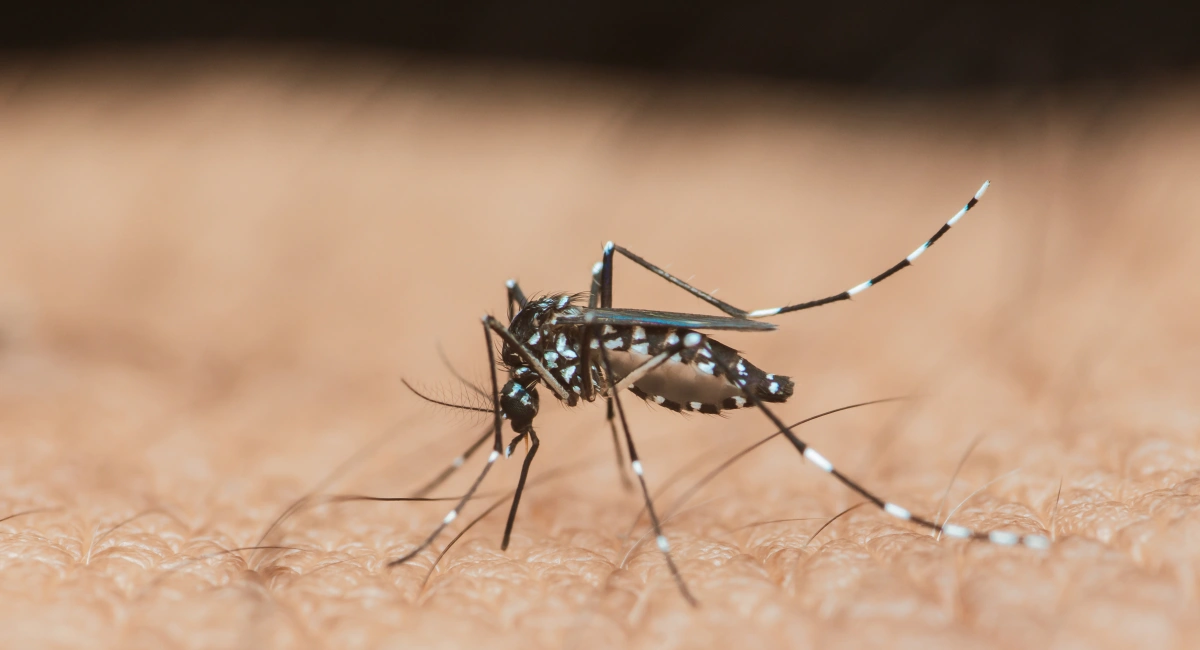
Aedes aegypti is the main driver of dengue transmission worldwide. It's a small, dark mosquito with distinctive white markings on its legs and a pattern resembling a lyre on its upper body. It has adapted remarkably well to urban environments, breeding in small containers of standing water found around homes and businesses.
What makes this species particularly difficult to manage is its preference for human hosts and that, unlike most mosquitoes, it is most active during the day. Unlike many mosquitoes that feed on a range of animals, Aedes aegypti strongly prefers human blood, which makes it highly efficient at spreading the virus between people.
Aedes albopictus — the secondary vector
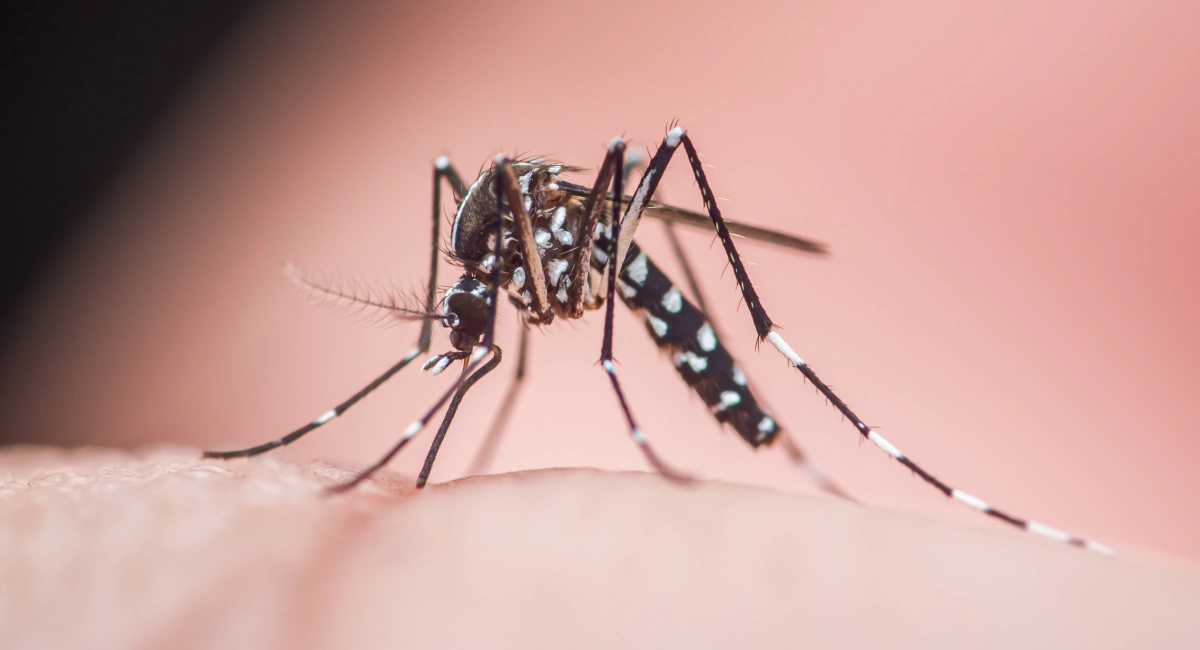
Aedes albopictus, commonly called the Asian tiger mosquito, is identifiable by its bold black-and-white striped pattern. It's a secondary vector for dengue but plays a growing role as its range expands. Originally from Southeast Asia, it has spread across much of the U.S., including parts of the West Coast, the South, and the Mid-Atlantic states.
While Aedes albopictus is less efficient at transmitting dengue than Aedes aegypti, it's more cold-tolerant and adaptable, which means it can survive in a wider range of climates. Knowing the signs of mosquitoes around your property is a useful first step in reducing your exposure.
Daytime biting behavior vs. nighttime vectors
One of the most important things to understand about dengue mosquitoes is when they bite. This sets them apart from many other disease-carrying mosquitoes and changes how you need to protect yourself.
Aedes aegypti and Aedes albopictus are daytime biters. They are most active during the early morning hours after sunrise and in the late afternoon before sunset. This is the opposite of mosquitoes like Anopheles (which spreads malaria) or Culex (which spreads West Nile virus), both of which are primarily active at dusk and through the night.
This daytime activity pattern has real implications for how you protect yourself:
- Standard nighttime precautions aren't enough. Sleeping under a mosquito net helps at night, but it won't protect you during the day when dengue mosquitoes are most active.
- Repellent use matters during daylight hours. Apply an EPA-registered insect repellent before outdoor activities in the morning and afternoon, not just at dusk.
- Indoor exposure is a real risk. Aedes aegypti readily enters homes and bites indoors, so window screens and air conditioning provide meaningful protection.
If you're traveling to a dengue-endemic region, daytime vigilance is just as important as nighttime protection.
The human-to-mosquito transmission cycle (viremia)
Understanding how dengue moves from person to mosquito, not just mosquito to person, helps explain why controlling mosquito populations is so critical.
When a person is infected with dengue, the virus circulates in their bloodstream. This is called viremia. During this window, if an uninfected Aedes mosquito feeds on that person, it ingests the virus along with the blood meal.
According to the WHO, human-to-mosquito transmission can occur up to two days before a person shows symptoms, and up to two days after their fever resolves. This means someone can unknowingly pass the virus to a mosquito even when they feel fine or think they're recovering.
Once inside the mosquito, the virus replicates in the midgut before spreading to the salivary glands. This process, called the extrinsic incubation period, takes roughly eight to 12 days at typical tropical temperatures. After that, the mosquito can transmit the virus for the rest of its life.
This cycle is one reason why dengue can spread so rapidly in densely populated areas with high mosquito activity. Reducing mosquito populations through professional treatment is one of the most effective ways to interrupt it.
Where is dengue fever found?
Dengue is endemic in more than 100 countries, primarily across tropical and subtropical regions of Southeast Asia, Latin America, the Pacific Islands, and parts of Africa. For most people in the continental U.S., the risk of contracting dengue at home is low, but it's not zero.
Localized outbreaks have occurred in Florida, Texas, and Hawaii, typically linked to travel or local Aedes mosquito populations. According to the CDC, while local spread is possible, most dengue cases reported in the U.S. are in travelers returning from affected regions. If you're planning international travel, it's worth checking current health advisories before you go.
What are the symptoms of dengue fever?
According to the Mayo Clinic, most people recover from dengue fever within a week or two. Not all people infected with dengue will show symptoms. When they do occur, dengue symptoms can range from a high fever and flu-like symptoms to the life-threatening dengue hemorrhagic fever, which can cause bleeding and a sudden drop in blood pressure.
The clinic recommends that if you suspect you might have contracted dengue fever after recent travel you should consult a healthcare professional.
Maternal and vertical transmission: pregnancy risks
The vast majority of dengue cases are transmitted by mosquito bites. However, there is documented evidence that dengue can also pass from a pregnant person to their baby, a process known as vertical transmission.
According to the CDC, pregnant women can transmit the dengue virus to the fetus during pregnancy or around the time of birth. The risk appears to be highest when a mother contracts dengue late in pregnancy or close to delivery, when viral levels in the blood tend to be elevated.
The WHO notes that vertical transmission rates appear low overall, but the consequences for the newborn can be serious. Potential outcomes include:
- Premature birth
- Low birth weight
- Fetal distress
- In rare cases, fetal death
Most newborns who contract dengue through vertical transmission are asymptomatic, but symptoms can develop within the first two weeks of life. These can range from mild fever and rash to more severe presentations involving bleeding complications.
If you are pregnant and traveling to a dengue-endemic region, speak with your healthcare provider before you go.
Rare non-vector transmission: blood products, organ transplants, and needlesticks
While mosquito bites account for the overwhelming majority of dengue infections, a small number of cases have been linked to other routes of transmission. These are rare but worth understanding, particularly for healthcare workers and those in medical settings.
The WHO confirms that rare cases of dengue transmission via blood products, organ donation, and transfusions have been recorded. This can occur when a donor is in the viremic phase of infection, sometimes before symptoms appear, and the virus is present in donated blood or tissue.
Similarly, needlestick injuries in healthcare settings have been documented as a potential route of transmission, though these cases are uncommon.
For the general public, the risk from these routes is extremely low. The focus for most people should remain on reducing mosquito exposure and eliminating breeding sites around the home.
How to reduce your risk of mosquitoes and dengue
The most direct way to reduce your risk of catching dengue fever from mosquito bites is to reduce the mosquito population around your property and increase personal protection.
Personal protection:
- Use an EPA-registered insect repellent when outdoors
- Wear long sleeves and pants, especially during peak biting hours
- Use window and door screens to keep mosquitoes out
- Sleep under a mosquito net if you're traveling to a high-risk area
Around your property:
While the risk of contracting dengue in the U.S. is very low, these steps can help you reduce the general risk of mosquitoes.
- Remove standing water from flower pots, birdbaths, gutters, and any containers that collect rainwater; Aedes mosquitoes can breed in as little as a teaspoon of water
- Keep vegetation trimmed, as mosquitoes rest in shaded, leafy areas
- Check for and fix any leaks or drainage issues around your home
For more reliable, longer-lasting results, professional mosquito treatments are the better option. Our technicians inspect your property, identify breeding sites, and apply targeted treatments to help reduce mosquito populations at the source. Whether you need a one-time service or ongoing seasonal protection, we can build a plan that works for you.
Book your free pest inspection today
Our local technicians will assess your property and recommend tailored solutions. Fast, friendly, and completely obligation-free.
- Targeted treatments
- Local experts, fast response
- Trusted, trained technicians