Temps and termites are on the rise. Schedule your free inspection today.

800-937-8398 Call us for a free quote Contact us

Springtail characteristics and facts

Springtails (Collembola) are tiny, soil-dwelling arthropods often mistaken for insects. There are hundreds of different species of springtail found in the US, including snow fleas, globular springtails, lucerne fleas, and water springtails. They're usually harmless and are considered occasional invaders. In nature, springtails play a beneficial role by breaking down decaying plant matter and leaf litter, and helping recycle nutrients into the soil. However, they can sometimes appear in large numbers around homes, patios, or basements, especially in damp conditions, and become a nuisance.

Springtail identification

Springtails are often mistaken for other tiny pests because of their quick, jumping movements and tendency to appear in large groups. They use the forked structure attached under their abdomen to fly into the air, like fleas. Unlike fleas, they do not bite. They are wingless and humpbacked. 

Many springtails are too small to be seen clearly without magnification, but in the right conditions, they can appear in visible swarms.

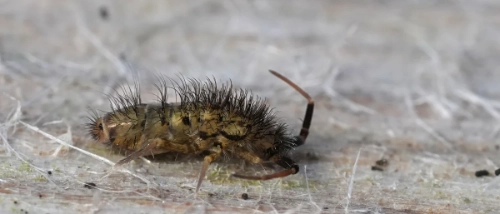
A close-up of a springtail on the ground

What do springtails look like?

Springtails are very small, usually less than one-eighth of an inch long, and can be hard to spot individually. 

They come in a range of colors, including gray, black, white, and sometimes bluish. Their bodies are soft, rounded, and covered in fine hairs, and they tend to have short antennae, six legs (making them hexapods). They do not have wings. 

Springtails have a tiny, forked structure called a furcula tucked underneath their body. When released, their furcula allows springtails to jump into the air when they sense danger.

Signs of a springtail infestation

Springtails are small and harmless, but they can show up in large numbers when moisture levels are high. While they don’t bite or damage property, their sudden appearance indoors can still be a sign of a bigger issue. Look for these signs:

Live springtails indoors

You may see tiny, dark insects crawling or hopping near windows, sinks, or drains. They often show up in kitchens, bathrooms, or basements; anywhere with high humidity or standing water.

Clusters near houseplants or damp areas

Springtails thrive in moist soil. If your plants are overwatered or your soil is constantly damp, they may gather on the surface or around the base of the pot.

Movement that looks like “jumping dust”

When disturbed, springtails launch themselves into the air. This springing motion is a key way to tell them apart from other small pests. 

Key springtail characteristics to look out for: 

  • A quick, springing motion caused by a tiny forked appendage underneath the body
  • Soft, oval-shaped bodies with short antennae
  • No wings and unable to fly
  • Typically found in moist areas like soil, leaf litter, drains, or around overwatered plants
  • Some species, like those nicknamed “snow fleas,” can also be seen outdoors on the snow surface during late winter or early spring

Need help with springtail identification? Western can help identify and treat your pest infestation.

Habitat, diet, life cycle, and behaviors

These springtail facts and habits can help you understand where they live, why they infest properties, and what risks they might indicate.

Springtails may seem to put on airs with their fancy spring tail, but they are really one of the most primitive insects. They are primarily native to North America, but are found almost everywhere. These bugs are used to extremely close quarters — up to 50,000 per cubic foot. That's a small personal bubble. 

They love moist outdoor locations, such as algae, fungi, and decaying vegetables. Inside, they seek potted plants, floor drains, damp basements, or crawl spaces.

Springtails feed on fungi, mold, algae, and decaying organic matter. That’s why you’ll often see them in areas with damp soil or rotting leaves. Inside the home, they may be drawn to mildew, algae in drains, or the damp soil of houseplants. They are also fans of dried milk powder.

One thing to note: springtails don’t eat wood, food, or fabric, and they aren’t typically drawn to human or pet food. If you’re seeing damage to any of these items, another type of pest is likely to blame.

Springtails go through a simple life cycle: egg, nymph, and adult. Female springtails lay their eggs in moist soil or organic debris. Once hatched, the nymphs look like smaller versions of the adults and grow through a series of molts.

Under the right conditions, they can complete their life cycle in just a few weeks, and adults may live for several months.

Springtails are most active when the humidity is high. They avoid dry areas and will migrate quickly in search of moisture. Their most distinctive behavior is their ability to jump when disturbed. This is made possible by a tiny, spring-like structure under their abdomen called a furcula.

They don’t bite, sting, or cause damage, but seeing large numbers indoors may indicate excess moisture in your home that should be addressed.

Are springtails dangerous?

Springtails are not considered dangerous to people or pets because the bugs don’t bite, sting, or spread disease, and they typically don’t cause damage to homes or belongings. While seeing them indoors can be frustrating, they’re more of a nuisance than a threat. However, springtail infestations may indicate a moisture issue in homes.

How to get rid of springtails

The best way to get rid of springtails is to address the moisture that’s attracting them. Since they thrive in damp conditions, drying out the affected areas is often the most effective solution. 

However, if springtails keep showing up, despite your best efforts, schedule an inspection with a Western Exterminator technician. We’ll help you find the source of your infestation and recommend the right treatment for your home or business.

A close-up of a small, hairy springtail

Springtail prevention tips

The best way to prevent springtails is to reduce moisture in and around your home. 

Start by repairing any leaky pipes, faucets, or appliances that may be creating damp areas. Use a dehumidifier in humid spaces like basements, crawl spaces, or bathrooms. Also, try to avoid overwatering houseplants, and let the soil dry out between waterings.

Outside, make sure to clear away damp mulch, leaves, and other organic debris near your home’s foundation. It also helps to seal any gaps around windows, doors, and vents to limit their entry points. Keeping things dry and well-sealed makes your home much less attractive to springtails.

Need help with occasional pest invaders?

Springtails are one of many pests that can appear when dampness levels rise. If you’re seeing small insects that jump or gather near sinks, plants, or windows, it’s important to act quickly. Western’s pest control team can help find the source, treat the problem, and give you tips to prevent springtails from coming back. 

Click the button below to schedule your free springtail inspection.

Frequently asked questions

No, springtails do not bite. They don’t have the mouthparts needed to break skin, and they pose no risk to people or pets.

No, springtails do not fly. They don’t have wings, so instead they move by crawling or jumping using a tiny tail-like structure under their bodies.

Yes, jumping is one of the most noticeable traits of springtails. They use a forked structure called a furcula to spring into the air when disturbed.

When outdoor moisture levels are too high or too low, springtails may migrate toward buildings in search of stable humidity. Indoors, they often appear in basements, crawl spaces, bathrooms, or around overwatered plants; anywhere that stays damp. They usually enter through cracks, vents, or gaps around windows and doors, especially after heavy rain or snowmelt. 

If you’re seeing them indoors regularly, it may be time to contact one of our pest control experts for help.

Not usually. Springtails feed on decaying plant matter, fungi, and algae, not live plants. In fact, they help break down organic material in soil. In very large numbers, they might bother seedlings, but serious plant damage is rare.

Find your local branch

See what the hot pest topics are in Mr. Little’s world.