Temps and termites are on the rise. Schedule your free inspection today.

800-937-8398 Call us for a free quote Contact us

Clover mites (Bryobia praetiosa) are considered a nuisance pest, invading structures by the thousands, primarily in the spring and autumn. Clover mites are distributed worldwide and found throughout the United States. Once considered more of an occasional invader, they are now a serious pest due to the housing boom associated with suburban sprawl and the installation of well-fertilized lawns growing close to the foundations of houses.

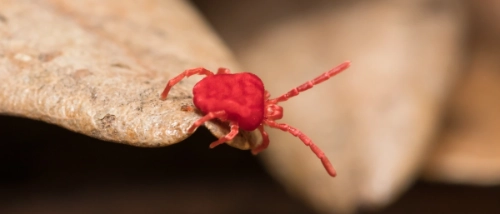
Clover mite crawling over brown foilage

Characteristics

Clover mites are tiny, about 1/30 of an inch, making them smaller than a pinhead. 

The reddish-brown color of their bodies and their long front legs make them fairly easy to spot once you know what to look for. 

These mites have eight legs, no antennae, and no wings. Because of their tiny size and reddish color, they are often mistaken for other pests and can leave a stain if crushed.

Identification

To spot a clover mite infestation, look for their reddish color. You might see them moving slowly on windowsills, walls, or furniture. Their defining feature is a pair of elongated front legs, which can be mistaken for antennae. 

While they don’t bite or transmit diseases, the sheer number in which they appear can overwhelm homeowners. They tend to crawl near cracks, gaps, and other small crevices that provide easy access indoors. Spotting tiny red smears is another telltale sign.

Clover mite habitat

Clover mites are sun-seekers and will gather on sunny southern and eastern exposures of homes. When clover mites have thoroughly infested a building, they can be a significant nuisance to homeowners. Clover mites appear as dark red specks crawling around siding, doors, windows, drapes, curtains, and furniture.

Clover mite lifecycle

Clover mites overwinter chiefly in the egg stage, under bark, in cracks in fence posts, under sheathing of buildings, in cracks in the foundation, or in dry, protected sites. Winter eggs begin to hatch very early in spring, and one generation is completed during the spring and early summer.

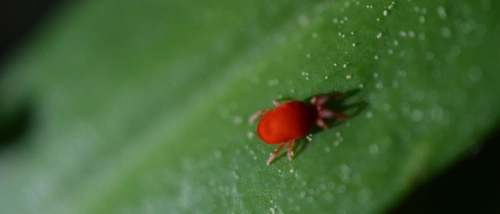
Clover mite on green leaf

Where are clover mites found in the U.S.?

Clover mites are found in most parts of the United States. They are common in areas with extensive lawn fertilization and dense plant growth around homes and buildings. States with seasonal changes where spring and fall have mild temperatures will likely see more mite activity.

Clover mites' behaviors, threats, or dangers

Clover mites are pests not because they bite or cause disease, but simply because they can invade a structure in unbelievable numbers. In 1954, one single bedroom was estimated to have 250,000 mites crawling on the floor! When crushed, clover mites leave a red stain that is not blood; it is their natural color. Since clover mites are so small, homeowners may not even recognize them in their house until they have spread. However, what most people are likely to notice are the red stains clover mites leave behind.

Are clover mites hard to get rid of?

Getting rid of clover mites can be tough without help. Their tiny size allows them to slip into homes through almost any small crevice. While vacuuming and sealing cracks may offer short-term relief, these DIY methods typically do not address the underlying issue. To help get rid of clover mites and avoid repeated issues, it’s best to contact your local Western expert. We know where to look and how to treat affected areas properly.

How many clover mites count as an infestation?

If you see more than a few clover mites around doors, windows, or inside your home, it may be the start of an infestation. Their numbers can grow fast, especially in spring and fall. It doesn’t take thousands to create a problem; spotting even a dozen or so inside could mean many more are nearby.

If you think you're dealing with clover mites, contact Western Exterminator. We know how to handle occasional invaders and nuisance pests. No matter how big or small the problem is, we're here to help.

Frequently asked questions

No. Clover mites don’t bite or transmit diseases and pose no health risk to people or pets.

They do not. These pests are harmless but annoying due to the large numbers they gather.

The clover mite diet includes grass, weeds, and other plants. They feed by sucking plant juices.

Look for their reddish color and their long front legs. They’re smaller than a pinhead and move slowly.

Yes, in some cases. But in many, they keep returning unless the source is addressed. Professional treatment is often needed for full peace of mind.

The clover mite lifespan is short; adults typically live for about two weeks, but their rapid breeding can lead to large populations in a short time.

Find your local branch

Enjoy pest-free living all year long with PestFree365+. See how our home pest control plan protects you and your family from 39 common pests.