Temps and termites are on the rise. Schedule your free inspection today.

800-937-8398 Call us for a free quote Contact us

Common types of California spiders

California is home to a variety of spiders - a fact you might know from a personal (and perhaps frightening) encounter with one of these arachnids. Spiders might scare you, but don’t worry - it’s our duty to instruct you on the ins and outs of some of these pests you might see.

The following creatures are examples of spiders in California:

Whether you live in Los Angeles or San Francisco, or elsewhere in the Golden State, we will help you understand the basic facts about some commonly encountered California spiders. And don’t forget - if spiders have taken up residence in or around your property, you can book a free pest inspection today.

Contact our local spiders experts

* Required field

Download this report

Types of spiders in California

Common types of spiders in California include the American house spider, wolf spider, orb weaver, and cellar spider. These spiders vary in size, shape, and color, but most are harmless to people and play a role in managing insect populations.

Some common spiders include the Phidippus genus of jumping spiders, Parasteatoda tepidariorum (the common house spider), and Argiope argentata (a striking garden orb weaver). You might also come across spiders like the European sheetweb spider (Malthonica spinimana), the funnel weaver (Hololena longinqua), or the goldenrod crab spider (Misumena vatia), depending on your location and the time of year. While these spiders may seem intimidating, most prefer to stay out of your way.

Understanding the kinds of spiders you’re likely to see helps you know which ones are harmless and which might need a closer look. If you’re unsure what kind of spider is in your home, reach out to us for help identifying and addressing the issue.

A common house spider on a white background

American house spider

The American house spider is one of the most common types of spiders in California. Often found in homes, these spiders build tangled webs in quiet, undisturbed areas like basements, closets, and garages. Their coloring is usually gray or brown with subtle markings across the body and cephalothorax (the head, or front section), making them easy to spot.

Though their appearance might be unsettling, American house spiders aren’t dangerous to humans. Bites are rare and typically only occur when the spider feels trapped. These spiders can help reduce other pest populations in your home by feeding on insects caught in their webs. If you spot webs around your property, removing them regularly can help keep their numbers in check.

A close-up of a black widow on a web

Western black widow spider

The black widow spider has a nasty reputation, so if you’re a California resident, you should learn how to identify it. You may think female black widow spiders consume the males after they mate, but this hardly ever occurs (although this is where the common name of widow spiders comes from).

In California, you may run into the western black widow spider (Latrodectus hesperus). Females are dark in color (they are typically black but can also be dark brown). Males are generally not black and are smaller than the females. Adult western black widow females are 5/16 to 5/8 inches in length. The abdomen of the western black widow female has an hourglass-shaped mark that’s usually red or orange. Western black widows are typically located in shielded, dry spots such as hollow stumps, sheds, and barns.

You might be concerned about the black widow spider’s poisonous bite. Know that male black widow spiders hardly ever bite, but females will bite to defend themselves - particularly when they are protecting their eggs. If you are bitten, you may or may not feel a pinprick. The pain typically comes nearly right away, though. You may also experience swelling and redness. High blood pressure, nausea, and sweating are possible, among other symptoms. Get medical attention right away if a black widow spider bites you.

Have you seen black widow spiders around your property, or do you suspect they’re around? You should reach out to a pest control expert as soon as possible. Contact Western Exterminator to fight the problem.

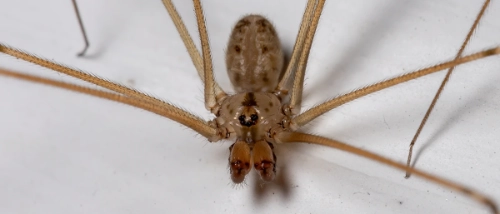
A close-up of an adult cellar spider

Cellar spider

Have you observed a spider with really long legs? It may have been a long-bodied cellar spider (Pholcus phalangioides). Cellar spiders get their name because they are often found in damp, dark locations such as cellars.

The long-bodied cellar spider adult is typically pale yellowish to light brown or gray in color. Their legs are thin and long. The bodies of adult females are about ¼ to 5/16 inches in length, whereas males’ bodies are about ¼ inch in length. Do not mistake long-bodied cellar spiders for harvestmen, which are also arachnids but are not actually spiders.

You may find a cellar spider web in your basement or cellar, or in a corner of your garage. Despite the cellar spider’s somewhat eerie appearance, this spider isn’t likely to hurt you. Still, eliminating its webs can turn into an annoyance. Cellar spiders do not eliminate their webs; rather, they tack new webbing onto existing webbing. Cellar spider webs are frequently located in corners.

The long-bodied cellar spider female can make three egg sacs (the sacs each have 13 to 60 eggs). It typically takes about one year for a cellar spider to become mature.

If you’re seeing a lot of cellar spiders at your home or business, contact Western Exterminator to find a fitting control solution for these pests.

 A female brown widow spider

Brown widow spider

Did you know the black widow isn’t the only widow spider out there? Brown widow spiders have come into areas of Southern California in recent years, so here’s your chance to learn more about them.

The brown widow spider is brown or grayish-brown in color. The abdomen has three white spots. It has an hourglass mark that’s yellow to orange. A baby brown widow spider can look a bit like a baby black widow spider, but the very young brown widow spiders are colored with more brown. Also, grown brown widow spiders look like immature western black widow spiders, so you need to be careful when trying to identify the type of spider.

You won’t likely see brown widows inside your home - rather, they can be found at places that have more exposure (under eaves, for example). Keep in mind that brown widow spiders are venomous; however, the brown widow bite is not likely to be as severe as the black widow bite. A brown widow’s bite can result in pain and a red mark, but if more serious symptoms crop up, get medical attention.

A close-up of a false black widow

False black widow

The false black widow spider (Steatoda) is often mistaken for its more dangerous cousin, the black widow. Its body is bulbous and dark brown or purplish, without the red hourglass marking. It may be found in sheds, basements, and corners of homes.

Though it is not as harmful as a true black widow, the false black widow spider can still bite when disturbed. Symptoms of a bite might include pain and swelling, but serious reactions are rare. If you think you’ve found a false black widow or have been bitten, it’s best to seek advice from a healthcare provider and have us assess your property for further activity.

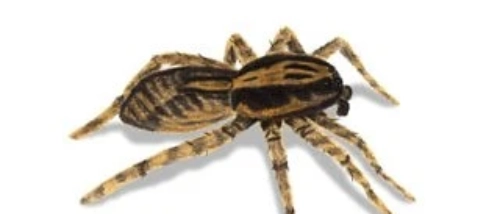
Wolf spider

Wolf spider

Wolf spiders belong to the Lycosidae family and are found across California. They are fast-moving and are often seen on the ground rather than in webs. These spiders are usually brown or gray, with hairy bodies and strong legs.

Wolf spiders do not spin webs to catch prey. Instead, they hunt insects on the ground. While large and intimidating, their bites are rare and typically not dangerous to humans. Their presence indoors can be unsettling, though, and often signals other pest issues.

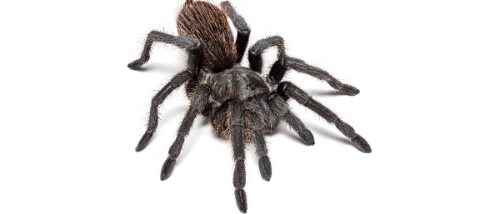
Tarantulas

Tarantulas

California is home to several species of tarantulas, especially in dry, desert-like areas and grasslands. These large, hairy spiders are slow-moving and mostly active during the warmer months or mating season in the fall.

Tarantulas may look scary, but they are generally not aggressive. They have fangs and venom, but their bite is not considered dangerous to humans unless an allergic reaction occurs. If you do see one on your property, it’s best to leave it alone. If tarantulas become a recurring issue, our team can assess your home and provide solutions.

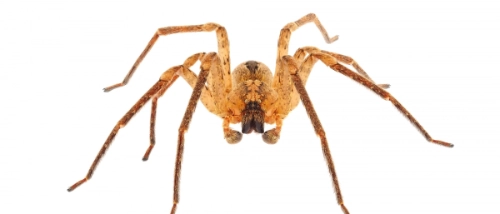
A desert recluse spider against a white background

Desert recluse

The desert recluse spider is one of the more concerning types of spiders in California, especially in the southern part of the state. It's light brown in color and is known for a violin-shaped marking on its back, though this may not always be visible. Because these spiders like hiding in undisturbed areas, clutter in garages or sheds can attract them. 

This recluse spider’s venom can lead to complications for some people in rare cases, including skin damage. Bites are not common, but if you think you’ve been bitten, see a healthcare professional right away and capture the spider for identification. Misdiagnosis of many other common skin conditions as spider bites is common. Without a spider to identify and confirm that it is the cause of the sore, it is nearly impossible to say that a spider caused the sore.

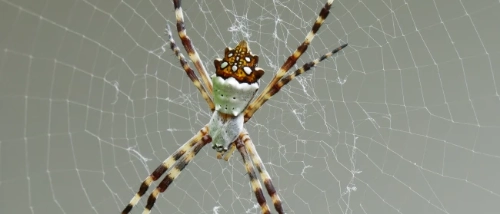
A silver garden orb weaver on a web

Silver garden orb weaver

The silver garden orb weaver is a type of Araneidae spider commonly seen in gardens and shrubs throughout California. Known for its bright silver or white markings, this spider builds circular webs to trap flying insects.

Despite its striking look, the silver garden orb weaver is not harmful to people. It's a helpful garden resident that keeps insect populations down. If webs become a nuisance around your property, we can help manage the situation while preserving helpful species where possible.

Are there poisonous or venomous spiders in California?

Yes, there are venomous spiders in California. Some of the most notable are the black widow and brown widow, both of which can be found in and around homes in the state. These spiders are known for their potent venom, though serious reactions to bites are rare. The yellow sac spider and the desert recluse also carry venom that may cause health issues in some people.

So, are there poisonous spiders in California? The term "poisonous" is often confused with "venomous." While technically incorrect for spiders, many people use "poisonous" to describe these species. What matters most is knowing how to spot and avoid them. If you're unsure whether the spider you've found is dangerous, it's best to leave it alone and call us to take a look.

Remember, spider bites can cause different reactions depending on the person. Always see a healthcare professional if you think you've been bitten by a spider and are having symptoms.

Spider control in Los Angeles

Get the kind of peace of mind that only comes from Western Exterminator.


Spiders in Riverside

Looking for the local authority in spider control for Riverside, CA? Count on Western Exterminator to eliminate the problem.

San Diego spider control

Our specialists live and operate in San Diego, available to help you with any spider problem you might encounter.

Spiders in your California home? Call your local experts

Western Exterminator can help do away with the spiders that are infesting your California property and help prevent them from returning. If you think (or know) that you’ve got a spider problem, get in touch with us today. Whether it’s a one-off inspection or as part of our pest control plan, PestFree365+, we can help.1

1 Treatments and Covered Pests defined in your Plan. Limitations apply. See Plan for details

Find your local branch

Using Integrated Pest Management with targeted treatments, you will receive the most effective pest control with the least environmental impact.