© 2026 Rentokil Initial plc and subject to the conditions in the Legal statement
Quick overview
- Small holes in packaging, live insects near shelving, and webbing in corners can all point to stored product pests.
- These pests, beetles, moths, and mites, feed on grain, flour, nuts, and other dry goods.
- Catching the signs early limits product loss and protects your reputation with customers and auditors.
- Prevention comes down to inspection habits, sanitation, and proper storage.
- A pest control plan backs up your day-to-day prevention efforts.
A bag of flour looks fine from the outside. Then someone opens it and finds a scattering of tiny beetles. This is how most stored product pest problems get discovered, not from an obvious sign, but from something small and unexpected.
Stored-product insects (SPIs) are easy to miss because of their size, but the cost of missing them isn't small. Wasted inventory, failed inspections, and customer complaints can all follow. Here's what to look for and what to do about it.
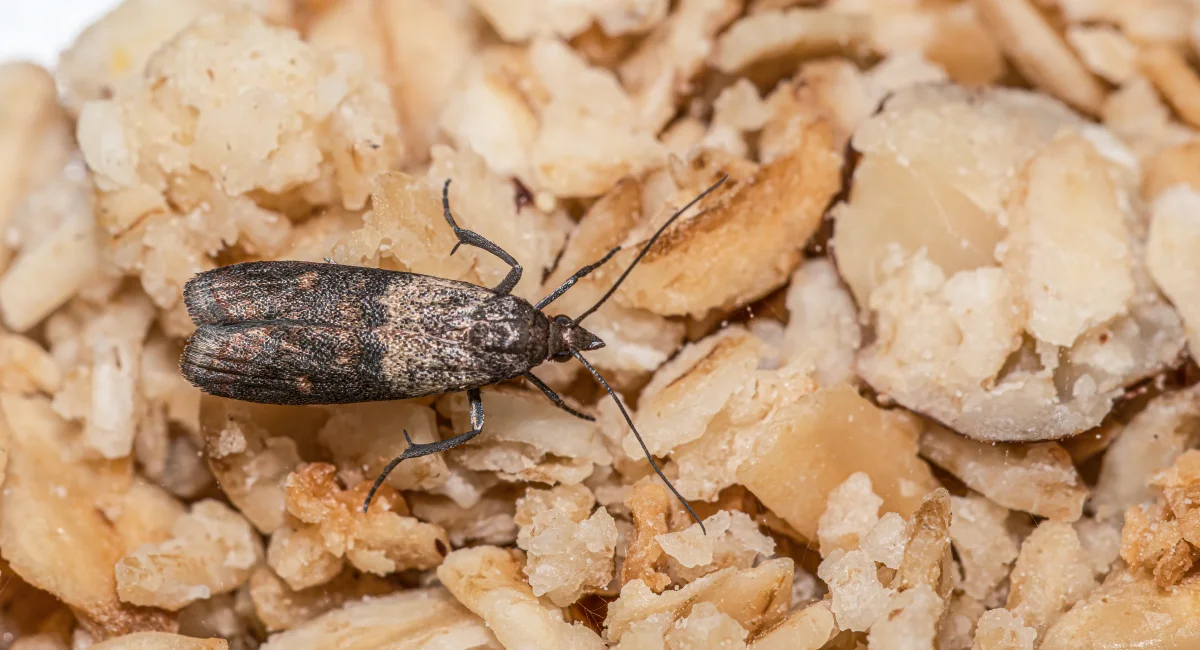
Signs you have a stored product pest infestation
Regular inspections of stored products and storage areas is critical to early detection of an infestation. However you also have to know what you’re looking for. Here are some signs to help you detect stored product pests early.
Sign one: holes or damage in packaging
Some stored product pests can chew through paper, cardboard, plastic, cellophane, and even foil to reach food inside. The holes they leave are sometimes smaller than the eye can catch, so packaging can look untouched even when pests are already inside. Check seams and corners of bags and boxes closely, not just the surface.
Sign two: live or dead insects near storage
Finding beetles or moths on shelving, beams, windowsills, or processing equipment is one of the clearest signs of a problem. These pests are drawn into storage areas by the smell of dry goods and can travel in with deliveries or find their own way inside.
Sign three: larvae, pupae, or webbing
Silken webbing near beams or windowsills, or larvae mixed into spilled product, both point to an active breeding population rather than a one-off pest sighting. This is usually a sign the infestation has been developing for a while.
Sign four: unexplained spillage
Food spillage containing live insects or larvae is a strong indicator that pests are actively feeding nearby. This is often found around storage racks or near packaging that's already been compromised.
Types of stored product insects
Not every infestation shows obvious signs early on. This is where knowing your pests helps. Stored product pests generally fall into three groups:
- Beetles and weevils: These pests feed and breed inside dried plant and animal products. Most can fly to find new places to feed, though some rely on shipments and deliveries to spread.
- Moths: Moths cause damage through their larvae, which chew through food and sometimes packaging, while adult moths fly in search of places to lay eggs.
- Mites: Technically arachnids rather than insects, at less than one twenty-fifth of an inch, mites are the smallest pests on this list. They can contaminate food and, in some individuals, trigger allergic reactions.
How they feed
Feeding habits also vary. Internal feeders, like the rice weevil, granary weevil, and Angoumois grain moth, lay eggs inside whole kernels and eat the product from the inside out. External feeders, like the Indian meal moth, as well as stored product beetles and mites, feed on the outside of grains, flour, or dust left behind during handling.
What to do if you spot the signs
Not every sign confirms an infestation. Minor packaging wear can look similar to pest damage, so proper training helps your team tell the difference before jumping to conclusions.
If the signs check out, act quickly:
- Isolate and inspect the affected product away from the rest of your storage.
Check surrounding shelving, packaging, and equipment for further signs. - Clean up spillage and dust immediately, since these attract more pests.
- Review your storage practices, including how long products have been sitting and whether older stock is being used first.

Preventing the problem before it starts
Regular prevention beats regular firefighting. A few habits go a long way:
- Inspect incoming shipments away from your main storage area, and reject anything showing live activity.
- Store products off the floor and away from walls to make inspections easier.
- Keep raw materials in strong, well-sealed packaging, particularly in warehouses, bakeries, and grain silos. Silo owners may also want to look into silo fumigation services.
- Install and maintain tight-fitting screens on doors and windows.
- Keep waste bins sealed and cleaned before deliveries.
Getting professional support
Prevention habits reduce risk, but they don't remove it completely. An integrated pest management plan for your food processing facility pairs regular monitoring with targeted treatment, so problems get caught before they spread. If you've noticed any of the signs above, a free pest inspection by your local Western Exterminator technician is a straightforward way to find out what's going on and what to do next.
Schedule your free pest inspection today
Get peace of mind knowing your home or business is protected. Our technicians will assess your property and recommend customized solutions.
Book your free pest inspection today
Our local technicians will assess your facility and recommend tailored solutions. Fast, friendly, and completely obligation-free.
- Safe, targeted treatments
- Local experts, fast response
- Trusted, trained technicians