© 2026 Rentokil Initial plc and subject to the conditions in the Legal statement
Quick overview
- Light traps help attract and capture flies in a controlled, hygienic way
- Insect light traps use UV light; LED and fluorescent are the main options
- The right trap depends on the environment, usage, and level of fly pressure
- LED traps can offer longer lifespan, consistent and up to 79% energy savings¹
- Effective fly control combines light traps, exclusion, waste management, and monitoring
Flying insects can put pressure on day-to-day operations, especially in food handling, healthcare, hospitality, and storage environments where hygiene and reputation matter. Choosing the right fly control setup isn’t always straightforward.
When it comes to commercial light traps, the conversation usually comes down to LED UV versus fluorescent UV. Both can work. But they’re built differently, and that affects how they perform in real-world environments.
Why businesses use fly traps
Flies are more than a nuisance. In commercial settings, they can affect hygiene standards, impact customer perception, and create challenges during audits or inspections.
That’s why many businesses use insect light traps (ILT) as part of their fly control strategy. A well-chosen system should attract flies effectively, capture them in a controlled, hygienic manner, and suit the environment in which it’s placed. A trap that works well in a warehouse may not suit a customer-facing space, and vice versa.
LED UV vs fluorescent UV
Both options use ultraviolet light to attract flies, but they differ in how that light is delivered and what that means for performance, efficiency, and ongoing maintenance.
Fluorescent systems have been used for many years. They’re familiar, widely available, and still used in many commercial environments. They can be effective, but they often come with trade-offs, like a shorter lamp lifespan, a gradual drop in UV output over time, higher energy use compared to newer technologies, and the need for more frequent maintenance.
For some businesses, these systems still meet basic needs. But they may require more ongoing attention to maintain consistent performance.
Meanwhile, LED technology has become more common in commercial fly control, offering a more efficient way to attract flies. Instead of relying on traditional tubes, LED systems are designed to maintain consistent UV output over time, reduce energy use, and extend service intervals, cutting the ongoing costs.
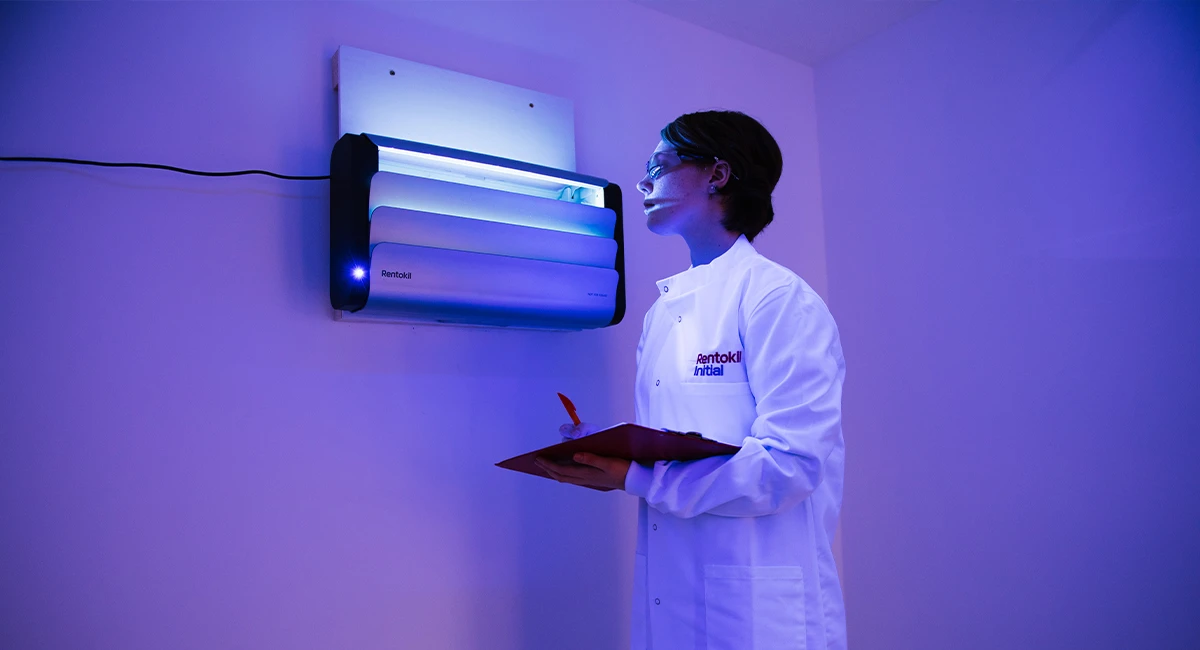
Modern systems, like our Lumnia insect light traps, reflect this shift. For example, LED units can use up to 79% less energy than traditional fluorescent models and may offer lamp lifespans of up to four years, helping reduce maintenance costs over time.1,2
Why UV light matters for fly behavior
To understand why these differences matter, it helps to look at how flies respond to light. Flies don’t see light the same way people do. What attracts them isn’t brightness, it’s wavelength. Research shows that common fly species are most responsive to UV light in a specific range. Traps that emit light close to that range are more likely to attract flies effectively. That’s why consistency matters. If UV output drops over time—as it can with older systems—trap performance may decline as well.
Choosing the right trap
The best option depends less on the technology alone and more on how and where it will be used. Here are a few practical considerations:
Front-of-house spaces
In customer-facing areas - like retail stores and grocery stores, discretion is key. Businesses often look for traps that blend into the environment, with reduced glare, and keep captured insects out of sight. Compact, low-profile designs are often better suited here.
Back-of-house and operational areas
In restaurant kitchens, larger storage areas, and food production spaces, the focus shifts to coverage and catch rate, as well as ease of servicing and durability. Larger, higher-capacity units may be more appropriate in these settings.
Taking a comprehensive approach to fly control
Every site is different. Fly activity can vary depending on layout, season, and business type. That’s why it helps to step back and look at the full picture, not just the trap itself.
At Western Exterminator, we work with businesses to understand where fly pressure is coming from and how different solutions can work together. That may include indoor light traps, outdoor control methods, exclusion, waste management, and other practical preventive steps tailored to the site.
Discover which Lumnia traps are right for your business.
¹ Findings based on comparison study conducted by Rentokil Initial in 2019 between Lumnia models (on Low Power Mode setting) and various fluorescent bulb insect light traps.
² 4-year lamp life based on manufacturer testing of Lumnia LED lamps; lifespan percentage based on available competitor claims as of October 2023.
Schedule your free pest inspection today
Get peace of mind knowing your home or business is protected. Our technicians will assess your property and recommend customized solutions.
Book your free pest inspection today
Our local technicians will assess your property and recommend tailored solutions. Book a friendly, obligation-free inspection at a time to suit you.
- Targeted treatments applied responsibly
- Experts in the pest pressures you face
- Trusted, trained technicians