Temps and termites are on the rise. Schedule your free inspection today.

800-937-8398 Call us for a free quote Contact us

House sparrows

Learn about house sparrows - habitat, diet, life cycle, and dangers

Small, scrappy, and remarkably adaptable, house sparrows thrive wherever people live, from city sidewalks to suburban backyards to farm buildings. While they're a natural part of the landscape, these birds can become a real problem when they nest in or around your home or business.

Quick house sparrow facts

  • Males have a gray crown, chestnut nape, and black bib; females are streaky brown
  • Can raise up to four broods per year
  • They will take over nest boxes meant for native birds like bluebirds
  • Droppings can carry diseases, including histoplasmosis.
A pigeon perched on a ledge looking at the camera

What are house sparrows?

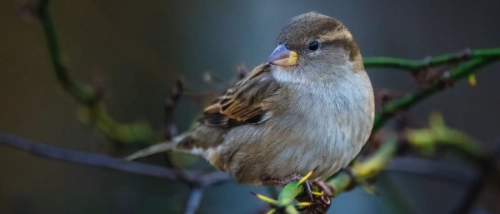
House sparrows (Passer domesticus) are small, chunky little birds. Males are the more striking of the two, with a gray crown, chestnut nape, and a black bib that gets bolder as they age. Females are a more muted streaky brown. 

Both are about 6 inches long (roughly the size of a golf ball with wings) and have that short, stout bill you'd expect from a bird that spends most of its life cracking seeds.

Habitat, diet, life cycle, and behaviors

House sparrows are adaptable. They eat what's available, nest where they can, and breed fast.

Sparrows are built for life around people: You'll find them in cities, suburbs, farms, and anywhere there's a building to nest in and food nearby. They love gaps in rooflines, dryer vents, soffits, and gutters. They're not picky; if there's a cavity, they'll use it. 

Unlike many birds, they don't migrate, so once they settle in, they're there year-round.

Seeds make up the bulk of a house sparrow’s diet, especially grains and grasses, but they're opportunists. Around homes and businesses, they'll pick through garbage, scavenge crumbs, and raid bird feeders. In summer, they'll also eat insects, which they feed to their chicks.

Breeding season runs from March through August, though in warmer climates they can nest almost year-round. Females lay three to six eggs per clutch and can raise up to four broods in a single season. Eggs hatch in about 11 to 14 days, and chicks fledge roughly two weeks after that. 

A single pair can produce a lot of offspring in a short time, which is why populations build up quickly once they've established themselves on a property.

House sparrows are bold, social, and persistent. They nest in tight colonies and are fiercely territorial around their nesting sites. One of their most damaging habits is evicting native cavity-nesting birds, like bluebirds and tree swallows, from nest boxes. They'll destroy eggs, kill chicks, and take over the nest.

They're also noisy, roosting in large groups and chirping constantly, so if you've got a flock on your property, you'll know about it.

Want to avoid nuisance sparrows from nesting on your property? Check out our methods to get rid of birds for preventative tips and tricks.

Managing house sparrows

Find out how our technicians deal with problem birds.


Frequently asked questions

House sparrows nest in cavities: gaps in rooflines, dryer vents, soffits, gutters, and wall openings.

They're tough competition for native cavity-nesting birds like bluebirds and tree swallows. House sparrows will evict them from nest boxes, destroy their eggs, and kill their chicks. Over time, this can put pressure on native bird populations in areas where sparrows have established themselves.

They were introduced deliberately. In 1851, a small group was released in Brooklyn, New York, as part of an effort to control insects. The plan didn't quite work out; sparrows spread rapidly across the continent and are now one of the most common birds in North America.

House sparrows are not native to North America and are not protected under the Migratory Bird Treaty Act. This means they can be legally managed and controlled, unlike many native bird species.

No. House sparrows are non-migratory, meaning they stay put year-round. Once a pair establishes a nesting site, they'll typically return to it season after season. That's part of what makes them so persistent.

Find your local branch

Enjoy protection from 39 of the most common household pests with our annual residential pest control program, PestFree365+.