Temps and termites are on the rise. Schedule your free inspection today.

800-937-8398 Call us for a free quote Contact us

How to tell the difference between bed bugs & ticks

Finding a small bug in your bedroom is unsettling enough; not knowing what it is makes it worse. Bed bugs and carpet beetles get mixed up more than you'd think: they're both small, both hide in similar spots, and both show up where people sleep. 

But they're very different problems that need very different solutions. Here's how to tell them apart.

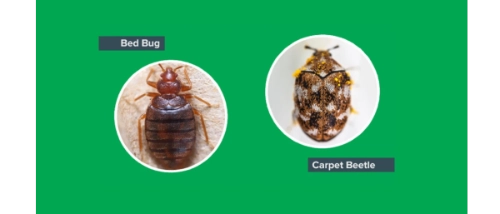
bed bug compared to a carpet beetle

What bed bugs and carpet beetles have in common?

It's easy to see why people confuse the two. Both are small, reddish-brown, and tend to turn up in bedrooms and on upholstered furniture. Both are also good at staying out of sight, hiding in mattress seams, carpet edges, and fabric folds. And both can cause real distress when you find them, which is exactly why getting the identification right matters.

Appearance

While they're similar in size and color at a glance, there are some clear visual differences once you know what you're looking at.

Bed bugs are flat, oval-shaped, and roughly the size of an apple seed; about 5–7mm. They're reddish-brown in color and become darker and more swollen after a blood meal. They have no wings and don't jump.

Carpet beetles are slightly smaller and more rounded, typically 2–4mm. Adults have a distinctive mottled pattern of black, white, and orange scales. Their larvae are small and bristly, which is often what causes irritation when people mistake them for bed bug bites. 

Unlike bed bugs, adult carpet beetles can fly.

 Seeing bed bugs or carpet beetles?

If you've spotted something and you're not sure which you're dealing with, the quickest way to narrow it down is to look at what's being affected. Bites on your skin and spots on your bedding point toward bed bugs. 

Holes in fabrics, shed skins, or damaged woolens suggest carpet beetles. Either way, keep the bug if you can — it'll help an expert pest control technician make a fast, accurate identification.

Habitat

Bed bugs stay close to where people sleep. You'll find them in mattress seams, box springs, bed frames, behind headboards, and in nearby furniture. They don't stray far from their food source.

Carpet beetles are more widely distributed around the home. Adults are often found near windows and light sources, while larvae do the real damage, working through carpets, rugs, natural fiber clothing, and stored fabrics like wool and silk. They're also commonly found in wardrobes, under furniture, and in undisturbed storage areas.

Infestation behavior

Bed bugs reproduce quickly. A female can lay hundreds of eggs over her lifetime, and a small infestation can grow significantly within a matter of weeks. Because they feed on blood, they'll always stay close to the people in the home. Our guide on how to get rid of bed bugs covers more on the common warning signs and how to prevent an infestation.

Carpet beetles tend to build up more gradually and quietly. The adults are harmless, but their larvae can cause extensive damage to natural fibers before most people even notice there's a problem. Infestations often go undetected until clothing or carpets are already damaged.

Can carpet beetles bite you?

Carpet beetles don't actually bite. However, their bristly larvae can cause a skin reaction in some people that resembles bed bug bites, which are small, red, and irritating bumps. The key difference is that carpet beetle reactions tend to appear on exposed skin that's come into direct contact with infested fabric, rather than in the lines or clusters typical of bed bug bites. 

If you're waking up with bites but can't find evidence of bed bugs, carpet beetle larvae could be the culprit.

Signs of an infestation

The signs these two pests leave behind are quite different, making them among the most reliable ways to tell them apart. Here's what to look for with each.

A woman with bite marks from a bed bug

Signs of bed bugs:

  • Bites on your skin, often in lines or clusters
  • Small blood spots on your sheets or pillowcase
  • Dark ink-dot-sized droppings around mattress seams
  • A musty, sweet smell in the bedroom
  • Live bugs or shed skins in bedding and furniture.
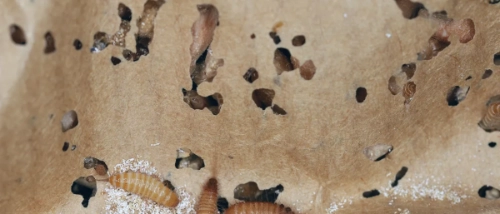
A damaged natural fiber surface, showing multiple bristly, segmented carpet beetle larvae alongside irregular holes, shed skins, droppings, and debris.

Signs of carpet beetles:

  • Irregular holes in natural fiber clothing, carpets, or rugs
  • Shed larval skins in wardrobes, under furniture, or along carpet edges
  • Adult beetles near windows or light sources
  • Skin irritation from contact with infested fabric
  • Damaged stored items like blankets, taxidermy, or dried goods.

When to call a professional

Both bed bugs and carpet beetles are worth taking seriously, and both are harder to deal with than most people expect. 

If you're seeing signs of either pest and you're not confident in what you're dealing with, don't wait. The sooner we can assess the situation, the easier it is to treat.

Find your local branch

Enjoy protection from 39 of the most common household pests with our annual residential pest control program, PestFree365+.