Temps and termites are on the rise. Schedule your free inspection today.

800-937-8398 Call us for a free quote Contact us

Scorpion facts and information

Your guide to scorpion species, habits, and how to help protect your property from scorpions

Scorpions are one of the most unsettling pests you can find in and around your home. With their curved tails and venomous stingers, they're hard to ignore. If you live in the Southwest, knowing how to identify them, where they hide, and what to do about them can make a real difference for your family's wellbeing.

Quick facts about scorpions

  • Scorpions are arachnids, closely related to spiders, mites, and ticks.
  • There are more than 50 scorpion species in the desert areas of the Southwest.
  • Nearly all scorpion stings happen at home, most often in bedrooms.
  • The Arizona bark scorpion is the only U.S. species of serious medical concern.
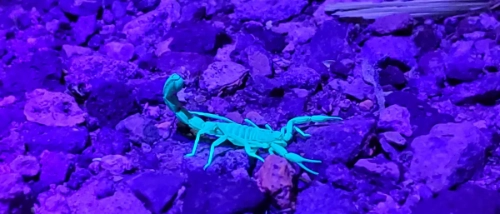
  • Scorpions glow under ultraviolet light, making them easier to spot at night.


A scorpion fluorescing under UV (black) light.

What are scorpions?

Scorpions are predatory arachnids that have been around for hundreds of millions of years. They have four pairs of legs, a pair of claw-like pincers called pedipalps, and a segmented tail that ends in a venomous stinger. Most species are nocturnal, hunting insects and other small prey after dark.

In the western United States, scorpions are a common household concern, particularly in Arizona, Nevada, California, and Utah. They thrive in warm, dry climates and are well adapted to desert living. While most species produce little more than a painful sting, a few can pose a more serious risk, especially to young children and older adults.

If you're seeing scorpions around your property, a professional scorpion control service can help you address the problem before it gets worse.
Different scorpion species

There are more than 50 scorpion species in the desert areas of the Southwest. Most are relatively harmless to healthy adults, but a few deserve extra attention. Here are the species you're most likely to encounter in the Western U.S.

Arizona bark scorpion

Centruroides sculpturatus

The most medically significant scorpion in the United States. Adults reach two to three inches in length and are pale tan or yellowish in color. Unlike most scorpions, bark scorpions can climb walls, ceilings, and vertical surfaces. A sting from this species can cause intense pain, numbness, tingling, and in severe cases, muscle spasms or breathing difficulties.

Arizona giant hairy scorpion

Hadrurus arizonensis

The largest scorpion in the U.S., often exceeding five  inches. Found in the Sonoran and Mojave Desert regions of Arizona, California, Nevada, and Utah. Despite its intimidating size, its venom is relatively mild. It feeds on a wide variety of prey, including other scorpions.

Arizona stripe-tailed scorpion

Paravaejovis spinigerus

The Arizona stripe-tailed scorpion is a burrowing species found in Arizona, California, and parts of New Mexico. Full-grown at under three inches, it's often mistaken for the bark scorpion. Its venom is mild and rarely requires medical treatment.

Struggling with scorpions?

Call now to book your free inspection.

Key signs of scorpions

Scorpions are nocturnal and good at staying hidden, so you may not see them directly. Watch for these signs:

  • Live sightings at night, especially in bathrooms, bedrooms, and laundry rooms
  • Scorpions in shoes, towels, or clothing left on the floor
  • Increased insect activity around your home, which can attract scorpions as a food source
  • Scorpion sightings near entry points like door frames, weep holes, or gaps around pipes

If you've spotted scorpions inside your home, it's worth getting a professional assessment.

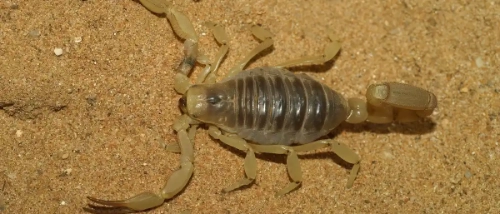
A close-up of a Arizona giant hairy scorpion (Hadrurus arizonensis) on a sandy surface.

Preventing scorpions

There are some practical steps you can take to make your home less inviting to scorpions. 

Seal gaps around pipes, install door sweeps, and repair damaged window screens to close off entry points. Outside, clear woodpiles, rocks, and debris away from your foundation, keep grass mowed short, and trim tree branches away from the roofline. At night, wear shoes indoors and out, and use a UV flashlight to spot scorpions before they find you.


Professional scorpion control 

If you're regularly finding scorpions in or around your home, it's time to bring in the professionals. Western Exterminator has been helping homeowners and businesses across the Southwest manage scorpion problems since 1921. 

Our technicians know the local species, understand how they behave, and can identify the specific conditions on your property that are attracting them.


Frequently asked questions

Most scorpion species in the U.S. range from one to three inches in length. The Arizona giant hairy scorpion is the largest native species, often exceeding five  inches. The Arizona bark scorpion, the most medically significant species, is on the smaller end at two to three inches.

The Arizona bark scorpion (Centruroides sculpturatus) is the only scorpion in the US considered a serious medical concern. Its venom can cause intense pain, numbness, and in severe cases, neurological symptoms. Most other species found in the western US produce a painful but medically minor sting. If you're stung and experience symptoms beyond local pain, contact a healthcare professional or Poison Control immediately.

The most effective approach combines exclusion (sealing entry points), reducing harborage and food sources around your property, and professional treatment. 

Scorpions can squeeze through surprisingly small gaps, as little as 1/16 of an inch. Common entry points include gaps under doors, damaged window screens, weep holes in brick veneer, and openings around pipes and electrical conduits. The Arizona bark scorpion is also a skilled climber, which means it can access upper floors and ceilings.


Seal gaps around doors, windows, and pipes. Remove debris, woodpiles, and rocks from around your home's foundation. Keep grass trimmed and tree branches away from the roofline. Wear shoes at night, and use a UV flashlight to check for scorpions before bed.

Find your local branch

Enjoy protection from pests all year long with PestFree365+. See how our home pest control plan can help protect you and your family from 39 common pests.