© 2026 Rentokil Initial plc and subject to the conditions in the Legal statement
Quick overview
- Identifying a nest's shape and material helps determine the level of risk
- Paper wasps build open combs, while hornets and yellowjackets build enclosed shells
- Solitary mud daubers are less aggressive than social wasps living in colonies
- Common nesting sites include eaves, attics, wall voids, and underground burrows
- Disturbing social nests is dangerous and usually requires professional removal.
Finding a wasp nest on your property can be alarming, and for good reason. But before you do anything, it helps to know what you're dealing with.
How to identify a wasp nest
Different wasp nests can look very different from one another, so knowing what you're looking at is a useful first step. Proper wasp nest identification can help you gauge the risk level and decide on the right course of action.
It all comes down to key factors: shape, size, material, and location. Most wasp nests are made from chewed wood fibers mixed with saliva, giving them a papery texture. Colors range from gray and brown to tan, depending on the wood source used. Some nests are open-celled and visible, while others are fully enclosed or hidden underground.
Also good to note: Spotting wasps flying in and out of a specific area is often the first clue that a nest is nearby.
Social vs. solitary wasp nests
Not all wasps live in colonies. Knowing whether you're dealing with a social or solitary species matters.
Social wasp nests
Social wasps, like yellow jackets, paper wasps, and hornets, live in colonies that can number in the thousands. Their nests are built to house a queen, workers, and larvae. These nests grow throughout the season and can become very large by late summer.
Social wasp nests are the ones most likely to pose a risk to people, as the colony will aggressively defend its home if disturbed.
Solitary wasp nests
Solitary wasp nests are much smaller and built by a single female. Mud daubers are the most well-known example. These wasps don't form colonies, so they're far less aggressive and rarely sting unless directly handled.
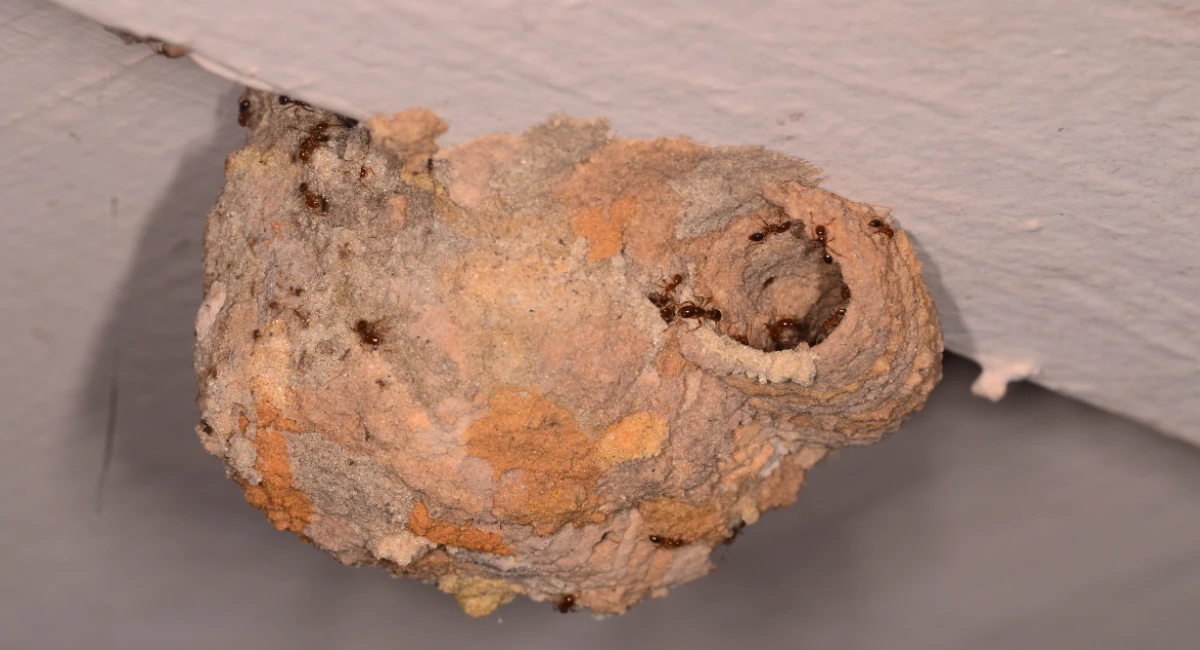
Their nests are typically small, tubular structures made from mud, built to house eggs and paralyzed prey for larvae to feed on.
What does a wasp nest look like?
From the open, papery cones of paper wasps to the hidden underground chambers of yellowjackets, each species builds differently, and knowing what you're looking at can help you understand the risk.
Here's a breakdown of the most common types of wasp nests you're likely to come across.
Paper wasp nests
The paper wasp nest is one of the most recognizable. It has an open, umbrella-shaped structure with visible hexagonal cells, resembling a honeycomb.
These nests are typically gray or brown and hang from a single stalk attached to eaves, porch ceilings, or tree branches. They're usually small to medium in size and don't have an outer casing, so the cells are exposed. If you spot one of these, you'll likely see paper wasps moving in and out of the cells.
Yellowjacket nests
Yellowjacket nests are enclosed structures with a papery outer shell and a small entry hole. They can be found above ground, tucked into wall voids, attics, or dense shrubs, or underground in abandoned rodent burrows. Inside, the nest contains multiple layers of comb.
By late summer, a yellowjacket nest can house thousands of workers, making it one of the more dangerous nest types to encounter.
If you notice yellow jackets flying in and out of a hole in the ground or a gap in your siding, there's likely a nest nearby.
Hornet nests
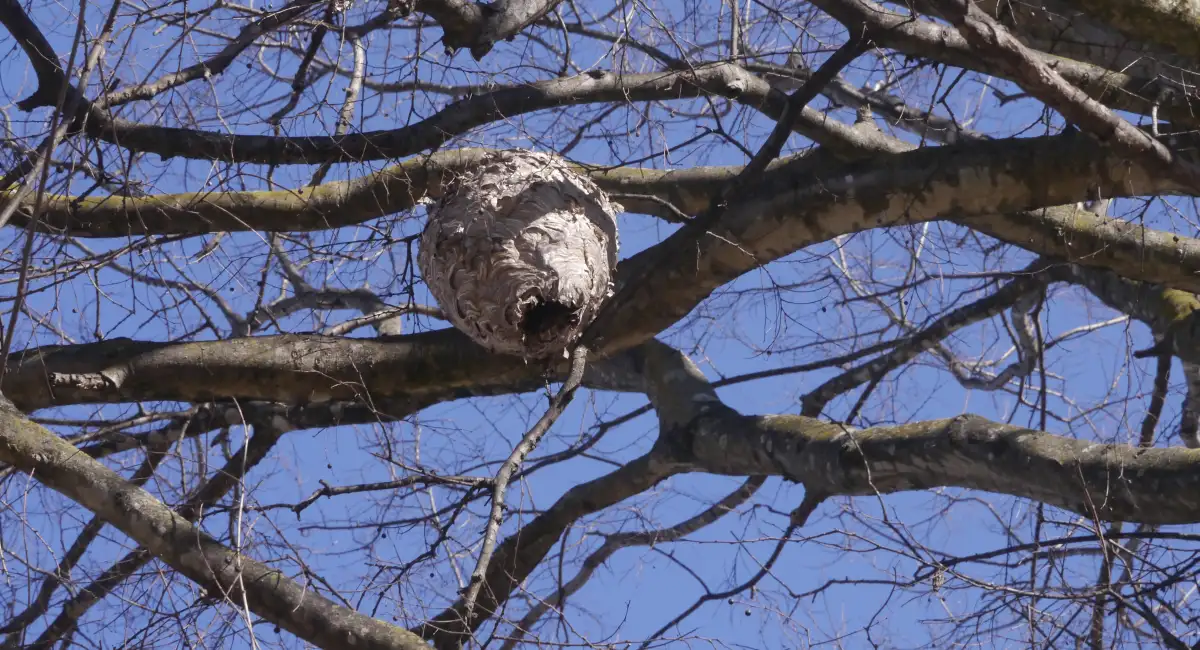
The hornet nest is hard to miss. These large, football-shaped structures are made from a thick, papery material and are usually gray or brown. They're fully enclosed with a single entry point at the bottom. Hornet nests are most commonly found hanging from tree branches, under roof eaves, or attached to the sides of buildings.
A mature hornet nest can be the size of a basketball or larger. If you spot one, keep your distance—wasp removal services are the best way to handle it.
Mud dauber nests
Mud dauber nests look nothing like the papery structures built by social wasps. These are small, cylindrical tubes made from mud, often found in sheltered spots like garages, barns, or under porch overhangs. They're typically brown or gray and may appear in clusters or as a single tube.
Because mud daubers are solitary and non-aggressive, their nests pose little risk. However, they can still be a nuisance if they're building up on your property.
Ground wasp nests
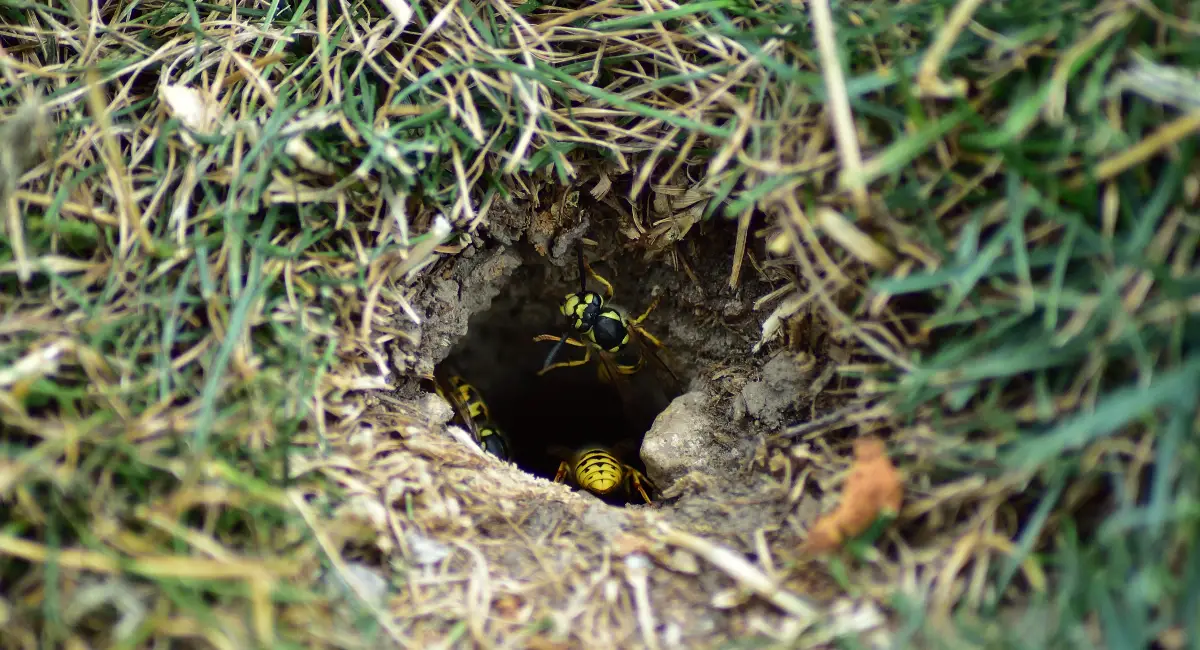
Ground wasp nests are easy to miss because they're hidden below the surface. The entry point is usually a small hole in the ground with wasps flying in and out.
Accidentally stepping near a ground wasp nest can trigger an aggressive defensive response, so it's important to watch where you walk in grassy or wooded areas during summer and fall.
Where are wasp nests found?
Wasps aren't picky, but they are strategic. They look for spots that offer shelter, warmth, and protection from the elements. Here are some places where wasp nests can be found:
- Roof eaves and attics: Sheltered and elevated, eaves and attics are a top choice for wasps. The protected position keeps nests safe from predators and bad weather
- Underground: Yellowjackets love an abandoned rodent burrow, and they'll build a large colony inside one before you even know it's there. Ground wasps also excavate their own burrows in soft soil. Watch for any small ground-level hole with wasps coming and going
- Wall voids and structures: Wasps can squeeze through tiny gaps to nest inside wall voids, behind siding, or in hollow fence posts. If you hear buzzing from inside a wall, there's likely a nest hidden within.
- Dense trees and shrubs: Natural cover makes them a favorite for wasps and hornets, especially. Their large, enclosed nests can be easy to miss until you're right on top of them.
You might not notice a nest until you're trimming hedges or mowing near a bush, which is exactly when accidental disturbance is most likely.
.2023-10-31-13-50-36.webp)
What does a wasp nest sound like?
If you hear a faint, rhythmic buzzing or humming coming from inside a wall, ceiling, or eave, it could be a wasp nest. The sound is caused by the movement of hundreds or thousands of wasps inside the colony. It can sometimes be mistaken for an electrical hum.
The larger the colony, the louder the sound. If you hear this and can't locate the source, it's worth having a professional inspect the area, because hidden nests can be just as dangerous as visible ones.
How big can a wasp nest get?
This depends on the species of wasps you’re dealing with. A small paper wasp nest in early spring might be no bigger than a golf ball. On the other hand, by late summer, a yellowjacket or hornet nest can grow to the size of a basketball or even larger, housing thousands of wasps.
In warmer climates where colonies don't die off in winter, nests can grow to extraordinary sizes over multiple seasons. The bigger the nest, the more wasps it contains, and the greater the risk if disturbed.
Are wasp nests dangerous?
Wasp nests can be dangerous, particularly those belonging to social wasps like yellowjackets and hornets. These species are highly protective of their colonies and will sting repeatedly if they feel threatened.
Also, a disturbed nest can trigger a swarm attack, which poses a serious risk, especially to anyone with a venom allergy.
What to do if you find a wasp nest
A small mud dauber nest in an out-of-the-way location, like the corner of a garage ceiling, is unlikely to pose an immediate threat. Solitary wasps are generally non-aggressive and won't defend their nests the way social wasps do.
If the nest is small, inactive, and well away from foot traffic, you may be able to monitor it without urgent action. That said, it's always worth getting a professional opinion to be sure.
Not every nest is an emergency, but some situations do call for immediate professional attention. Don't put yourself at risk by attempting DIY removal.
Need wasp nest removal?
If you see a wasp nest nearby, contact us for a free initial check.
A wasp nest on your porch can turn your outdoor space into a no-go zone. Here are some practical tips to help prevent them from setting up home.
Schedule your free pest inspection today
Get peace of mind knowing your home or business is protected. A Western Extermiantor specialist will assess your property and recommend customized solutions.
Book your free pest inspection today
Our local technicians will assess your property and recommend tailored solutions. Fast, friendly, and completely obligation-free.
- Targeted treatments, applied safely
- Local experts, fast response
- Trusted, trained technicians