© 2026 Rentokil Initial plc and subject to the conditions in the Legal statement
Quick overview
- A wasp nest can start forming within days in early spring
- Growth speeds up once worker wasps hatch
- Under the right conditions, a nest can reach basketball size in just four weeks
- Wasps build nests in sheltered spots like eaves, walls, and attics.
You step outside one morning and spot a small gray shape tucked under your eave. A few weeks later, it's the size of a grapefruit and buzzing with activity.
Wasps are fast, efficient builders, and a colony can go from a handful of cells to thousands of insects in a single season.
Quick answer: How fast can a wasp nest be built?
A queen wasp can start a new nest within days of emerging from hibernation in early spring. Within three to four weeks, the first worker wasps hatch and take over construction.
From that point, growth accelerates fast.
A nest can expand from walnut-sized to basketball-sized within four to six weeks under the right conditions. By late summer, a single nest can house thousands of wasps. That's a lot of stinging potential from something that started as a few paper cells.
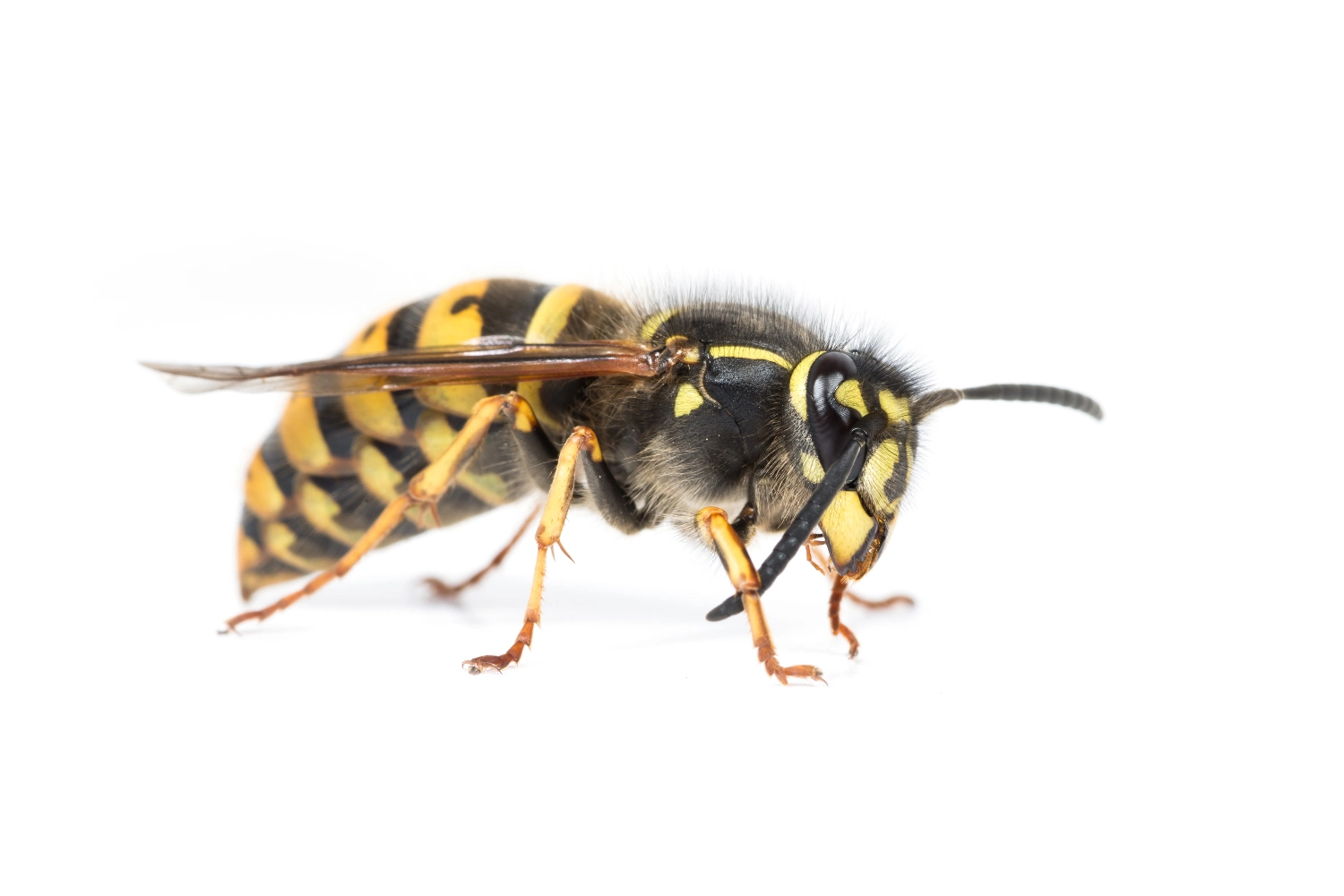
Wasp nest construction
The life of a wasp nest follows a fairly predictable pattern. Here's how it typically unfolds from spring through fall.
Stage 1 – Queen starts the nest
In early spring, a queen wasp emerges from hibernation and begins searching for a sheltered spot to build. She chews wood fibers from fences, decks, or dead trees and mixes them with saliva to create a paper-like pulp. She uses this to construct the first few cells, where she lays her eggs.
At this stage, the nest is tiny, often no bigger than a walnut. The queen is working alone, feeding and caring for the first larvae herself. This is the easiest time to spot and address a developing nest.
Stage 2 – Workers expand the nest
Once the first eggs hatch and mature (roughly three to four weeks after the queen starts building), worker wasps take over construction. The queen's sole job becomes laying eggs. Workers forage for food, build new cells, and defend the nest.
With a growing workforce, expansion speeds up significantly. New layers of comb are added underneath existing ones, and the outer envelope grows to enclose them. A nest can go from the size of a golf ball to football in a matter of weeks.
Stage 3 – Peak nest size in late summer
By mid-to-late summer, the colony is at its largest. A nest can contain up to 10,000 wasps at peak activity. Wasps are also more aggressive during this period, as food sources become scarcer and the colony is focused on protecting what it has.
This is when encounters become most dangerous, and when wasp removal services matter most.
Stage 4 – Nest abandonment in fall and winter
As temperatures drop in fall, the colony begins to decline. The queen produces new queens and male wasps, which mate and disperse. The original queen and most workers die off, and the nest is abandoned.
Wasps don't return to old nests the following year, but new queens may build nearby. That's why the same spots on your property can seem to attract them season after season.
How quickly does a wasp nest grow?
Growth is slow at first, then exponential. Here's a rough breakdown of how it typically progresses:
- Days 1–3: The queen selects a site and builds a small starter nest
- Days 4–10: Eggs are laid; the queen continues building alone
- Days 11–21: Larvae hatch and are fed by the queen
- Week 3 onward: First workers emerge and take over construction
Once workers are active, the pace picks up fast. Left unchecked through summer, a nest can get pretty big, pretty fast, making it especially difficult to control.
What materials do wasps use to build nests?
Wasps are essentially paper-makers: They scrape wood fibers from surfaces like fence posts, dead branches, or untreated timber, then chew them into a pulp mixed with saliva. This dries into a lightweight, layered wasp’s nest material that forms both the cells and the outer casing.
The result is surprisingly strong and well-insulated. Nests are built to maintain a warm internal temperature, warm enough to support larval development even on cooler days.
It's a remarkably effective piece of natural engineering, but best when far from your property.
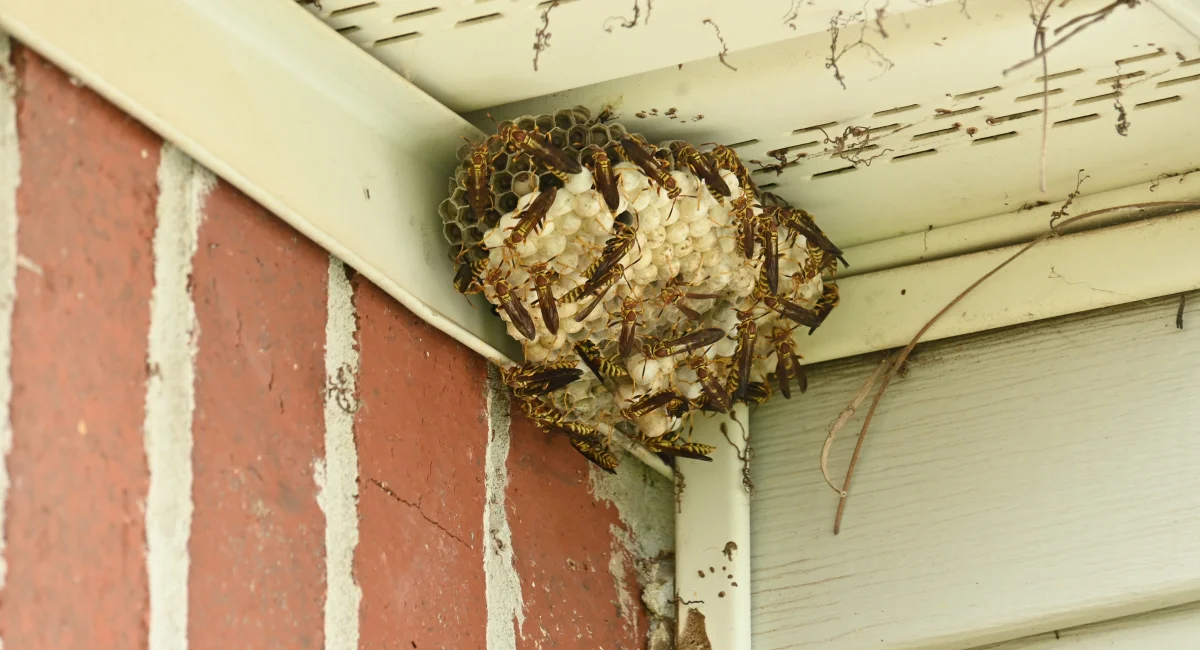
Where do wasps build nests around homes?
This depends on the type of wasp nest, but in general, look for sheltered, dry spots with easy access to wood fiber. Common locations include:
- Eaves and overhangs: A classic spot for paper wasps and hornets
- Wall cavities and soffits: Harder to spot until the colony is well established
- Attics and garages: Warm, undisturbed, and often full of exposed wood
- Underground: Yellowjackets frequently nest in old rodent burrows or soil voids
- Tree branches and shrubs: Hornets often build exposed, papery nests in trees
- Decks, porches, and outdoor furniture: Anywhere sheltered from rain
Wasps are opportunistic, so if there's a gap, a cavity, or a quiet corner, they'll consider it.
Do wasps reuse old nests?
No, they don’t. Each spring, new queens build fresh nests from scratch, and an abandoned nest from the previous year won't be reoccupied. That said, the same sheltered spots that attracted wasps before are likely to attract new queens again.
If you've had a nest in a particular location, it's worth sealing that area off or having it inspected before the next season begins.
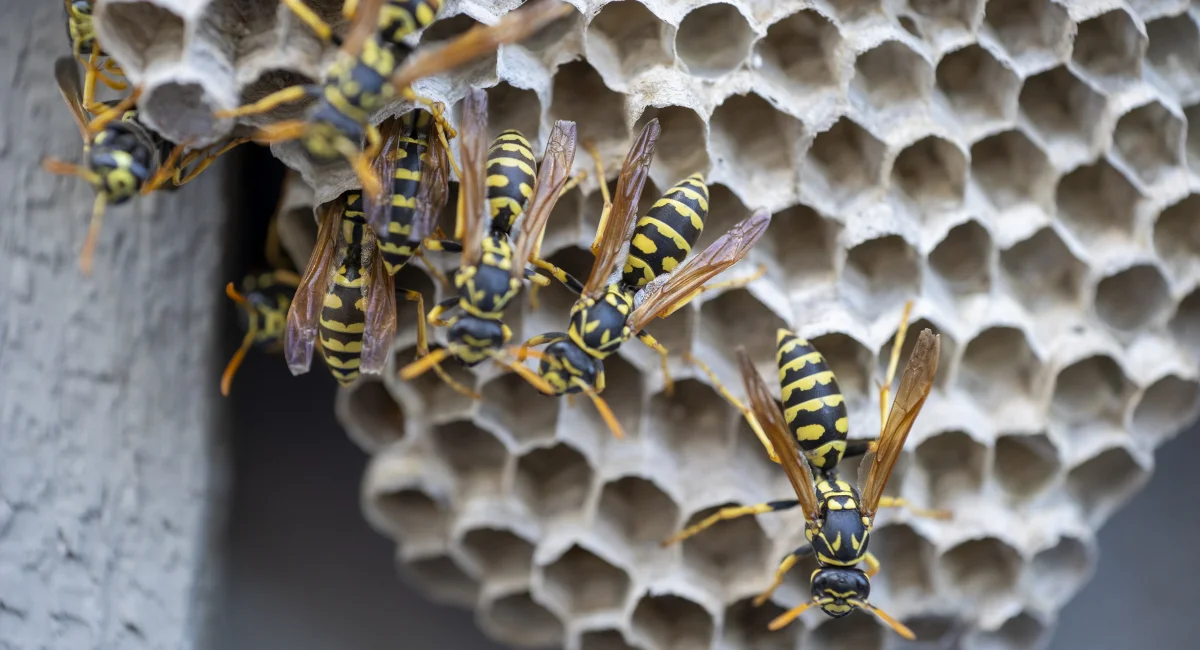
Signs wasps are starting to build a nest
Catching a nest early makes a real difference. In early spring, keep an eye out for a single queen wasp hovering around sheltered spots like eaves, beams, or soffits. A small, gray, or papery structure forming on a surface is a clear sign she's already chosen her spot.
You may also notice wasps repeatedly flying to the same area, or entering and exiting a gap in siding, a vent, or a crack in the wall.
Can you stop wasps from building a nest?
You can definitely prevent them by making your property less attractive to nesting queens: inspect eaves, soffits, roof edges, and any gaps in siding or decking in early spring, and seal off any cracks or entry points you find along the way.
It also helps to keep trash cans sealed, cover food and drinks when eating outside, and trim back branches near the roofline.
That being said, while prevention can reduce the chances of a nest forming, it's no guarantee. If you've had nests before, a professional inspection in spring can help identify risk areas before queens get established.
What to do if you find a wasp nest
If you find a nest, whether it's small and just starting or large and active, the best approach is to leave it alone and call a professional. Get ahead of the problem before nesting season peaks. Book your free wasp inspection today.
The main difference between bees, wasps, and hornets is their aggressiveness and willingness to sting. Read more on the topic here.
Schedule your free pest inspection today
Get peace of mind knowing your home or business is protected. A Western Extermiantor specialist will assess your property and recommend customized solutions.
Book your free pest inspection today
Our local technicians will assess your property and recommend tailored solutions. Fast, friendly, and completely obligation-free.
- Targeted treatments, applied safely
- Local experts, fast response
- Trusted, trained technicians