Temps and termites are on the rise. Schedule your free inspection today.

800-937-8398 Call us for a free quote Contact us

Termite tree damage: How to get rid of termites in trees

Termites are known for the damage they can cause inside homes, but they can also be found in live or dead trees. Termite tree damage can weaken healthy trees and increase the risk of termites spreading to nearby structures. If you’ve noticed signs of termites in trees near your property, it’s important to act quickly. This guide explains how to spot activity, what to do next, and why calling in experts is the best option.

Do termites eat trees?

All three of the main species - drywood, dampwood, and subterranean termites - eat wood and cellulose materials and can cause damage in trees, but how they behave depends on the species and condition of the tree. Here's how the most common types of termites interact with trees.

These are the most likely to cause structural damage. They live in underground colonies and travel through mud tubes to reach food sources. When trees are nearby, they feed on roots and lower trunks, especially in soft, damp wood. Their activity often goes unnoticed until damage becomes severe.

Drywood termites live inside dry wood and don’t need contact with the soil. While more commonly found in homes, they can infest dry, dead branches in trees. If drywood termites are active in a tree, there’s an increased chance they may also be active in nearby buildings. Learn more in our guide to protecting your home from drywood termites.

This species prefers very moist wood, like rotting stumps, logs, or trees with internal decay. They’re less of a structural threat but still signal a moisture problem on your property, something that can attract other termites or pests.

Signs of termites in trees

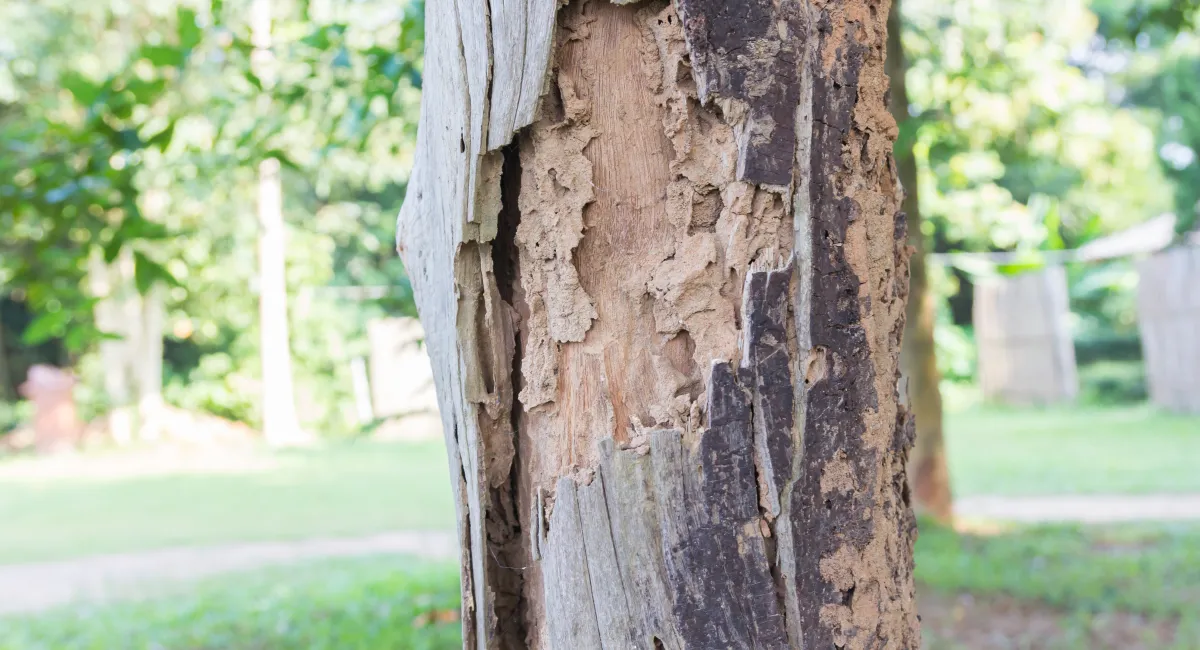
Cracked and peeling bark on a tree; evidence of termites

Look out for these signs that could point to a termite-infested tree:

  • Mud tubes on the trunk or roots
  • Hollow-sounding wood when tapped
  • Cracked or peeling bark
  • Sawdust-like droppings (frass)
  • Small holes in the bark or base

If you come across a termite-infested tree in the woods, or a far distance from anyone’s property, you’re not at risk. If you’re in a protected woodland or national park, you should consider alerting a ranger or the local forestry department, as they may want to take action to preserve trees nearby.

If the tree is near your property, you should consider scheduling an inspection with one of our local technicians. These termites could easily spread and begin a new colony closer to or within your home. Our team knows how to identify the signs of termite activity, assess the severity, and recommend the most effective termite treatment to help protect your property.
How to get rid of termites in trees

If you’ve spotted termites in a tree near your home or business, you’ll want to know how to get rid of termites. Unfortunately, your options for DIY treatments are limited. Over-the-counter sprays and treatments aren’t likely to solve the problem, as termite colonies can live deep within infested wood or underground, where DIY treatments can’t reach. Homemade solutions like borax and boric acid will also likely be ineffective for a tree infested with termites.

To get rid of termites in trees, it is recommended to consult a professional arborist. They’ll be able to advise on the extent of the damage and the best course of action for treating the affected tree.

Frequently asked questions

Termites usually target trees that are old, rotting, or have moisture damage. Subterranean termites often infest softwoods, especially those with moisture near the roots or base of the tree. Formosan termites - a type of subterranean termite - are known for destroying live trees.

Drywood termites tend to go after dry, dead wood and can be found in hardwood limbs or branches. Dampwood termites prefer wood with high moisture content and are typically found in decaying hardwoods. The type of termite and the condition of the tree both influence which species is most likely to be present.

If the conditions are right, subterranean termites are especially capable of spreading this way. They build mud tubes underground, allowing them to move from a tree to a nearby home without being seen. Our technicians know how to trace this movement, identify risk zones on your property, and recommend a treatment plan that helps reduce the chance of a home infestation.

Reach out to a professional arborist. They will be able to determine the best course of action for treating the affected tree.

Find your local branch

Western Exterminator provides sector-specific commercial pest control to a wide range of industries. We know the challenges faced by businesses and the regulatory landscape.