Drywood termites
Unlike their subterranean cousins, drywood termites do not need to be near the soil, do not create mud tunnels, and prefer to eat wood with a moisture content of 12% or less. Drywood termites are commonly found in the southwest U.S. and northwest Mexico but can be carried elsewhere via infested furniture and lumber.
Drywood termite swarming typically occurs on warm and sunny days after a sudden temperature increase. These termites are homebodies, setting up house within the wood itself. Swarmers start by gnawing a small tunnel. They then close it, excavate a chamber, and mate. Drywood termites commonly establish nests in roof materials and structures such as wooden support beams, furniture and hardwood floors, leaving the tunneled wood smooth. Once drywood termite eggs hatch, immatures and nymphs are put to work, as there is no worker division.
Characteristics of drywood termites
Drywood termite swarmers’ head and pronotum is orange-brown and the abdomen is dark brown. Their wings are smoky and their membrane and pigmented veins are blackish.
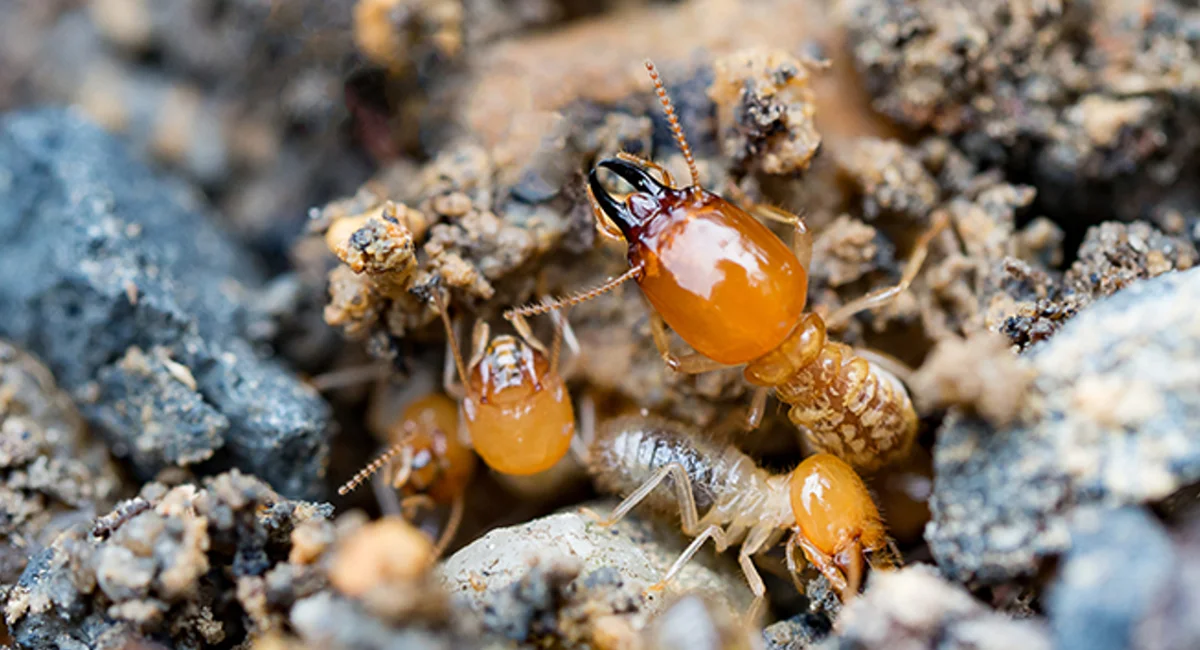
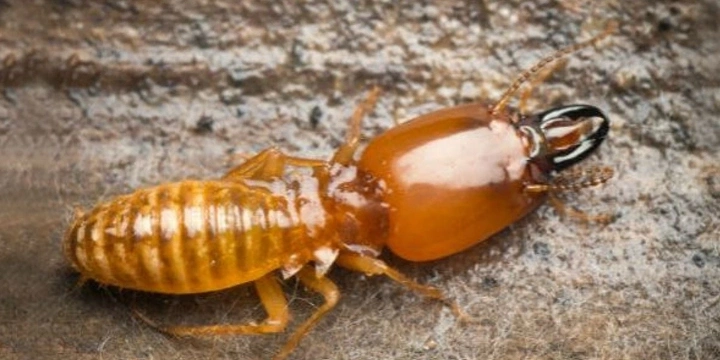
Drywood termite soldiers have a forehead that slopes down gradually from the top of an orange to reddish-brown head. From a side view, it looks flattened to slightly rounded and they have a whitish eye spot. Antennae have a third segment that is enlarged and club-like. The pronotum (top body plate) is as wide or wider than the head when viewed from above.
Drywood termite biology
Drywood termites are homebodies, setting up house in wood. As there is no worker division, immatures and nymphs are put to work. Drywood termites swarm and find cracks or knotholes in wood with nest potential. They start by gnawing a small tunnel, then close it, excavate a chamber, and mate. Drywood termites may stay dormant for nearly a year before laying up to 5 eggs, 20 nymphs and 1 soldier.
By the end of the second year the colony may have grown to 6-40 nymphs and 1 soldier; by the third year there may be 40-165 termites, and by the fourth year the population explodes to 70-700. By this time, swarmers may have developed. They swarm in dozens or sometimes even hundreds – not at all a welcome sight. Drywood termite swarming typically occurs in September – November on a bright day in warm, sunny weather (80 degrees F), peaking after a sudden temperature increase. In Arizona, they swarm on July nights.