© 2026 Rentokil Initial plc and subject to the conditions in the Legal statement
Carnivorous plants sound like something out of a movie, but they’re very real.
These plants evolved in places where the soil is low in nutrients. Instead of relying only on the ground for nitrogen and minerals, they supplement their diet by trapping and digesting insects and other tiny creatures.
Common types of bug-eating plants
Carnivorous plants are usually grouped by the kind of trap they use. Some snap shut. Others lure insects into a slippery tube. Some use sticky “glue,” and a few even vacuum prey underwater. Knowing the trap type makes these plants much easier to identify.
Below are some of the most well-known types of carnivorous plants that eat bugs, along with how their traps work and what kinds of insects they typically catch.
Venus flytraps

The Venus flytrap is the most famous carnivorous plant, and for good reason. Its trap looks like a small mouth lined with “teeth,” and it closes when an insect touches trigger hairs inside the trap. This is a real movement, not a slow curl like many other plants. Once the trap shuts, the plant seals and digests the insect over time, then reopens when it’s done.
Flytraps typically catch crawling insects such as ants, beetles, and spiders, as well as small flies that land on them. They need bright light and specific watering conditions, and they don’t do well if they’re constantly handled or triggered for fun.
Each trap has a limited number of closes before it dies back, so it’s best to let the plant hunt on its own.
Pitcher plant
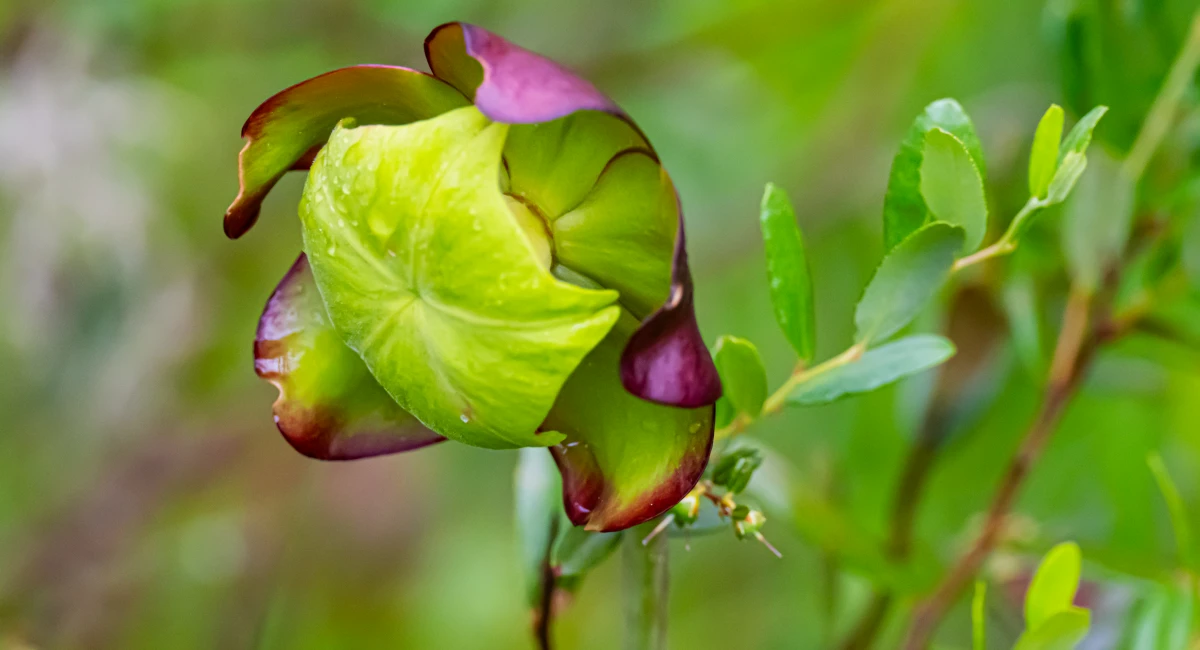
Pitcher plants catch insects using a deep, tube-shaped leaf that functions like a pitfall trap. Insects are attracted by color and scent, then slip on a waxy or wet rim and fall inside. Downward-pointing hairs and slick walls make it difficult to climb back out. Digestive enzymes or bacteria break down the prey.
- North American pitcher plants, often called Sarracenia, are known for upright pitchers and are typically outdoor plants in the right climate
- Tropical pitcher plants, often called Nepenthes, produce hanging pitchers and are more commonly grown as specialty houseplants. These aren’t native to the U.S., but you might see them growing indoors in greenhouses, conservatories, and botanical gardens, especially in warmer or well-controlled environments.
Pitcher plants often catch flies, wasps, gnats, and other insects drawn to nectar. Outdoors, they can catch a wide variety of flying insects, especially in warm weather.
Sundew

Multiple sundew species are native across the United States. These plants use sticky tentacles that look like tiny dewdrops at the ends of hairs. Those “drops” are actually a glue-like substance that traps small insects. Once something sticks, the plant slowly curls its tentacles and sometimes the whole leaf around the prey to increase contact, then digests it.
These plants are especially good at catching small flying pests like fungus gnats and fruit flies, which is one reason they’re popular near bright windows or under grow lights. They come in many shapes and sizes, from small rosettes to taller varieties with long leaves.
Butterwort
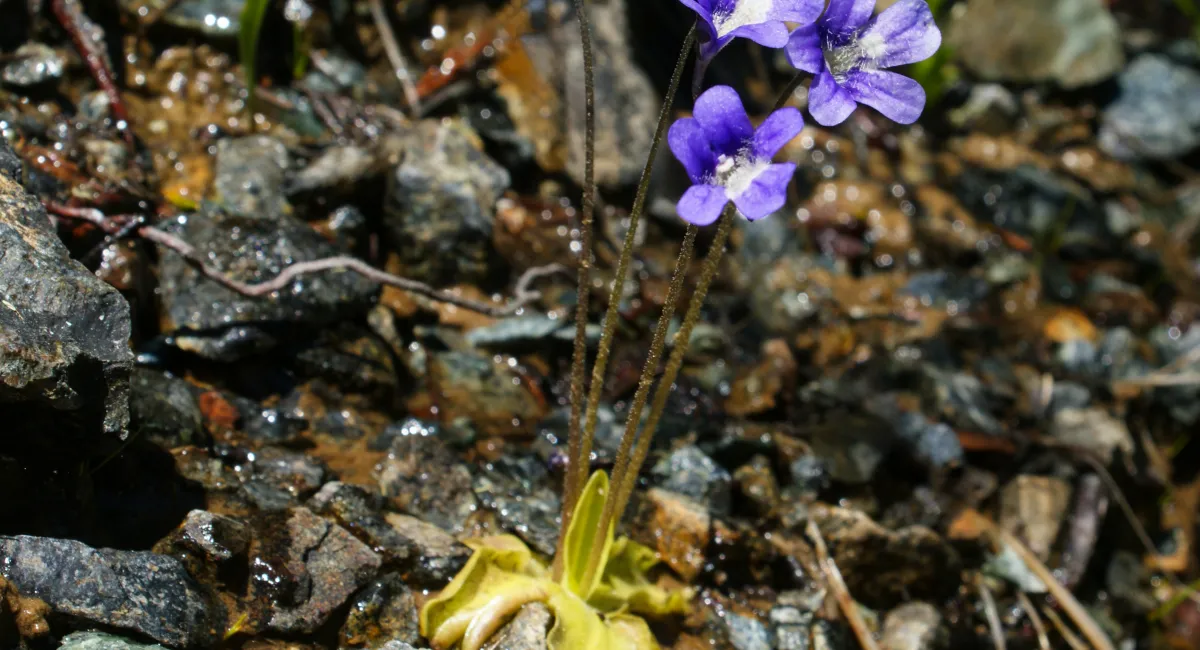
Butterworts look less dramatic than flytraps or pitchers, but they’re extremely effective in the right setting. Their leaves form flat, soft rosettes and feel slightly greasy or sticky. Insects land on the leaf, get stuck, and the plant digests them with enzymes on the surface.
Butterworts are well-known among indoor growers for catching fungus gnats. If you’ve ever had gnats hovering around houseplants, a butterwort placed near the problem area can catch a steady trickle of adults. They still won’t eliminate the source if the soil stays wet and gnat larvae are thriving, but they can help reduce the flying population.
Bladderwort
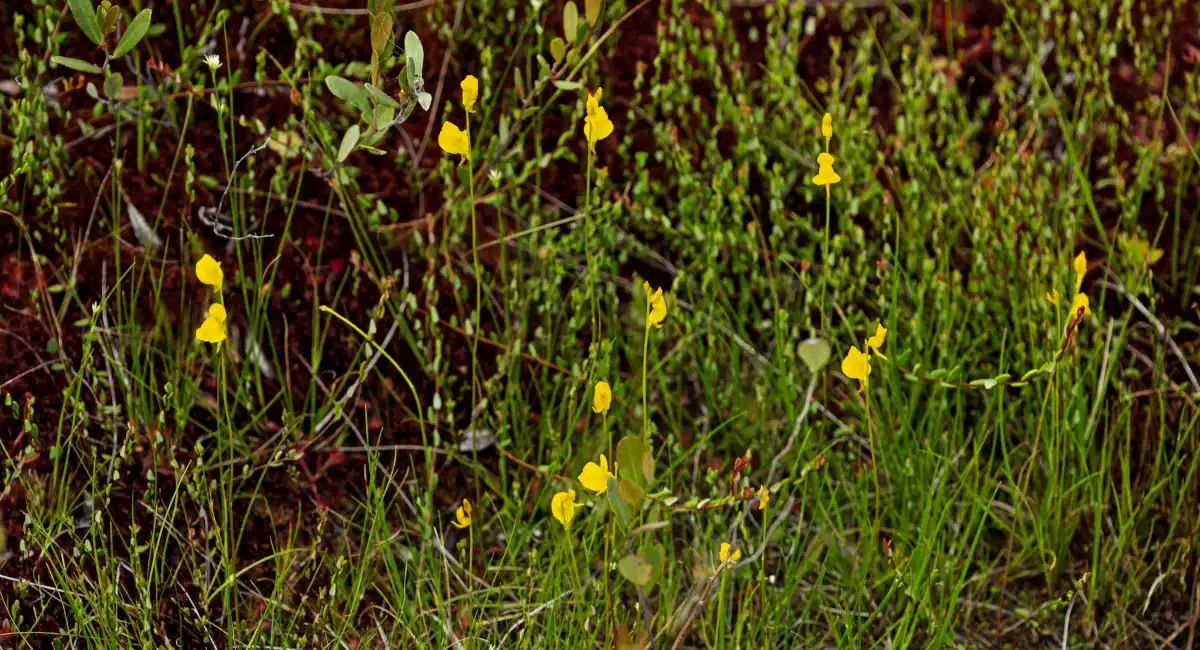
Bladderworts are among the most impressive examples of carnivorous plants because their traps function like tiny vacuum chambers. Many species are aquatic or grow in very wet soil, and their small “bladders” create suction and pull in microscopic prey when trigger hairs are activated. They’re no slowcoaches either – they have the fastest motion of any plant on earth, with their traps triggering in under a millisecond.
These typically feed on tiny aquatic organisms rather than household insects, so they’re less commonly thought of as “bug-eating” in the everyday sense. Still, they’re a major group of carnivorous plants and a great example of how diverse these traps can be.
Cobra lily

The cobra lily is a striking North American carnivorous plant with a twisted pitcher that resembles a rearing cobra. It uses a combination of lures, slippery surfaces, and confusing light patterns to guide insects deeper into the trap. Once inside, escape becomes difficult.
Like many carnivorous plants, it’s picky about growing conditions. It often prefers cool water around the roots and can struggle in hot conditions. When it thrives, though, it’s one of the most unique-looking carnivorous plants you can grow.
A quick reality check: What these plants can (and can’t) do
Carnivorous plants can catch insects, but they’re not a practical solution for an indoor pest problem. A healthy plant might catch a few insects in its immediate area, but rarely. Venus flytraps, for example, will only catch an insect every 1-2 months. If you’re seeing persistent bugs, that usually points to moisture, food sources, or entry points that need to be addressed directly by a professional pest exterminator.
We can take care of insect problems, large or small. Give us a call on 800-937-8398 or fill out our online contact form.
Your garden is an attractive place for visitors of every description, some more welcome than others. FInd out about some of the common pests you might encounter, and the steps you can take to keep them away.
Schedule your free pest inspection today
Get peace of mind knowing your home or business is protected. Our technicians will assess your property and recommend customized solutions.
Book your free pest inspection today
Our local technicians will assess your property and recommend tailored solutions. Fast, friendly, and completely obligation-free.
- Targeted treatments applied safely and responsibly
- Local experts, fast response
- Trusted, trained technicians