© 2026 Rentokil Initial plc and subject to the conditions in the Legal statement
You step outside to check on your garden, and something looks off. Leaves that were full and healthy yesterday now have ragged edges, pinholes, or see-through patches like lace. If you’ve ever thought, “What is eating my plants?” you’re not alone.
Start with the damage: What your leaves are telling you
Before you go hunting for the culprit, take a close look at the leaves. Feeding patterns are often the fastest way to narrow things down.
- Chewed edges or missing chunks usually point to caterpillars, beetles, or grasshoppers
- “Skeletonized” leaves (tissue missing, veins left behind) often come from certain beetles or sawfly larvae
- Tiny “shot holes” may be caused by flea beetles or other small chewing insects
- Tunnels or squiggly trails inside the leaf are classic leaf miners
- Rolled or webbed leaves can mean caterpillars are feeding while hidden.
Also, note where the damage is. Is it mostly on new growth? Low leaves near the soil? Only a few plants or everything in the bed? Those details matter.
Common leaf-eating insects
Identification matters because different insects feed in different ways, and the most effective next step depends on what you’re dealing with.
Caterpillars
Caterpillars are one of the most frequent causes of chewed leaves in home gardens. Many feed in the evening or overnight and hide during the day, often on the underside of leaves or along stems. Their damage tends to look irregular, as if someone took random bites out of the leaf.
When caterpillars are active, you may also notice small droppings on leaves or on the soil beneath the plant. Some species pull leaves together or roll them slightly to create shelter while they feed.
Flea beetles
Flea beetles are tiny, fast-moving beetles known for the “shot-hole” look they leave behind. Instead of large bites, their feeding creates many small holes scattered across the leaf surface.
On young plants, this can stunt growth because tender leaves lose too much tissue too quickly. Flea beetles often appear during warm weather and may be more noticeable when you disturb the plant, since many species jump like fleas when startled.
Japanese beetles and other leaf-skeletonizing beetle
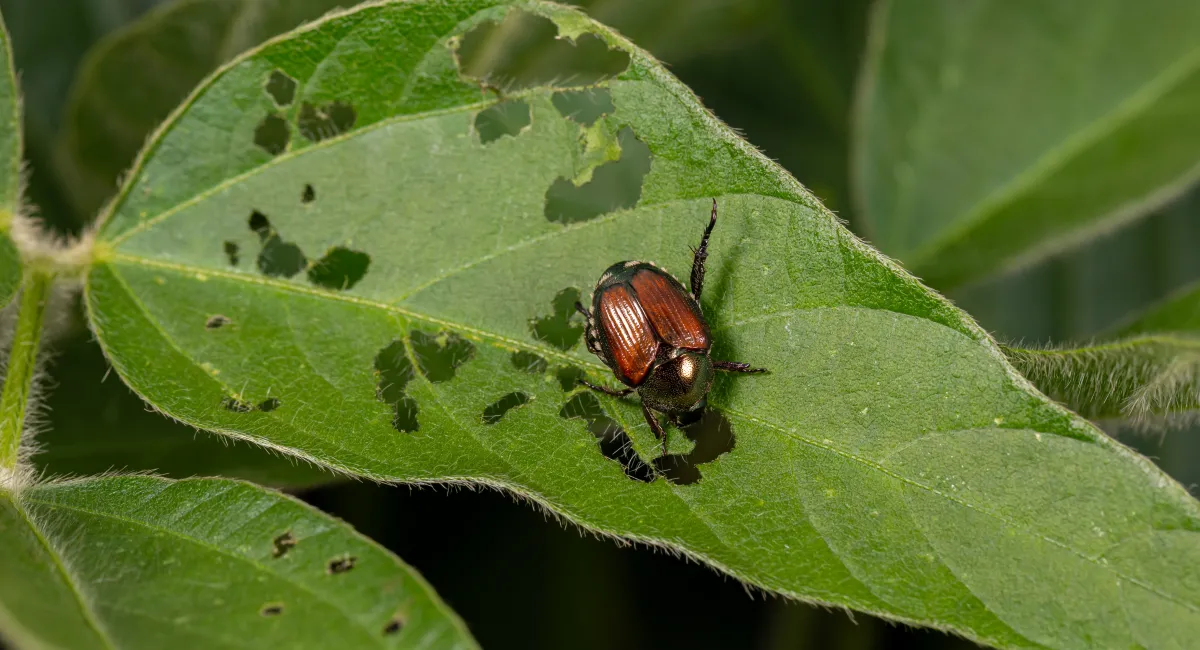
Some beetles don’t just chew holes. They feed between leaf veins, leaving a lace-like skeleton behind. When damage looks like the soft parts of the leaf have been removed but the veins remain – that’s probably due to leaf-skeletonizing beetles.
These beetles may feed in groups, and damage can escalate rapidly when populations are high. Even when plants survive, repeated skeletonizing can reduce vigor and make the plant more vulnerable to heat stress.
Sawfly larvae
Sawfly larvae are often mistaken for caterpillars, and that confusion can lead to frustration when the problem doesn’t improve as expected. They can feed in clusters, and they can strip leaves quickly, especially on shrubs and ornamental plants.
Depending on the species, the damage can look like heavy chewing along the leaf edges or skeletonizing, leaving only veins behind. Because sawfly larvae can defoliate plants fast, early detection is important.
Leaf miners
Leaf miners cause a different kind of damage because they feed inside the leaf rather than on the surface. Instead of holes, you’ll usually see pale, winding trails or blotchy patches within the leaf tissue. Those marks are feeding tunnels created as the larva moves between the upper and lower layers of the leaf.
Leaves may yellow, dry out, or drop early when mining is extensive. This type of damage is easy to miss at first, especially on dense plants.
Thrips
Thrips do not usually create obvious chewing holes. Instead, they scrape and pierce leaf tissue, which can make leaves look silvery, bronzed, or scuffed. New growth may appear distorted, curled, or stunted when thrips are feeding heavily.
Because thrips are small and difficult to spot, the first sign is often the plant’s appearance rather than the insect itself. Thrips damage can be mistaken for heat stress or nutrient issues, particularly when the discoloration is subtle.
Earwigs
Earwigs will damage leaves, but they prefer chewing on soft plant tissue, leaving ragged edges or irregular holes, especially on tender seedlings and flowers. They tend to feed at night and hide during the day in damp, tight spaces like mulch, ground cover, pots, or crevices. If you only see new damage in the morning and can’t find anything on the plant during the day, earwigs are one possibility to consider.
What to do if you’re not sure what’s eating your plants
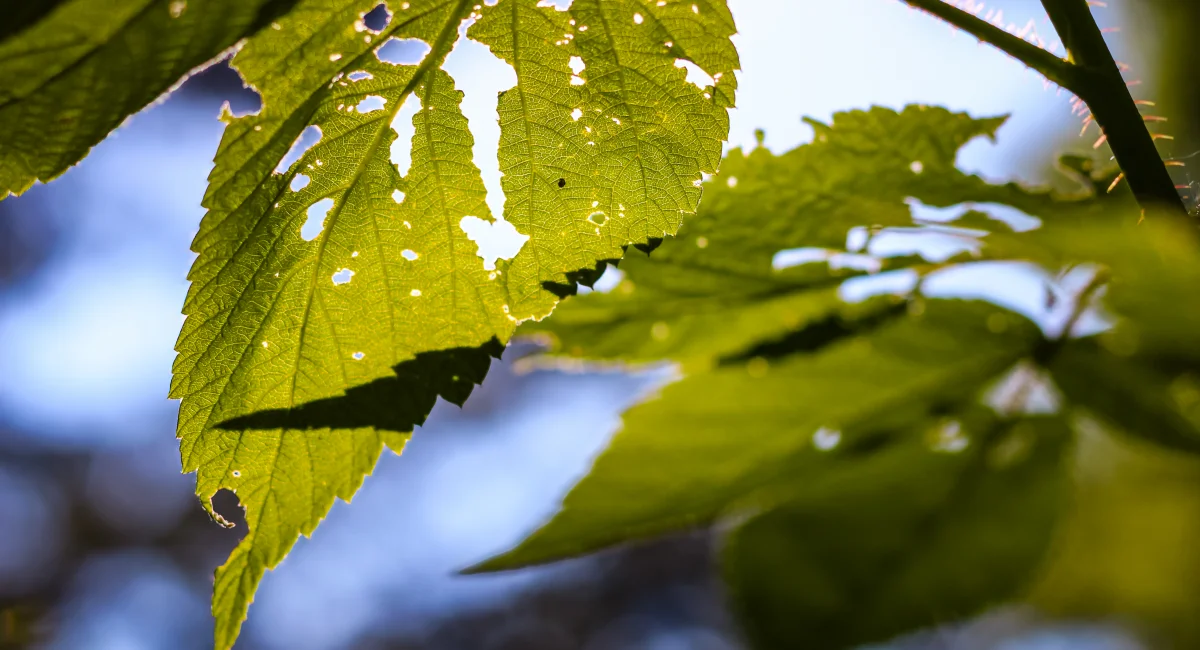
When the insect isn’t obvious, timing helps. Many leaf-eating pests are most active early in the morning, at dusk, or at night. Checking plants with a flashlight can reveal what daytime inspections miss. It also helps to examine the pattern of damage across the plant.
Some pests focus on new growth, while others start low near the soil line or concentrate on a single plant type.
When to consider professional help
If you’re seeing repeated damage across multiple plants, if a shrub or ornamental is losing foliage faster than it can recover, or if you’re dealing with a pest problem that returns season after season, it may be time for a professional inspection. Western Exterminator will quickly identify which pests are attacking your plants, and provide guidance on how to tackle the insect responsible.
Call 800-937-8398 or fill out our online contact form.
Warm weather encourages outdoor living, making patios an extension of our homes. However, bothersome insects like flies and mosquitoes can spoil the experience. Learn tips and tricks to keep bugs away from your patio.
Schedule your free pest inspection today
Get peace of mind knowing your home or business is protected. Our technicians will assess your property and recommend customized solutions.
Book your free pest inspection today
Our local technicians will assess your property and recommend tailored solutions. Fast, friendly, and completely obligation-free.
- Targeted treatments applied safely and responsibly
- Local experts, fast response
- Trusted, trained technicians