© 2026 Rentokil Initial plc and subject to the conditions in the Legal statement
Quick overview
- Auditors expect complete, gap-free pest activity records.
- Missing logs can trigger a citation even without active pest issues.
- 24/7 monitoring closes the gaps traditional inspections leave behind.
- Connected systems support FDA, HACCP, and GFSI-aligned frameworks.
An auditor doesn't just want to know that your facility is pest-free. They want proof: dated logs, consistent inspection intervals, and evidence that any activity was addressed on time. For facility managers, pest control compliance often comes down to documentation as much as it does to actual pest activity.
What auditors expect to see
Whether the visit comes from a health department, a third-party certification body, or an internal quality team, most pest control audits focus on the same core question: can you prove your program is working, not just that it exists?
That means auditors typically review inspection frequency against your written program, look for consistent trap and bait station logs, and check that any pest activity found was followed by a documented corrective action. A written pest management plan is a starting point, but it carries little weight without records that back it up.
For facilities under commercial pest control programs, especially in food and beverage, healthcare, and hospitality, this documentation burden is significant. Pest control remains one of the most frequently cited issues in FDA enforcement. An analysis of FDA warning letters issued between 2017 and 2023 found that sanitary operations violations, which include pest control and facility maintenance, were the single most-cited issue in food facility warning letters, with common findings including rodent gnaw holes and droppings on facility grounds. That is exactly the kind of finding a stronger documentation trail can help prevent.
Key records that make or break your audit
Not all pest control reporting is created equal. Auditors tend to focus on three specific areas that separate a passing program from a citation.
1. Complete, gap-free trap logs
A single missed inspection date can raise questions, even if nothing was found. Auditors often pull months of records at once, and any gap between your written inspection schedule and your actual logs becomes a finding. Consistency matters as much as the data itself.
2. Corrective actions closed on time
Finding pest activity during an inspection is not automatically a problem. What matters is what happens next. Auditors want to see that a corrective action was documented and completed within a reasonable timeframe, and that the issue didn't reappear the following month.
3. Actionable trend analysis over raw numbers
Traditional pest control programs rely on a technician's periodic visit to generate the next log entry. Between visits, there is often no record of what happened, which leaves a documentation gap that auditors are trained to spot.
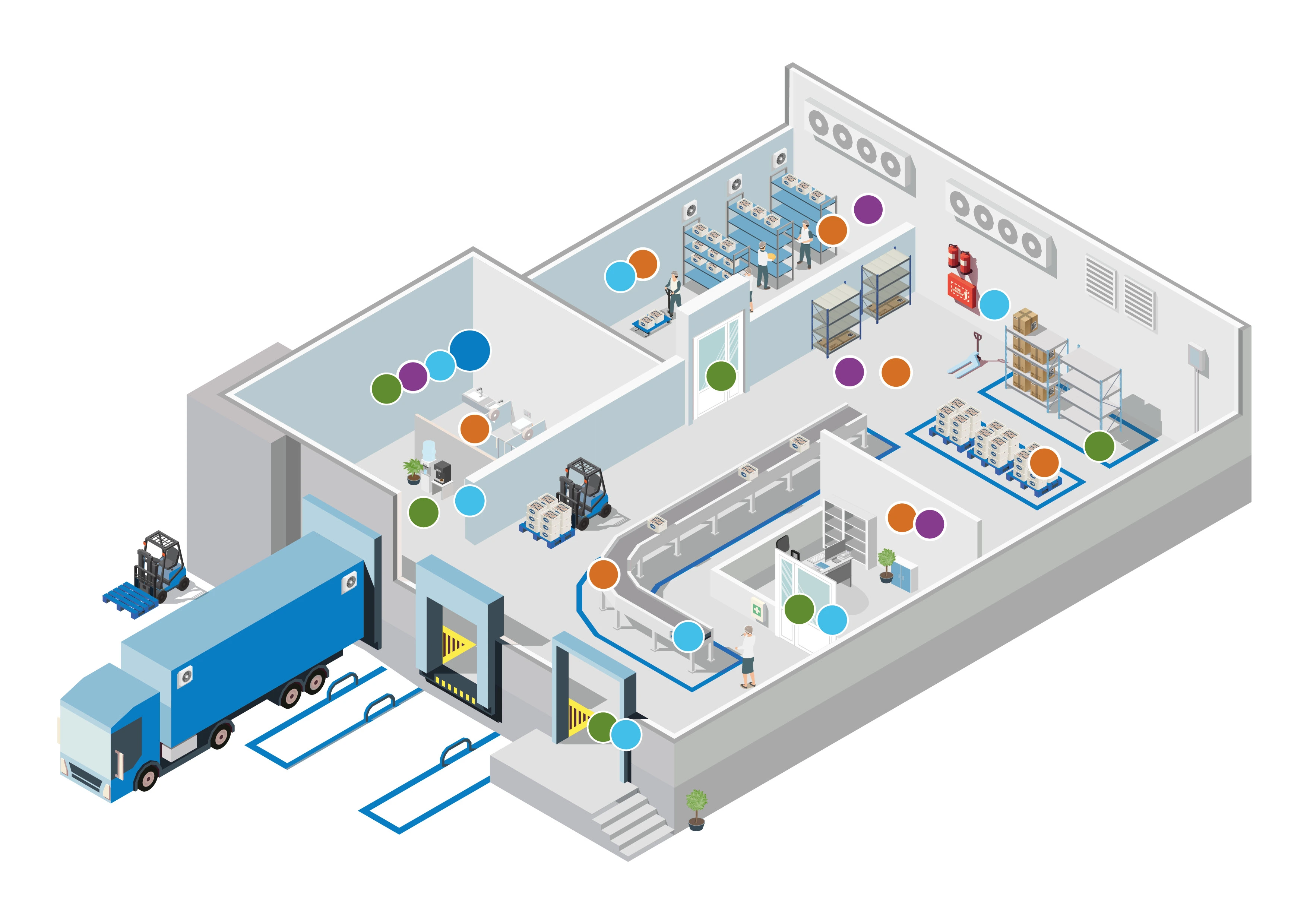
Connected, always-on monitoring changes that. Sensors placed at key points track rodent activity continuously, and every triggered event gets logged automatically with a timestamp. Instead of a monthly snapshot, you get a running record that shows exactly what happened and when, with far less room for missed entries or inconsistent notes.
This kind of continuous pest control reporting also makes trend analysis easier. Facility managers can see if activity is clustering near a specific dock door or storage area over several weeks, rather than trying to piece that pattern together from separate paper reports. For pest control for commercial buildings with multiple entry points and high foot traffic, that visibility can be the difference between catching a pattern early and explaining a citation after the fact.
The frameworks this supports
Continuous, well-documented monitoring aligns with the recordkeeping expectations built into several major compliance frameworks facility managers already work within, including integrated pest management principles, which emphasize ongoing monitoring and data-driven decisions over reactive treatment alone.
Frameworks like Hazard Analysis and Critical Control Points (HACCP) and Global Food Safety Initiative (GFSI)-recognized certification schemes, such as Safe Quality Food (SQF) and British Retail Consortium (BRC), all expect a documented pest control audit trail, not just a service contract. Connected monitoring doesn't replace the written program or the technician's expertise. It strengthens the evidence behind both, giving auditors a clear, consistent record to review instead of a patchwork of paper logs.
Stay audit-ready with PestConnect
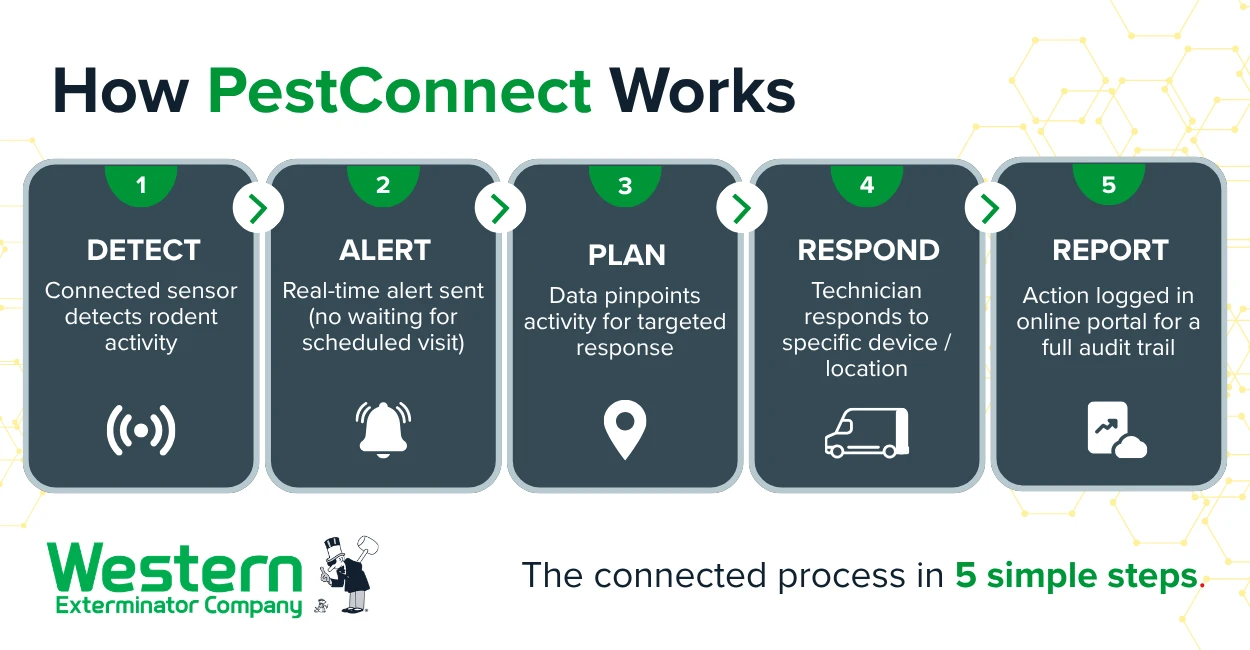
PestConnect is our smart, connected pest monitoring system built for commercial facilities. It tracks rodent activity around the clock and sends real-time alerts to our local technicians, creating a continuous, time-stamped record that supports your audit and compliance needs instead of leaving gaps between visits.
If your facility is preparing for an upcoming audit or wants stronger documentation year-round, reach out to your local Western Exterminator team to talk through how PestConnect fits into your compliance program.
Schedule your free pest inspection today
Get peace of mind knowing your home or business is protected. Our technicians will assess your property and recommend customized solutions.
Book your free pest inspection today
Our local technicians will assess your property and recommend tailored solutions. Fast, friendly, and completely obligation-free.
- Safe, targeted treatments
- Local experts, fast response
- Trusted, trained technicians